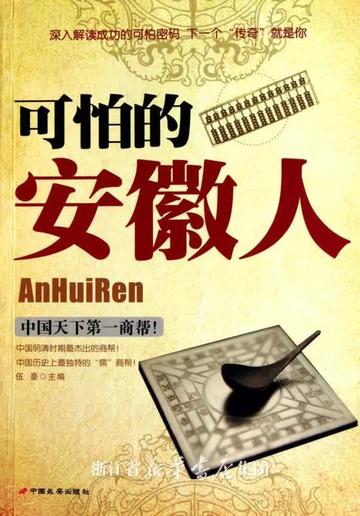
Anhui is a good place. There are rivers, lakes, and various mineral deposits in Anhui. There are Mount Huang, Mount Jiuhua, and Mount Tianzhu, places where poets often stop and recite poems. At the same time, Anhui is also a place where wealth is created. It has been said since ancient times: There is no town without Hui, and there is no business without Hui. Huizhou merchants were formed in the middle of the Ming Dynasty and declined in the late Qing Dynasty. They first focused on the salt industry, until they gained the reputation of "connecting the south of the Yangtze River".
The folk proverb "No town can exist without Huizhou" probably best reflects the huge impact Huizhou merchants had on China's economy at that time. This folk proverb was uttered by the Huizhou people themselves, because it carries a kind of pride, a kind of self-confidence, and a kind of heroic spirit of "who else would give it to me". Just as Huizhou is known as the "Southeast Zoulu" and claims to be the authentic school of Confucianism, they also claim to be the leader of the economy in the shopping mall.
Reader comments
When people from Anhui arrive, they all get out of the way [making faces]
Anhui is really a good place, with beautiful natural scenery and powerful Anhui businessmen. This reminds me of the book "Huizhou Merchants". They both tell the glorious history of Huizhou Merchants. I also particularly like the fighting spirit of Huizhou merchants mentioned in the book. This is very similar to Sun Shaoping in "The Ordinary World". They are both people who work hard in adversity. However, I don't really like the boastful tone, it feels a bit too proud. But overall, this is a book worth reading and can teach us a lot about Anhui and Huizhou merchants.



When people from Anhui arrive, they all get out of the way [making faces]
Anhui is really a good place, with beautiful natural scenery and powerful Anhui businessmen. This reminds me of the book "Huizhou Merchants". They both tell the glorious history of Huizhou Merchants. I also particularly like the fighting spirit of Huizhou merchants mentioned in the book. This is very similar to Sun Shaoping in "The Ordinary World". They are both people who work hard in adversity. However, I don't really like the boastful tone, it feels a bit too proud. But overall, this is a book worth reading and can teach us a lot about Anhui and Huizhou merchants.