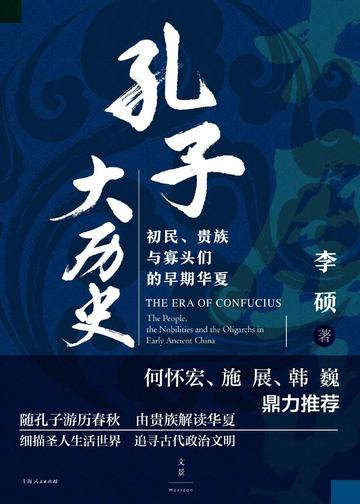
"The Great History of Confucius" is a biography of Confucius written by Li Shuo, the author of "Three Hundred Years of the Civil War". It vividly writes the life of Confucius: he was born as an illegitimate child, grew up in a low-income single-parent family, and gradually became the largest official in the Lu State, "Da Si Kou Xing Photographer". At the same time, he also witnessed the changes and anecdotes in the domestic and foreign affairs of various countries in the late Spring and Autumn Period. After suffering political frustration, Confucius traveled around the world, but ultimately failed to realize his political ideals. However, his teachings were passed down to future generations through the inheritance and interpretation of later generations, and he was also "made" by his disciples to become the most holy teacher.
In our usual impression, Confucius, as a superior "sage", is an abstract figure. "The Great History of Confucius" is precisely to remove this "sage" aura of Confucius and restore his growth process as an ordinary person. He has his own joys, sorrows and fears, as well as confusion, entanglement and persistence. The author Li Shuo explores Confucius's psychological state and motivations when facing various life events, thereby painting a rich and complete image of Confucius.
By interpreting classical and historical documents, "The Great History of Confucius" reproduces the ups and downs of Confucius' life within the rules of the oligarchic hereditary political game, as well as the various life scenes and daily rituals of the Spring and Autumn Period in which he lived. It restores Confucius's life world at the anthropological and even film and television visual levels.
Reader comments
The Spring and Autumn Period and the Warring States Period - an era when talents emerged in large numbers and various ideologies and cultures collided and merged. The author chose a unique perspective. Confucius, who was almost sunk in this era without the halo of a saint, had rich experience. His thoughts also sparked different sparks in this era. This For a moment, he was not the great man Confucius with three thousand disciples. He was just an ordinary person in the chaotic background of the Spring and Autumn Period and the Warring States Period. At the end of the aristocratic era, when rituals collapsed and music collapsed, the author showed us a different and wonderful history through his unique grasp of the historical era, and saw a different Confucius.
Li Shuo's works must be high-quality. There are already too many books about the life of Confucius, but Li Shuo's "The Great History of Confucius" still surprises people. In his writing, Confucius's life is vivid, real and flawed. He was an illegitimate child and came from a low-income single-parent family. , Is also a great Sikou. He will be frustrated, will not reach his ideal place throughout his life, and will be reshaped after his death. The author has a very solid historical background, but he still has the interest of writing. The ups and downs of Confucius' life are in front of his eyes against the background of the Spring and Autumn Period, and it is awe-inspiring to read.
Recommended, worth reading. What makes this book different from other works about Confucius is its overall grasp of the historical situation and the insight into human nature that transcends history. The author uses the life of Confucius as a microcosm to fully demonstrate the style of aristocratic society in the Spring and Autumn Period. At the same time, it also depicts how the aristocratic society disintegrated and declined in the era of great changes. The full text is easy to understand, but behind it lies the author's deep thinking on the logic of civilization and human order. By placing Confucius in the era in which he lived, he can understand Confucius historically.
What makes this book different from other works about Confucius is its overall grasp of the historical situation and the insight into human nature that transcends history. The author uses the life of Confucius as a microcosm to fully demonstrate the style of aristocratic society in the Spring and Autumn Period. At the same time, it also depicts how the aristocratic society disintegrated and declined in the era of great changes. The full text is easy to understand, but behind it lies the author's deep thinking on the logic of civilization and human order. By placing Confucius in the era in which he lived, he can understand Confucius historically.
Most of our understanding of Confucius comes from textbooks. In our impression, he seems to be a well-educated and serious old man. In fact, this is not the case. This book will give us a more detailed understanding of Confucius. Contrary to what we know, Confucius was actually a very humorous old man. His thoughts never went to extremes, but he was flexible but focused on principles. He said that "the king entrusts his ministers with courtesy, and the ministers serve the king with loyalty." The rights and interests of both parties are equal. If the superior has no future, Confucius will leave and switch to his employer. He will never be loyal to his death. Confucius is a good teacher, and many of his thoughts are worth learning. This book will also help us understand his thoughts better and apply them to our own lives better.
"If heaven does not give birth to Zhongni, eternity will be like a long night." Such a sigh that has been passed down through the ages truly reflects the image of Confucius in the minds of the world. He is the founder of Confucianism and is loyal to benevolence. However, most readers always have a distant and vague impression of him. This book starts from the life experience of Confucius, who grew up as an illegitimate child in a single-parent family at the bottom of the class, and eventually became the "Grand Secretary Kou Xing and Prime Minister" of the State of Lu, but he was politically frustrated. This book vividly reproduces Confucius's frustrations and triumphs, his depression and pain, making the image of Confucius more vivid and full.
This book allowed me to see a different side of Confucius. It turned out that he also had joy, anger, sorrow and joy! I especially like the story about Confucius and his friends in the book, which feels very real. But I hated the oligarchs of that era, they were so bad! Overall, this book is very interesting and I recommend you read it too!
Li Shuo's works must be high-quality. There are already too many books about the life of Confucius, but Li Shuo's "The Great History of Confucius" still surprises people. In his writing, Confucius's life is vivid, real and flawed. He was an illegitimate child and came from a low-income single-parent family. , Is also a great Sikou. He will be frustrated, will not reach his ideal place throughout his life, and will be reshaped after his death. The author has a very solid historical background, but he still has the interest of writing. The ups and downs of Confucius' life are in front of his eyes against the background of the Spring and Autumn Period, and it is awe-inspiring to read.
Only by reading this book can we understand the arrangement of the Analects of Confucius and the scenery behind the words. Come closer to the master
Not bad, worth recommending
In popular books, it is not impossible that some conjectures are interesting.
After reading this book by Jian Shang, I feel that Mr. Li Shuo's research on history is more detailed and can help us understand history more comprehensively.
Although it is not written in an academic way, it is easier to clearly understand the gentry politics of the Spring and Autumn Period.
Yes, it is written in an easy-to-understand manner and also contains some of your own opinions. It is worth reading.
The Spring and Autumn Period and the Warring States Period - an era when talents emerged in large numbers and various ideologies and cultures collided and merged. The author chose a unique perspective. Confucius, who was almost sunk in this era without the halo of a saint, had rich experience. His thoughts also sparked different sparks in this era. This For a moment, he was not the great man Confucius with three thousand disciples. He was just an ordinary person in the chaotic background of the Spring and Autumn Period and the Warring States Period. At the end of the aristocratic era, when rituals collapsed and music collapsed, the author showed us a different and wonderful history through his unique grasp of the historical era, and saw a different Confucius.
Li Shuo's works must be high-quality. There are already too many books about the life of Confucius, but Li Shuo's "The Great History of Confucius" still surprises people. In his writing, Confucius's life is vivid, real and flawed. He was an illegitimate child and came from a low-income single-parent family. , Is also a great Sikou. He will be frustrated, will not reach his ideal place throughout his life, and will be reshaped after his death. The author has a very solid historical background, but he still has the interest of writing. The ups and downs of Confucius' life are in front of his eyes against the background of the Spring and Autumn Period, and it is awe-inspiring to read.
Recommended, worth reading. What makes this book different from other works about Confucius is its overall grasp of the historical situation and the insight into human nature that transcends history. The author uses the life of Confucius as a microcosm to fully demonstrate the style of aristocratic society in the Spring and Autumn Period. At the same time, it also depicts how the aristocratic society disintegrated and declined in the era of great changes. The full text is easy to understand, but behind it lies the author's deep thinking on the logic of civilization and human order. By placing Confucius in the era in which he lived, he can understand Confucius historically.
What makes this book different from other works about Confucius is its overall grasp of the historical situation and the insight into human nature that transcends history. The author uses the life of Confucius as a microcosm to fully demonstrate the style of aristocratic society in the Spring and Autumn Period. At the same time, it also depicts how the aristocratic society disintegrated and declined in the era of great changes. The full text is easy to understand, but behind it lies the author's deep thinking on the logic of civilization and human order. By placing Confucius in the era in which he lived, he can understand Confucius historically.
Most of our understanding of Confucius comes from textbooks. In our impression, he seems to be a well-educated and serious old man. In fact, this is not the case. This book will give us a more detailed understanding of Confucius. Contrary to what we know, Confucius was actually a very humorous old man. His thoughts never went to extremes, but he was flexible but focused on principles. He said that "the king entrusts his ministers with courtesy, and the ministers serve the king with loyalty." The rights and interests of both parties are equal. If the superior has no future, Confucius will leave and switch to his employer. He will never be loyal to his death. Confucius is a good teacher, and many of his thoughts are worth learning. This book will also help us understand his thoughts better and apply them to our own lives better.
"If heaven does not give birth to Zhongni, eternity will be like a long night." Such a sigh that has been passed down through the ages truly reflects the image of Confucius in the minds of the world. He is the founder of Confucianism and is loyal to benevolence. However, most readers always have a distant and vague impression of him. This book starts from the life experience of Confucius, who grew up as an illegitimate child in a single-parent family at the bottom of the class, and eventually became the "Grand Secretary Kou Xing and Prime Minister" of the State of Lu, but he was politically frustrated. This book vividly reproduces Confucius's frustrations and triumphs, his depression and pain, making the image of Confucius more vivid and full.
This book allowed me to see a different side of Confucius. It turned out that he also had joy, anger, sorrow and joy! I especially like the story about Confucius and his friends in the book, which feels very real. But I hated the oligarchs of that era, they were so bad! Overall, this book is very interesting and I recommend you read it too!
Li Shuo's works must be high-quality. There are already too many books about the life of Confucius, but Li Shuo's "The Great History of Confucius" still surprises people. In his writing, Confucius's life is vivid, real and flawed. He was an illegitimate child and came from a low-income single-parent family. , Is also a great Sikou. He will be frustrated, will not reach his ideal place throughout his life, and will be reshaped after his death. The author has a very solid historical background, but he still has the interest of writing. The ups and downs of Confucius' life are in front of his eyes against the background of the Spring and Autumn Period, and it is awe-inspiring to read.
Only by reading this book can we understand the arrangement of the Analects of Confucius and the scenery behind the words. Come closer to the master
Not bad, worth recommending
In popular books, it is not impossible that some conjectures are interesting.
After reading this book by Jian Shang, I feel that Mr. Li Shuo's research on history is more detailed and can help us understand history more comprehensively.
Although it is not written in an academic way, it is easier to clearly understand the gentry politics of the Spring and Autumn Period.
Yes, it is written in an easy-to-understand manner and also contains some of your own opinions. It is worth reading.