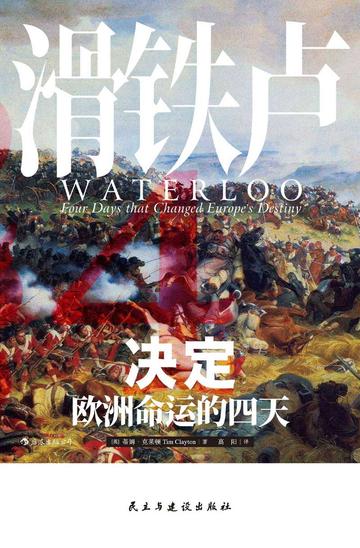
From June 15 to 18, 1815, the French army and the anti-French coalition fought three battles near Brussels that determined the fate of Europe.
On the occasion of the 200th anniversary of the Battle of Waterloo, Tim Clayton uses "hours" as a unit of measurement to meticulously re-evaluate the ancient legend of Waterloo by extensively citing newly discovered historical materials and trying to reveal the true sequence of major and minor events in the entire battle in order to correctly examine it. It examines the controversies that plagued the Battle of Waterloo and strives to illustrate all viewpoints. It paints a panoramic view of the Battle of Waterloo from the perspectives of the French, Germans, Dutch and Belgians, as well as the British, thereby providing as fair an account as possible of the roles played by the various armies in it.
This book also vividly tells the stories of those who faced crazy marches, extremely bad weather, and cruel battles, but still had extraordinary courage in the last important battle in the era of mixed horses, rifles, and cannons. It shows ordinary readers a glimpse of the lives and thoughts of the participants, so as to gain a deeper understanding of this battle.
Reader comments
This book interprets the Battle of Waterloo from a new perspective and is as detailed as a fascinating historical drama. The descriptions of characters from various countries in the book are wonderful, reminding me of "War and Peace", which both show the changes of the great era through the stories of ordinary people. Moreover, the author is also very good at combining history and art, just like the paintings mentioned in the book, allowing us to feel the style of that era more intuitively. All in all, this is a good book worth reading.

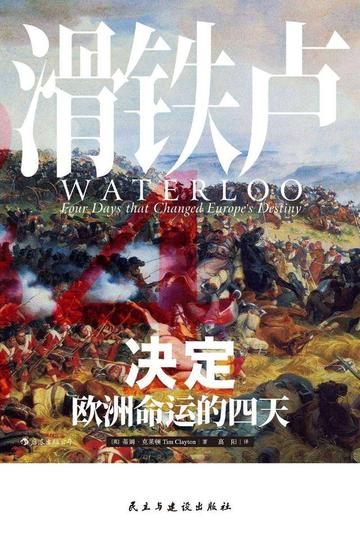
This book interprets the Battle of Waterloo from a new perspective and is as detailed as a fascinating historical drama. The descriptions of characters from various countries in the book are wonderful, reminding me of "War and Peace", which both show the changes of the great era through the stories of ordinary people. Moreover, the author is also very good at combining history and art, just like the paintings mentioned in the book, allowing us to feel the style of that era more intuitively. All in all, this is a good book worth reading.