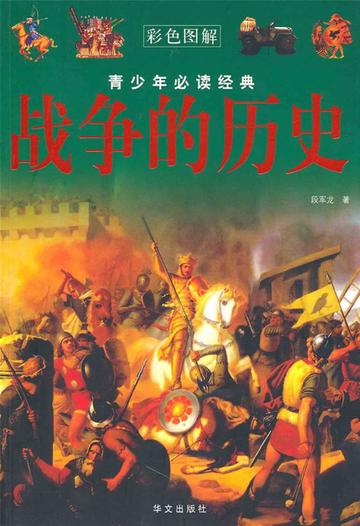
The History of Warfare presents a brief history of the development of warfare in human society in chronological order. From the age of cold weapons to the era of firearms, cannons, and sailing ships, from the Eastern and Western worlds transformed by technological revolutions to modern high-tech warfare, it covers the major conflicts in world history. It explores how the development of productivity drove changes in weapons, and how those changes in turn transformed methods and theories of warfare. It also introduces renowned military commanders from different historical periods and their outstanding military thought and theories of war, while offering vivid panoramic recreations of major battles that shaped world history.
In writing The History of Warfare, care was taken both to explain the nature of warfare in accurate, accessible language and to broaden the subject through engaging related material. Sections such as “Great Military Commanders” and “Key Weapons” offer focused insights that help young readers expand their horizons and gain a more comprehensive, in-depth understanding of warfare. The book also includes a wealth of illustrations, among them portraits of famous commanders, diagrams of important weapons, and reconstructions of battle scenes. Each image is accompanied by a precise, concise caption that makes difficult concepts easier to understand. These illustrations both explore their subjects in depth and supplement and extend the related information, giving young readers a complete, well-rounded understanding and leaving them with a vivid, lasting impression that develops their powers of understanding.
Its information-rich, colorful pages, clean and elegant design, and lively, flowing prose suit the tastes and reading preferences of young people. Through The History of Warfare, young readers can explore the development of human history from a fresh perspective, while learning and broadening their horizons in an enjoyable, relaxed atmosphere. They can also learn to consider and analyze questions from different angles and at different levels, strengthening their ability to observe and analyze historical issues.