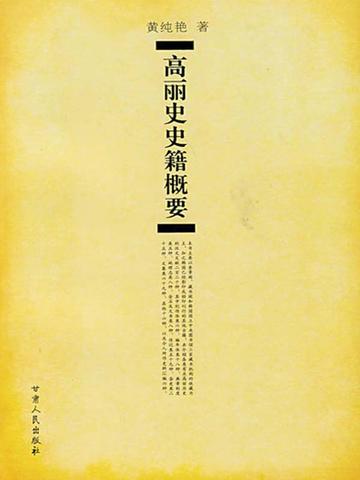
From February to July 2006, I was dispatched by the Shanghai Key Discipline "Overseas Chinese Ancient Philology" chaired by Professor Hao Chunwen to the Kyujanggak Institute of Korean Studies at Seoul National University in South Korea to engage in the investigation and research of ancient Korean ancient Chinese books. Before going abroad, I made use of the available conditions to learn as much detail as possible about the situation of ancient Chinese books in Korea. The plan I drew up was to make a catalog summary for the Ministry of History. After arriving at Seoul University and having a preliminary understanding of the Kyujanggak collection, I immediately gave up my original plan and decided to limit my work to the Goryeo Dynasty. This is mainly based on two considerations: First, there are so many ancient Chinese documents in Korea that the original plan cannot be completed in half a year. Kyujang Pavilion now collects more than 60,000 kinds of ancient documents. The total number of ancient documents existing in Korea can be imagined, and most of them are Chinese documents. Until around 1910, the treaties signed by the North Korean government with various countries and contracts with foreign talents hired were still mainly in Chinese. Poems and official and private documents of scholar-bureaucrats were also mainly in Chinese. There are hundreds or even thousands of historical documents in the Ministry of History such as chronicles, miscellaneous histories, biographies, geography, official and private documents, etc. It is almost impossible to pass through them one by one. Second, the number of Goryeo documents is relatively limited, and with all our efforts, we can basically have a complete understanding of them in half a year. I study the history of the Song Dynasty myself, and I also hope to have a comprehensive understanding of the historical documents of Goryeo.
Reader comments
This book details the historical documents of the Goryeo period and gave me a deeper understanding of the culture of that period. The author's research is very thorough and informative, and some of the historical records in the book are interesting. For example, it is mentioned in the book that "poems, official and private documents of scholar-bureaucrats are mainly written in Chinese", which made me think of the inheritance and influence of culture.

This book details the historical documents of the Goryeo period and gave me a deeper understanding of the culture of that period. The author's research is very thorough and informative, and some of the historical records in the book are interesting. For example, it is mentioned in the book that "poems, official and private documents of scholar-bureaucrats are mainly written in Chinese", which made me think of the inheritance and influence of culture.