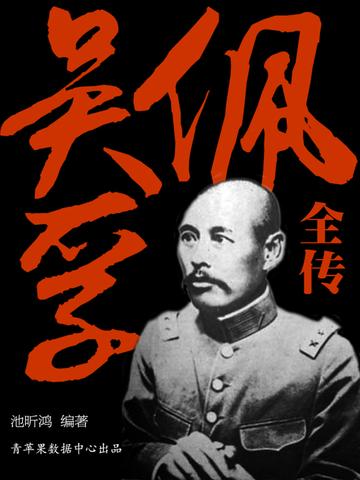
Wu Peifu, courtesy name Ziyu, was born in Penglai, Shandong in 1874. In 1898, he surrendered to the Huai Army. In 1906, he was appointed as the commander of the Cao Kun Department of the Beiyang Army and was highly regarded. Later he was promoted to brigade commander. The movement to protect the country against Yuan arose, and he followed the battalion into Sichuan to suppress the Yunnan Protectorate Army led by Cai E. In July 1917, he was appointed as the vanguard of the west route of the rebel army and participated in the crusade against Zhang Xun's restoration. In the same year, Sun Yat-sen formed a French military government. Wu Peifu was a leader in the history of the Republic of China during the period when the Beiyang political and military group ruled. When the reform movement reached its climax, he entered the military field as a scholar and gradually became a general, becoming a highly respected minister.
Reader comments
In the biography of a modern historical figure, Wu Peifu was once an all-powerful man. In his special era, he was the first Chinese to appear on the cover of Time magazine. He was good at poetry and song, and was known as a literati among warlords. He also did not have the hobbies that ordinary men would have. He never entered the concession and was known as the Three Not Commanders. But he was a victorious general who frightened his enemies, but his ending was a complete defeat, leaving him with eternal infamy. It can be said that he was a legendary hero in troubled times. The feeling of reading the number of times is that times can create heroes, and times can also destroy heroes.
He was a leader in the history of the Republic of China during the reign of the Beiyang political and military group. From writing to holding guns, from the writing field to the battlefield, his life was full of tragedy and passion. The author uses clear, popular and vivid language and superb narrative skills to repaint Wu Peifu's magnificent life for us. His life was closely connected with the current situation. After reading this book, we will have a deeper understanding of Wu Peifu's experience. The full text is fast-paced and lifelike, and it's hard to calm down after reading it.
Wu Peifu is really a good general.
Whether he is in a high position or unknown, he knows what he wants, and he also knows that as a Chinese, he must be patriotic; as a man, he does not look for flowers and flowers, but keeps his innocence; as a soldier, he is more honest and self-disciplined, and does not bully the poor;
He also achieved what he wanted: "Go with the breeze on your sleeves and ride on the crane, leaving your innocence in the world."
So far, no one can match Marshal Wu's integrity, benevolence and righteousness, a standard version of a model moral professional soldier!
When I saw the title of this book in the bookstore, I was still wondering, is this the Wu Peifu I know? His image in the modern history I know is not very decent! Such a person can have a biography, so I went home and searched for it, and after reading this book, I found that he seemed to have made no contribution to the progress of modern Chinese history. This book sorted out the life of Wu Peifu, the commander-in-chief of the Jade Army, and his unyielding and patriotic image corrected my misunderstanding of Wu Peifu.
A very good book "Beiyang Fengyun"
This book can be said to restore a real Wu Peifu and almost tell a complete history of the Republic of China. As a generational hero and the first Chinese to appear in Time magazine, Wu Peifu's life can be summed up in one word: life is like a drama. The dramatic conflicts contained in his life are very suitable for writing novels and adapting film and television dramas. His political career can be summed up in one word: fast. He rose to power quickly, became famous all over the world, and fell from the pedestal quickly.
Wu Peifu is a true soldier and politician! The author's writing style has the characteristics of the Republic of China! The abbreviation of the last chapter is correct. It not only gives a complete explanation, but also highlights Wu's positive image!
The writing is good, but there are no details about the Second Zhifeng, the Great Northern Expedition, and the Battle of Fengwu and Henan.
Restored a real Wu Peifu
This book is very good, like a history of the Republic of China
The vivid descriptions of historical figures benefited a lot
Good, good, good
The writing is vivid and I lament about Marshal Wu.
Understanding Wu Peifu from multiple dimensions
A relatively objective account of history.
Okay, Marshal Wu is a good man.
Wu admired that warlords with grassroots background could stand out in troubled times because of their perseverance, extraordinary ability and unique vision. Everyone's achievements are created by the times.

In the biography of a modern historical figure, Wu Peifu was once an all-powerful man. In his special era, he was the first Chinese to appear on the cover of Time magazine. He was good at poetry and song, and was known as a literati among warlords. He also did not have the hobbies that ordinary men would have. He never entered the concession and was known as the Three Not Commanders. But he was a victorious general who frightened his enemies, but his ending was a complete defeat, leaving him with eternal infamy. It can be said that he was a legendary hero in troubled times. The feeling of reading the number of times is that times can create heroes, and times can also destroy heroes.
He was a leader in the history of the Republic of China during the reign of the Beiyang political and military group. From writing to holding guns, from the writing field to the battlefield, his life was full of tragedy and passion. The author uses clear, popular and vivid language and superb narrative skills to repaint Wu Peifu's magnificent life for us. His life was closely connected with the current situation. After reading this book, we will have a deeper understanding of Wu Peifu's experience. The full text is fast-paced and lifelike, and it's hard to calm down after reading it.
Wu Peifu is really a good general. Whether he is in a high position or unknown, he knows what he wants, and he also knows that as a Chinese, he must be patriotic; as a man, he does not look for flowers and flowers, but keeps his innocence; as a soldier, he is more honest and self-disciplined, and does not bully the poor; He also achieved what he wanted: "Go with the breeze on your sleeves and ride on the crane, leaving your innocence in the world."
So far, no one can match Marshal Wu's integrity, benevolence and righteousness, a standard version of a model moral professional soldier!
When I saw the title of this book in the bookstore, I was still wondering, is this the Wu Peifu I know? His image in the modern history I know is not very decent! Such a person can have a biography, so I went home and searched for it, and after reading this book, I found that he seemed to have made no contribution to the progress of modern Chinese history. This book sorted out the life of Wu Peifu, the commander-in-chief of the Jade Army, and his unyielding and patriotic image corrected my misunderstanding of Wu Peifu.
A very good book "Beiyang Fengyun"
This book can be said to restore a real Wu Peifu and almost tell a complete history of the Republic of China. As a generational hero and the first Chinese to appear in Time magazine, Wu Peifu's life can be summed up in one word: life is like a drama. The dramatic conflicts contained in his life are very suitable for writing novels and adapting film and television dramas. His political career can be summed up in one word: fast. He rose to power quickly, became famous all over the world, and fell from the pedestal quickly.
Wu Peifu is a true soldier and politician! The author's writing style has the characteristics of the Republic of China! The abbreviation of the last chapter is correct. It not only gives a complete explanation, but also highlights Wu's positive image!
The writing is good, but there are no details about the Second Zhifeng, the Great Northern Expedition, and the Battle of Fengwu and Henan.
Restored a real Wu Peifu
This book is very good, like a history of the Republic of China
The vivid descriptions of historical figures benefited a lot
Good, good, good
The writing is vivid and I lament about Marshal Wu.
Understanding Wu Peifu from multiple dimensions
A relatively objective account of history.
Okay, Marshal Wu is a good man.
Wu admired that warlords with grassroots background could stand out in troubled times because of their perseverance, extraordinary ability and unique vision. Everyone's achievements are created by the times.