Faced with the same job opportunities and the same development platform, why do some secretaries rise to the top in a short period of time, become celebrities in front of leaders, and enter the leadership of the team? And even though some secretaries have put in a lot of effort, they are still not favored by their leaders, and even become targets of layoffs in the company? From an ordinary secretary to an outstanding leader, what are the secret rules of success?
Accurate positioning Ren Zhengfei, President of Huawei Group, said: "The value of a secretary is generated by his own cry. If you don't position yourself correctly, there will be no savior to do this for you... It is not the manager who promotes you, but you yourself. Only you can create your own history, create your own future and opportunities."
Increase experience: "Working Queen" with an annual salary of 12 million Hong Kong dollars - Hung Xiaolian, general manager of Hutchison Whampoa Group, said: "I am lucky to have 18 years of experience in secretarial work. Without this experience, I would not be able to achieve what I am today."
Exploiting talents Welch said: "A secretary is sometimes as important to my work as a vice president! Because of his existence, it is possible for me to focus on thinking and decision-making. Some people say that I get twice the result with half the effort, so at least half of it is the contribution of my secretary."
Reader comments
This book mentions a lot of practical suggestions, such as accurate positioning, increasing experience and using talents, etc., Which is very helpful for people who want to improve themselves. I particularly agree with the book's views on work attitude. Treating work as a career can indeed make people more progress. However, I didn't really like some of the examples in the book, which felt a bit old-fashioned. Overall, the writing style of this book is relatively pragmatic and the writing style is not bad. It is worth reading.
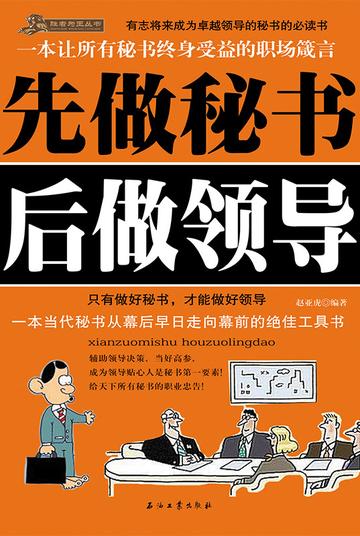




This book mentions a lot of practical suggestions, such as accurate positioning, increasing experience and using talents, etc., Which is very helpful for people who want to improve themselves. I particularly agree with the book's views on work attitude. Treating work as a career can indeed make people more progress. However, I didn't really like some of the examples in the book, which felt a bit old-fashioned. Overall, the writing style of this book is relatively pragmatic and the writing style is not bad. It is worth reading.