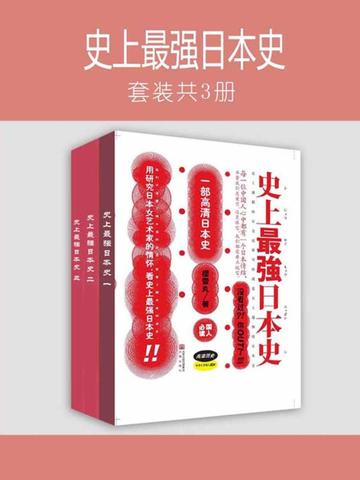
It tells the story of Japan's Warring States Troubles in the more than three hundred years from 1543 to 1868 in a popular and smooth writing style. It is based on historical materials, takes the age and specific tasks as the main line, and adds the writing style of the novel to give a detailed account of the fifteenth generation of the Edo shogunate and the generals. The fate of other samurai, merchants, etc. Is displayed in a panoramic manner, with more emphasis on the narrative of Japan's war history at that time. The "machi culture" of Edo (Tokyo) is the most inscribed, and the story of Japan's political and economic system and people's lives at that time is added.
The first part is written from the birth of Tokugawa Ieyasu until Japan was unified by Toyotomi Hideyoshi. It narrates Tokugawa Ieyasu's most difficult life years in his struggle, starting from his status as a hostage.
While telling the ups and downs of the characters' fate, it more closely reveals the biggest mystery in the history of Japan's Warring States Period - the rebellion of Akechi Mitsuhide, the Incident at Honnoji Temple, and the final outcome of Oda Nobunaga.
Reader comments
The writing quality of this book is above average. But many important events are overlooked or oversimplified. For example: Mo Qi One Night City, Harvest Bee Suga Koroku. This is a symbol of Toyotomi Hideyoshi's rise in the Oda family, and it is also the beginning of the disagreement between Hideyoshi and Gonroku. Another example: Maeda Toshiie, known as "Gun no Matata" and "Basami no Gun", also had an amazing performance in Oda Nobunaga, and the author didn't mention it at all. People who do not understand history will have doubts about the identity of the five elders of Maeda.
The writing is vivid, the history is clear, and the characters are delicately portrayed. It is very helpful for me to understand little Japan. They understand us, and we should also understand them. The more we understand, the more ridiculous and sad it becomes! …
The writing style of this book is very interesting, like telling a story, and easy to understand. The author's writing style is also very good, and the description of historical events is very vivid. It feels like I have traveled to Japan's Warring States Period. Moreover, the book describes the "machi culture" of Edo in great detail, which gave me a deeper understanding of the lives of the people of that era. "Everything starts from the eleventh year of astronomy." This sentence immediately pulled me into the long river of history, and I really like this feeling.
It seems that the author has a lot of opinions about Date Masamune, hahaha
The writing is good. A teacher who remembers the past and remembers the future will always remember the national humiliation in his heart. The people of the country should strengthen themselves.
It is helpful to understand Japanese history and is worth reading.
It's really good, very detailed and interesting.
Very well written
Is this the end? Why do you feel like you haven't finished writing?
The author's words are humorous, similar to "Those Things in the Ming Dynasty".
Very well written
I can see it. I can see it.
Okay, finished reading
The growth history of Little Japan
A good introduction to Japan's Warring States Period

The writing quality of this book is above average. But many important events are overlooked or oversimplified. For example: Mo Qi One Night City, Harvest Bee Suga Koroku. This is a symbol of Toyotomi Hideyoshi's rise in the Oda family, and it is also the beginning of the disagreement between Hideyoshi and Gonroku. Another example: Maeda Toshiie, known as "Gun no Matata" and "Basami no Gun", also had an amazing performance in Oda Nobunaga, and the author didn't mention it at all. People who do not understand history will have doubts about the identity of the five elders of Maeda.
The writing is vivid, the history is clear, and the characters are delicately portrayed. It is very helpful for me to understand little Japan. They understand us, and we should also understand them. The more we understand, the more ridiculous and sad it becomes! …
The writing style of this book is very interesting, like telling a story, and easy to understand. The author's writing style is also very good, and the description of historical events is very vivid. It feels like I have traveled to Japan's Warring States Period. Moreover, the book describes the "machi culture" of Edo in great detail, which gave me a deeper understanding of the lives of the people of that era. "Everything starts from the eleventh year of astronomy." This sentence immediately pulled me into the long river of history, and I really like this feeling.
It seems that the author has a lot of opinions about Date Masamune, hahaha
The writing is good. A teacher who remembers the past and remembers the future will always remember the national humiliation in his heart. The people of the country should strengthen themselves.
It is helpful to understand Japanese history and is worth reading.
It's really good, very detailed and interesting. Very well written
Is this the end? Why do you feel like you haven't finished writing? The author's words are humorous, similar to "Those Things in the Ming Dynasty".
Very well written
I can see it. I can see it. Okay, finished reading
The growth history of Little Japan
A good introduction to Japan's Warring States Period