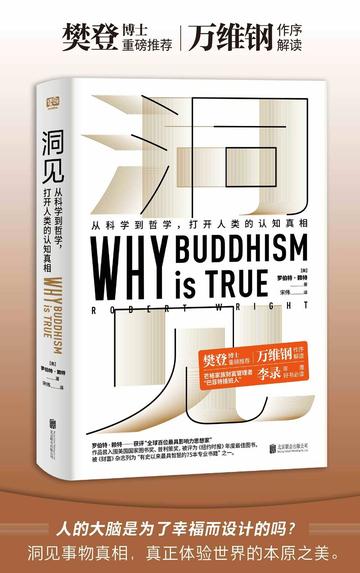
Insight: from Science to Philosophy, Unlocking the Truth About Human Cognition
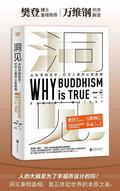
洞见:从科学到哲学,打开人类的认知真相
- Status
- Completed
- Source
- Fanqie
Stats
9.3Score
88Chapters
Tags
Synopsis
Reader comments
In booklists 9




Increase Knowledge and Improve Your Own Books
Books about architecture, computers, etc., Don't be emotional.
178.4MViews671Books3dUpdated

A Book That Will Make Your Brain Faster After Reading It
47.1MViews417Books1dUpdated


Looking for Some High-Quality Books Where You Can Learn Knowledge
I want to read a book similar to "The Pyramid Principle". There is no limit to the content. Reading it can broaden your horizons, increase your knowledge, and learn something.
22.6MViews301Books3dUpdated



Hardcore Bookworms Recommend Really Good Books
I want to watch content similar to "People Who Come Again in Life". Really good book
16.4MViews475Books14hUpdated



Does Tomato Have Any Philosophy Books?
I have become more interested in philosophy recently. Are there any high-quality introductory books on philosophy? : D
4MViews525Books1dUpdated


Philosophy, the Kind of Masterpiece That Is Enough to Burn Your Brain and Make You Forget About Food and Drink (Regardless of Sects)
Confucianism, Taoism and Buddhism
3.6MViews567Books6dUpdated
Books About Philosophy. Very Meaningful.
About Taoism or Buddhism.
1.4MViews548Books1dUpdated


Are There Any Books That Are More Realistic, Where I Can Learn Something I Don't Usually Know?
5.9kViews26Books5moUpdated


I Want to See Your Bookshelf
974Views109Books1moUpdated
Although reason plays an important role in human motivation, it is never reason that makes the decision in a sense. The science of our decision to do something based on our feelings has finally caught up with Hume. Experiments conducted by cognitive scientists show that trade-offs are not a dispassionate process but occur through conflicting feelings competing against each other. No matter how complex the algorithm is, it is feelings that ultimately guide our lives. The prefrontal lobe of the brain is of course very important, but the process of evolution has proven that the rational ability of the prefrontal lobe itself is also controlled by feelings, and people's dominant value system is in feelings.
The end of science is theology. This is not entirely a joke, but a summary based on the theological turns of many famous scientists in their later years and theological explanations of the origins of the elements contained in scientific theories. Interestingly, this book attempts to combine the research conclusions of evolutionary psychology with Buddhist thought to confirm the five truths of human cognition stated by the Buddha. From this point of view, as early as thousands of years ago, the Buddha had insight into the operating laws of human psychology. Following the wisdom of Buddhism can help us discover the original beauty of the world.
If there is no so-called past life and present life, do we still need to have faith in karma? The truly attractive subjects for modern people are no longer IQ taxes such as witchcraft and divination, but should be science that can provide insight, observation, and verification. The pursuit of spiritual realm in life can also be derived from evolutionary psychology. This is the miraculous reason why the wisdom left by wise men thousands of years ago can still shine today. Personal self-cultivation corresponds to Vipassana in Buddhism, and in the context of current psychology, it means constantly observing oneself and understanding oneself better.
Sometimes what we see with our eyes may not be real. What you think in your heart may not be what you really want. What we understand may not be true. In this book, the author attempts to help readers better understand the nature of human thinking and consciousness and provide a deeper insight through in-depth study of knowledge and ideas in different fields. The purpose of this book is to help readers go beyond superficial phenomena and common sense, think deeply and discover the deep truth of human cognition. It may provide an interdisciplinary perspective that allows readers to more fully understand and explore the mysteries of human thinking and consciousness.
Very good. Buddha and Tao both point to the same position, but the expressions are slightly different, but they are essentially the same. I may be a little biased. Of course, it is also possible that later modern compilers modified the classics to create this version. After all, some things are too advanced... It looks a bit surreal.
Perhaps it is my own illusion - this Eastern Eye, written from a Western perspective, is the most "insightful" book on the original meaning of Buddhism among the dozens of books on Buddhism that I have read. In fact, I still don't understand what the "original meaning of Buddhism" is. So, why do you still dare to make such "false statements"? Because I read and understood these eight words from the book for the first time - I am the Buddha, and the Buddha is me. What is "understanding"? 1. The "I" is both myself and not myself, and is more than myself; 2. The "I" does not include all those who practice with "others (gods and ghosts)", "other things", especially "other things"; 3. The so-called practice is to practice on your own; those who practice with other people, other things, especially other things, even if they practice for a lifetime, they will only become one of the thousands of ignorant believers who practice that others can do it, practice that other things are tangible, and practice that other things have shapes; not only that, for a long time, they will also have to do it - on behalf of others, on behalf of other things, especially on behalf of other things, and suffer their mistakes.
There are many things we do all the time but never realize how important it is. People are driven by instinct to live, but they are always fighting against instinct. This book clearly tells us the logic behind all this, smoothing out the fragments I have been thinking about and making it clearer.
Robert Wright, an attention-deficit man with a bad temper, shares from an evolutionary psychologist. Through various scientific experiments, such as the split-brain experiment, it has been proven that the "conscious self" has the ability to fool itself into thinking that the self is giving orders. Scientific theories corroborate what meditation does to the brain. It can be used as a reference for understanding the differences between Eastern and Western cultures. The dorsolateral prefrontal lobe controls abstract reasoning and is closely linked to the dopamine system, which is responsible for assigning value to objects and actions. The 'emotional' areas of the brain are involved in cognition, and the 'cognitive' areas of the brain are involved in emotion. The emotional module has mastered the control of consciousness through competition. The thoughts generated by the conscious self = subconscious mind. The conscious mind focuses on the present, and the subconscious mind focuses on the past and future. If the two directions are in the same direction, you will feel comfortable, and if they are pulling against each other, you will feel anxious. The subconscious mind is scattered. Pleasure and pain must be subjective products that evolve along with processes that are beneficial or harmful to organisms. The purpose or root of evolution is to drive organisms to pursue one and avoid the other. 1. Human beings often fail to see the world clearly, which causes them pain and also brings pain to others around them. 2. Human beings prefer to gain lasting satisfaction from the process of achieving goals rather than focusing on facts. Happiness and trouble are both "feelings" 3. Suffering is a part of life and repeats itself in life. 4. Identify the origin of "suffering" - craving and desire are reasonable 5. Let go of your ego and don't be trapped by your persistent desire and dislike for things.
Sometimes what we see with our eyes may not be real. What is on your mind may not be what you really want. What we understand may not be true. In this book, the author attempts to help readers better understand the nature of human thinking and consciousness and provide a deeper insight through in-depth research on knowledge and ideas in different fields. The purpose of this book is to help readers go beyond superficial phenomena and common sense, think deeply and discover the deep truth of human cognition.
With explanations and analyzes that most people can understand and accept, modern psychology is accurately applied to verify ancient and mysterious Buddhism, allowing people to understand human nature and get a glimpse of the mysteries of Buddhism.
Science has only just caught up with Buddha. I wish more people would view their enemies as their own right arm.
Forget about yourself, the past is often just a floating cloud, which seems to be blown away
The author uses humorous and real personal examples and candidly tells us what meditation is and what purposes it can achieve. Why do we need to meditate? Through many real self-cases and insights, it introduces meditation in an all-round way, which is of great help to some people who are suffering from anxiety, self-conflict and depression. After reading this book, I am more willing and diligent to get into contact with meditation.
This book gave me a feeling of sudden enlightenment. The sentence that impressed me deeply was "The brain is a few super players fighting for control." From this, I also began to become aware of my emotions and brain thoughts, including the connection between the brain and dreams. You can read this book several times and you will understand something.
Understanding Buddhism from the perspective of evolutionary psychology helps to understand the essence of Buddhism and put aside the shackles. It is also a powerful tool to promote Buddhism. Worth savoring! Thanks to the author!
Fellow practitioners realize together and share liberation
The Glory of the Human Mind, Mathematics, Science and Philosophy
Understanding Buddhism from the perspective of evolutionary psychology has benefited a lot.
The angle is quite novel. It understands Buddhism from the perspective of evolutionary psychology and deconstructs it from the perspective of modern people.
A book to understand reality
A good book worth reading intensively
Benefited a lot, worth watching
The book is good😼, very suitable for beginners
Mindfulness is the source of happiness
New perspective, interesting
Examples are easy to understand
Remember to read this book and see how long it took you to read it
I learned a lot, at least my mood has stabilized a lot, and I also tried to learn meditation. Benefited a lot thanks
If you want to think better, or be more modest, then meditate, look within yourself, discover emptiness or formlessness, and take a dim view of life, and that's it.
It's a very good book, but it's difficult to read in some places.