Krei Ohnishi was an aesthetician who made important contributions to the history of modern Japanese aesthetics and had his own unique and systematic aesthetic theory system. He was an important intermediary in the transition and transformation process of Japanese modern aesthetics from the Meiji and Taisho periods to the early Showa period and from the early Showa period to the late Showa period, that is, after the war.
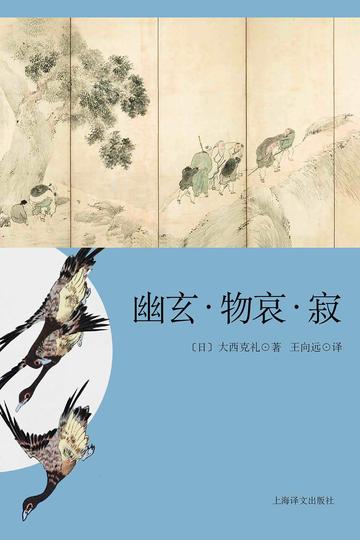
This book combines the "trilogy" of aesthetic research by the famous modern Japanese esthetician Krei Ohishi - "Theory of "Yu Xuan"", "Theory of "Sorrow of Things"" and "Theory of "Silence"" into one volume.
"Yugen·Monoai·Sabi" provides a systematic and in-depth analysis and interpretation of the three key words of Japanese traditional aesthetics - "Yugen", "Monoai" and "Silence". With its systematic construction, cultural semantics method, detailed theoretical analysis, unique elucidation and insights, it is outstanding in the study of traditional Japanese literary theory and aesthetics, and can be called a classic work of Japanese and even Eastern aesthetics.
"Yu Xuan·Mono Ai·Si" is of great reference value for Chinese readers to deeply understand the aesthetic concepts and aesthetic tastes of the Japanese nation, for effectively grasping the national characteristics of Japanese literature and art and even the cultural psychology of the Japanese nation, and for the study of comparative poetry and comparative literature.
This book is an important work on literary theory. It is a must-read for all readers and scholars who want to have a deeper understanding of Japanese aesthetics. It should have long-term sales potential.
Reader comments
This book is really good! The author Kori Ohnishi's in-depth analysis of the three traditional Japanese aesthetic concepts of "yuan", "mono-sei" and "silence" gave me a deeper understanding of Japanese culture. Just like I had a new appreciation for life after having a baby, this book also gave me new thinking about aesthetics. Moreover, the content in the book reminded me of some of my relatives and friends, whose experiences and feelings also resonate with these aesthetic concepts. However, I kind of hate the complicated theoretical analysis in the book, which makes it a bit difficult to read. Overall, this is a book worth reading and a must-read for anyone who wants to understand Japanese aesthetics.
This book is really good! The author Kori Ohnishi's in-depth analysis of the three traditional Japanese aesthetic concepts of "yuan", "mono-sei" and "silence" gave me a deeper understanding of Japanese culture. Just like I had a new appreciation for life after having a baby, this book also gave me new thinking about aesthetics. Moreover, the content in the book reminded me of some of my relatives and friends, whose experiences and feelings also resonate with these aesthetic concepts. However, I kind of hate the complicated theoretical analysis in the book, which makes it a bit difficult to read. Overall, this is a book worth reading and a must-read for anyone who wants to understand Japanese aesthetics.
Obscure and valuable.