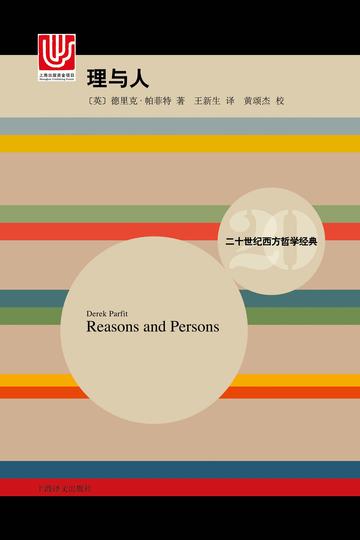
★Recommended by Liang Wendao! The classic work of Derek Parfit, "the great contemporary moral philosopher", visiting professor at Harvard University and New York University, and emeritus researcher at Oxford University, is selected as a "Harvard Buddhist material" to explain that the issue of self-identity is an eternal topic of mankind.
★"Few works of this kind can rival it in scope, richness, imagination, and persuasiveness of reasoning." ——Strawson (famous contemporary philosopher) "New York Review of Books"
★Perhaps the greatest work of substantive moral philosophy in the utilitarian tradition since Sidgwick published "Ethical Method" a hundred years ago.
★A survey report on the classics of Western philosophy in the 20th century published by the American "Philosophy Forum" in December 1999 listed this book among the 25 classics.
[About the author]
Derek Parfit (1942-) is a famous contemporary British philosopher and ethicist. His research interests include topics such as personal identity, rationality, and ethics. His 1984 book "Principle and Man" has a high reputation in the academic world, has been widely cited, and has been recommended to students and the public by many institutions of higher learning. Almost all of his research was completed at the University of Oxford in the UK. He is also a visiting professor at Harvard University, New York University and Rutgers University in the United States.
Introduction
Parfit is a famous contemporary philosopher and ethicist. His representative work "Principle and Man" is hailed as the greatest empirical moral philosophy work in the century since Sidgwick's "Ethical Method". Focusing on the two themes of "reason" and "people", this book in-depth and meticulously analyzes a series of representative views and theories held by people in history in these two aspects, and points out that people's grasp of their own nature and reasons for action is actually many falsehoods. With the help of a large number of examples and careful reasoning, the author not only compares and reminds the inner basis of human behavior, but also poses a strong challenge to some traditionally believed-in moral beliefs and concepts from the aspects of rationality, morality and human nature. After the publication of this book, it had a recognized revolutionary impact on the development of Western ethics, and it occupies an irreplaceable position in both metaethics and applied ethics. This book is also one of the famous "Harvard teaching materials".





Can't understand the content