The Rise and Fall of the Chamber of Commerce revolves closely around the fortunes of the Shanghai General Chamber of Commerce. The story begins when the Qing government, under pressure from the British to revise the Boxer Protocol in accordance with its provisions, establishes a general chamber of commerce by bringing together Shanghai’s various merchant guilds and associations. From the outset, the chamber becomes an arena where the city’s merchant factions vie with one another. As two major groups, the Cantonese merchants and the Ningbo merchants, grow in influence, they resort to every means to seize control of the chamber. In the end, both become pawns of the Tai Trading Company, a merchant syndicate led by Ding, a powerful official and merchant of the Qing government. After the Qing dynasty falls, Tai Trading Company eventually loses its control over the chamber, allowing our protagonist to reorganize it according to an ideal model suited to the times. The chamber thus gradually evolves from an autocratic platform monopolized by a single authority into a democratic platform where merchant groups and guilds coexist in harmony. This storyline consistently develops the drama’s central idea: a group’s dignity does not come from the authoritarian or dictatorial power of any faction, government, or individual, but from the legitimacy of the institutions and procedures that bind the group together.
The Rise and Fall of the Chamber of Commerce focuses on four male protagonists: Wu Tingju, Fu Shun’an, Chen Jiong, and Zhang Hu. Each represents a different state of dignity. The first protagonist embodies dignity in its fullest form, defined by complete independence of character. The second embodies the loss of dignity, defined by complete dependence on others. The third and fourth represent, from opposite extremes, dignity in an incomplete form: one from the perspective of a revolutionary, the other from that of the underworld. What they share is a degree of personal independence alongside a degree of personal deficiency. Both pursue the interests of only some people, unlike the first protagonist, who stands on a higher plane and works for the benefit of everyone in the world.
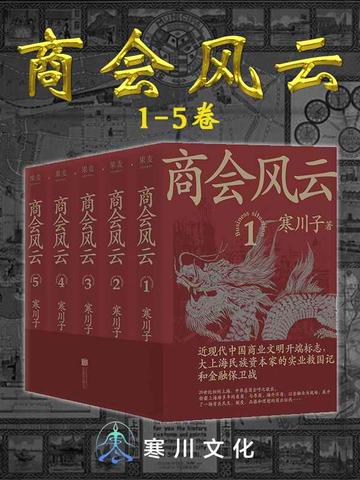



Zhejiang merchants are so powerful that they have to be convinced. Many of the first batch of businessmen to enter Shanghai Beach (Hupiao) were from Ningbo. Although these people were smart, they mostly had their limits and adhered to the spirit of contract. Doing business with them felt trustworthy and you could learn a lot from them. The first male in the clean and jerk team has a completely independent personality, but has many character flaws; the second male in Shun'an has a completely dependent personality, but has a rare ambition to make progress. The two are a pair of mirrors, they respect each other but cannot learn from each other and cannot be better than each other.
The plot of this book is really exciting! By telling the ups and downs of the Chamber of Commerce, it shows the business competition and social changes of that era. I especially like the portrayal of the four male protagonists in the book. Each of them represents a different realm of dignity, which makes me think more about life. Moreover, the development of the story is very compact and enjoyable to read. Recommended to you, worth reading!
The writing is delicate, and the plot has twists and turns, with shadows of storytelling or even fantasy, making people feel distorted and separated from life and universal logic. It is still a good book that can be read from beginning to end.
Shun'an evades responsibility, and only then does he say that he should be a human being! The good, evil, beauty and ugliness in business exchanges and ruthless business wars are also of reference in this era!
Wonderful. The protagonist is talented, but extremely pedantic and does not recognize the people around him
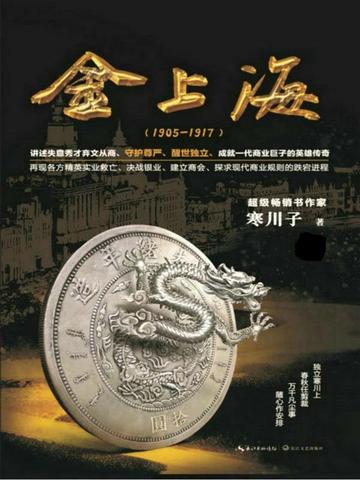
The ending of Jin Shanghai really touched me. It is a very good book. In that war-torn era, it was really not easy for it to stand firm.
Wonderful book