Munich mosques have disturbing links to terror. In the 1980s, Mahmoud Abuhlima was a frequent visitor to the mosque. He left for the United States soon after, and was jailed in 1993 for trying to help blow up the World Trade Center. In 1999, German police bugged Dhaka Zanli's home and tracked his contacts at the mosque, among whom was a very special man, Mohammad Atta. Two years later, Atta flew the first plane into the World Trade Center. In the years that followed, investigators were horrified by the terrorist attacks in Madrid and London, in which the suspects were young second- or third-generation Muslims born in Europe. The scramble for the Muslims of Munich introduced a deadly ideology to the West.
Islamic radicalism is a highly politicized and violent ideological system that provides a breeding ground for terrorism. The West experienced this violence firsthand during the 2001 terrorist attacks in New York and Washington. And its history is even longer, and it has troubled countries around the world for decades.
In the 1970s and 1980s, the United States tried to recruit Muslims to fight against the Soviet Union in Afghanistan. That was when the famous Al Qaeda organization was born. But the Munich mosque has to go back thirty years, to the beginning of the Cold War. Here in Germany, Muslims are involved in a psychological war, a battle of ideas. Across Western Europe, there are between 15 and 20 million Muslims, four times the number in the United States. This demographic change has not escaped the eyes of the Islamic world. At this juncture of historic evolution, the Muslim Brotherhood has deeply embedded its roots in Western society. No one can explain the Western mentality of being both fascinated and repulsed by the Muslim Brotherhood.
A well-known Islamic radical organization is the Muslim Brotherhood. It is the Muslim Brotherhood that turned the mosque into a grassroots political organization to achieve party goals. Almost all of the Muslim Brotherhood's activities in the West originated from the small group of people who ran the Munich mosque.
Reader comments
This book gave me a deeper understanding of Islamic radicalism and introduced me to people who have struggled with the currents of history. I liked Margaret in the book, and I was deeply impressed by her courage and persistence. This reminds me of Amir in "The Kite Runner". They are both pursuing their beliefs in difficult circumstances. The style of this book is realistic and profound. It is similar to "1984" in that it makes people think deeply about the impact of power and ideology on individuals.
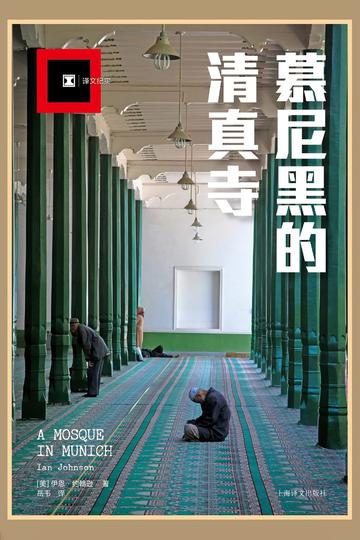





This book gave me a deeper understanding of Islamic radicalism and introduced me to people who have struggled with the currents of history. I liked Margaret in the book, and I was deeply impressed by her courage and persistence. This reminds me of Amir in "The Kite Runner". They are both pursuing their beliefs in difficult circumstances. The style of this book is realistic and profound. It is similar to "1984" in that it makes people think deeply about the impact of power and ideology on individuals.