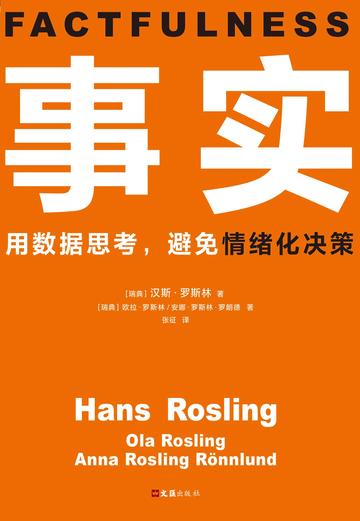
Avoid emotional decision-making, recognize emotional instincts, make corresponding changes, get rid of irrational troubles, and reinvest energy into constructive behavior.
Avoid dichotomy: The world should no longer be divided into developed and developing countries.
Most countries are middle-income countries, and this traditional classification method can easily make you miss potential markets in modern society; avoid generalizations: on the streets of some cities, you will see many half-built houses.
It's easy to think that this is because the person building the house has lost financial support or is doing things without a plan.
In fact, this is a smart way for homeowners to store wealth; avoid a single perspective: The United States ranks first in the world in per capita health spending.
However, the United States is not the country with the longest life expectancy in the world. The average life expectancy in the United States ranks only 40th. Avoid panic: "You must act now, or it will be too late!" This sentence will only bring stress and anxiety.
In most cases, we don't need to take immediate action; there will still be opportunities later.
Once you have the way of thinking provided by "Facts", you can: stay away from anxiety, become optimistic, full of hope, become rational, discover potential business opportunities, and make effective decisions.
Reader comments
Don't look at things in two, don't look at things one-sidedly and subjectively.
Use facts and data to speak for everything, and develop the habit of using your brain to think more.
Don't panic when something happens, you can post it on Moments first [laughing]
At the beginning of reading this book, you may feel boring about the description of data, but this is different from the headlines. It lists statistics realistically instead of the exaggerated emotional orientation of news. The biggest feeling after reading this book is that it allows you to maintain a sense of humility and curiosity, to accept the vastness of different viewpoints with the greatest openness, to look at everything relatively objectively, and to understand some new perspectives that you have never known before, rather than one-sided words or black and white arguments. After all, the world is a delicate gray...
This is an exploratory reading about facts and truth. It calls on people to pay more attention to the accuracy and reliability of facts by revealing the power and value of facts. The author transforms the importance and influence of facts into deeply rooted language, causing readers to think about truth and falsehood. This book discusses the sourcing, verification, and dissemination of facts, and explores the dangers and impact of disinformation on society. It provides methods and strategies to help readers identify and respond to false information, and develop critical thinking and the ability to discern truth.
This book talks about how people obtain facts in decision-making and optimize decisions based on the analysis of facts. This simple truth is not easy to apply in practice. Even among professional social science researchers, the distinction between facts and values has long been an unreflective issue that requires constant vigilance. This book teaches many methods that can be used in ordinary people's daily decision-making to help us obtain facts correctly and avoid misperceptions of facts due to personal cognitive preferences and misleading by others, which in turn lead to wrong behaviors.
"Facts", the relative concept is "emotions". The author's core point is that we should understand the world through facts and use data to express events rather than emotions. This truth is very profound, especially in today's impetuous society. Many times we put our emotions first, bringing our prejudices and emotions towards certain things, and creating conflicts in order to vent our dissatisfaction. In fact, in most cases, rational data is the best explanation of the problem. Recommended for everyone to read!
The passage that touched me most in the book was when the author recalled that when he was dealing with an unknown disease in an African country, he suggested that the mayor set up roadblocks and cancel public transportation because he was afraid of the spread of the disease. But this forced the women and children who were going to the market to take the sea route instead. Eventually the boat capsized and many people drowned. It was later discovered that the disease was not an infectious disease but poisoning caused by eating cassava.
There is no malicious intent, but it becomes a link in a huge tragic chain of cause and effect. The more fear, urgency and uncertainty arise, the more we must slow down. We cannot act based on worst-case scenarios, but we must try our best to verify the facts and ask about the consequences.
When I first started listening to this book, I didn't have much expectations. I thought it was just an "error correction encyclopedia" that listed some knowledge that I didn't really need to master. But after listening to it, I found that this was not the case at all.
As a doctor with rich experience in international public health, the author does not calmly comment on the world from a distance, but has been in the real scene for a long time. He does not have the arrogance of "I am sober when everyone is drunk", but uses a gentle narrative method to remind people that people will misjudge, and he himself has done the same.
This book has been of great help to me and is a book worth reading again and again. It feels like I have met a friend, a friend who is knowledgeable, wise, kind, enthusiastic and a little cute. It is also the teacher that I look up to and respect. Thank you and may your wishes come true.
After reading it, when judging whether something is true or false, I don't know whether something is right or wrong like before. Even if it is right, I don't know where it is right.
It has a guiding role for me at this stage. I used to not understand why movies always had deleted scenes, but then I just watched the uncut movies, not wanting to feel like I was being blindsided. Later, when I watch movies and news, I always have doubts. Is the real world so dangerous? What should I do if it's that dangerous. Slowly, I realized that some plots were too exaggerated. If I didn't establish correct views in advance before coming into contact with this information, it would be easy to go astray.
After reading this book, I also have a basic understanding of how to judge facts. Don't follow what others say, increase your brain's knowledge reserve, and understand and act realistically.
This book is a very good book. After reading this book, I realized how stupid I was.
This book is a gift from Bill Gates to American college students. It helps us recognize the facts and speak with data instead of relying on our own feelings. Our negative emotions give us a pessimistic view of the world. "The reason why most people think the world is getting worse is largely because of our instinct to think negatively. We are always more likely to notice bad things than good things." Therefore, we need to use data and facts to help us correct our errors in judgment and misunderstandings.
"Facts", the relative concept is "emotions". The author's core point is that we should understand the world through facts and use data to express events rather than emotions. This truth is very profound, especially in today's impetuous society. Many times we put our emotions first, bringing our prejudices and emotions towards certain things, and creating conflicts in order to vent our dissatisfaction. In fact, in most cases, rational data is the best explanation of the problem. Recommended for everyone to read!
This book provides many interesting perspectives and practical thinking tools to help us avoid emotional decision-making. I like the introduction of middle-income countries in the book and the method of using data analysis to interpret real-life problems. The author and his family work together to give us a clearer understanding of the world through various cases and diagrams. This book can not only make us more rational, but also discover potential business opportunities, which is very helpful in life and work!
This book explains the facts about simplified thinking
It is very instructive and clarifies some contradictory points in daily life. After reading this book, you will become positive and optimistic. The world is getting better all the time.
What a great book!
Thanks to the author. Although the book has been written for eight or nine years, the instinctive misunderstandings of people about the world mentioned in it still made me think about it, reflect on whether I am controlled by instinct and the outside world, and realize the timeliness of knowledge (5-10 years) and the importance of updating knowledge in a timely manner.
Be objective and pertinent, and spare no effort in spreading his wisdom.
I can't understand, but I can reflect on myself
Very good book
Haven't finished reading yet. Read the reviews.
Very inspiring after watching it
Learn how he thinks
It's pretty and interesting.
Maybe it can change part of my way of thinking
An ordinary book, of course, is enough for the initial enlightenment
The world is getting better, isn't it?
What is the data used for?
Glimpse hidden information from data.
Make arguments and prove your point of view.
Capacity is limited, thanks for watching!
Seeing the facts clearly is a necessary prerequisite for young people today to establish a correct outlook on life
Use objective facts to drive decisions [Like][Chigua]
I felt very good after watching it, and it cannot change my previous understanding of the world.
Don't look at things in two, don't look at things one-sidedly and subjectively. Use facts and data to speak for everything, and develop the habit of using your brain to think more. Don't panic when something happens, you can post it on Moments first [laughing]
At the beginning of reading this book, you may feel boring about the description of data, but this is different from the headlines. It lists statistics realistically instead of the exaggerated emotional orientation of news. The biggest feeling after reading this book is that it allows you to maintain a sense of humility and curiosity, to accept the vastness of different viewpoints with the greatest openness, to look at everything relatively objectively, and to understand some new perspectives that you have never known before, rather than one-sided words or black and white arguments. After all, the world is a delicate gray...
This is an exploratory reading about facts and truth. It calls on people to pay more attention to the accuracy and reliability of facts by revealing the power and value of facts. The author transforms the importance and influence of facts into deeply rooted language, causing readers to think about truth and falsehood. This book discusses the sourcing, verification, and dissemination of facts, and explores the dangers and impact of disinformation on society. It provides methods and strategies to help readers identify and respond to false information, and develop critical thinking and the ability to discern truth.
This book talks about how people obtain facts in decision-making and optimize decisions based on the analysis of facts. This simple truth is not easy to apply in practice. Even among professional social science researchers, the distinction between facts and values has long been an unreflective issue that requires constant vigilance. This book teaches many methods that can be used in ordinary people's daily decision-making to help us obtain facts correctly and avoid misperceptions of facts due to personal cognitive preferences and misleading by others, which in turn lead to wrong behaviors.
"Facts", the relative concept is "emotions". The author's core point is that we should understand the world through facts and use data to express events rather than emotions. This truth is very profound, especially in today's impetuous society. Many times we put our emotions first, bringing our prejudices and emotions towards certain things, and creating conflicts in order to vent our dissatisfaction. In fact, in most cases, rational data is the best explanation of the problem. Recommended for everyone to read!
The passage that touched me most in the book was when the author recalled that when he was dealing with an unknown disease in an African country, he suggested that the mayor set up roadblocks and cancel public transportation because he was afraid of the spread of the disease. But this forced the women and children who were going to the market to take the sea route instead. Eventually the boat capsized and many people drowned. It was later discovered that the disease was not an infectious disease but poisoning caused by eating cassava. There is no malicious intent, but it becomes a link in a huge tragic chain of cause and effect. The more fear, urgency and uncertainty arise, the more we must slow down. We cannot act based on worst-case scenarios, but we must try our best to verify the facts and ask about the consequences. When I first started listening to this book, I didn't have much expectations. I thought it was just an "error correction encyclopedia" that listed some knowledge that I didn't really need to master. But after listening to it, I found that this was not the case at all. As a doctor with rich experience in international public health, the author does not calmly comment on the world from a distance, but has been in the real scene for a long time. He does not have the arrogance of "I am sober when everyone is drunk", but uses a gentle narrative method to remind people that people will misjudge, and he himself has done the same.
This book has been of great help to me and is a book worth reading again and again. It feels like I have met a friend, a friend who is knowledgeable, wise, kind, enthusiastic and a little cute. It is also the teacher that I look up to and respect. Thank you and may your wishes come true.
After reading it, when judging whether something is true or false, I don't know whether something is right or wrong like before. Even if it is right, I don't know where it is right. It has a guiding role for me at this stage. I used to not understand why movies always had deleted scenes, but then I just watched the uncut movies, not wanting to feel like I was being blindsided. Later, when I watch movies and news, I always have doubts. Is the real world so dangerous? What should I do if it's that dangerous. Slowly, I realized that some plots were too exaggerated. If I didn't establish correct views in advance before coming into contact with this information, it would be easy to go astray. After reading this book, I also have a basic understanding of how to judge facts. Don't follow what others say, increase your brain's knowledge reserve, and understand and act realistically.
This book is a very good book. After reading this book, I realized how stupid I was.
This book is a gift from Bill Gates to American college students. It helps us recognize the facts and speak with data instead of relying on our own feelings. Our negative emotions give us a pessimistic view of the world. "The reason why most people think the world is getting worse is largely because of our instinct to think negatively. We are always more likely to notice bad things than good things." Therefore, we need to use data and facts to help us correct our errors in judgment and misunderstandings.
"Facts", the relative concept is "emotions". The author's core point is that we should understand the world through facts and use data to express events rather than emotions. This truth is very profound, especially in today's impetuous society. Many times we put our emotions first, bringing our prejudices and emotions towards certain things, and creating conflicts in order to vent our dissatisfaction. In fact, in most cases, rational data is the best explanation of the problem. Recommended for everyone to read!
This book provides many interesting perspectives and practical thinking tools to help us avoid emotional decision-making. I like the introduction of middle-income countries in the book and the method of using data analysis to interpret real-life problems. The author and his family work together to give us a clearer understanding of the world through various cases and diagrams. This book can not only make us more rational, but also discover potential business opportunities, which is very helpful in life and work!
This book explains the facts about simplified thinking
It is very instructive and clarifies some contradictory points in daily life. After reading this book, you will become positive and optimistic. The world is getting better all the time.
What a great book!
Thanks to the author. Although the book has been written for eight or nine years, the instinctive misunderstandings of people about the world mentioned in it still made me think about it, reflect on whether I am controlled by instinct and the outside world, and realize the timeliness of knowledge (5-10 years) and the importance of updating knowledge in a timely manner.
Be objective and pertinent, and spare no effort in spreading his wisdom.
I can't understand, but I can reflect on myself
Very good book
Haven't finished reading yet. Read the reviews.
Very inspiring after watching it
Learn how he thinks
It's pretty and interesting.
Maybe it can change part of my way of thinking
An ordinary book, of course, is enough for the initial enlightenment
The world is getting better, isn't it?
What is the data used for? Glimpse hidden information from data. Make arguments and prove your point of view. Capacity is limited, thanks for watching!
Seeing the facts clearly is a necessary prerequisite for young people today to establish a correct outlook on life
Use objective facts to drive decisions [Like][Chigua]
I felt very good after watching it, and it cannot change my previous understanding of the world.