This novel is a companion to The Granary of All Under Heaven, written by acclaimed screenwriter Gao Feng after twelve years of painstaking work. With bold, incisive prose, the author recounts how, in the eighth year of the Qianlong era, a “bird inspection in the Golden Hall” exposed a major case involving concealed reports of disasters, corruption, and greed, laying bare an unprecedented crisis in the Qing empire's farmland and granaries.
Liu Tongxun, who has returned to his hometown due to illness, is ordered back into service. Leading newly appointed young officials such as Gu Shan and Du Xiao, he breaks through the encirclement and stakes his life to carry out Qianlong's grand plan to reclaim wasteland and expand farmland. After two years of hard work, the farmland crisis is brought under control, and the national economy gradually recovers. However, corrupt forces led by Tie Gongnan and Song Wulou openly defy the newly enacted “ban on land surveys.” Under the pretext of opening up wasteland, they assess taxes and cruelly exploit the settlers, causing the entire land reclamation effort to fail.
At this point, more than half of the country's eighteen provinces are struck by once-in-a-century disasters. The land is strewn with the dead, and people are forced to flee their homes. A nationwide food crisis erupts once more, shaking the foundations of the state and unleashing fierce turmoil throughout the court and the country. More than a dozen high-ranking officials are executed for corruption. Liu Tongxun and his colleagues are entrusted with the mission in this time of crisis. Taking the hard-hit province of Zhejiang as their starting point, they insist on governing farmland according to law and engage in a life-or-death struggle with powerful forces throughout the court and country. They preserve the Qing empire's farmland red line, and food security is established as the nation's top priority. Yet as soon as the new policy is introduced, an even sharper challenge emerges: ecological disaster caused by excessive reclamation. Liu Tongxun and his colleagues once again brave fire and water...
This historical novel is charged with contemporary concerns, uncovering real-world anxieties from the depths of history. Reading it can leave you shocked, furious, sorrowful, and even shaking your head in dismay. Every inch of land beneath our feet and every grain of rice in our bowls is steeped in the blood and sweat of farmers!
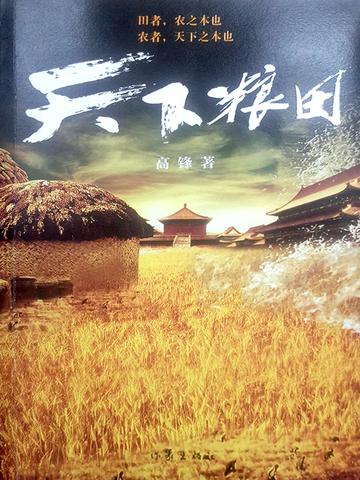




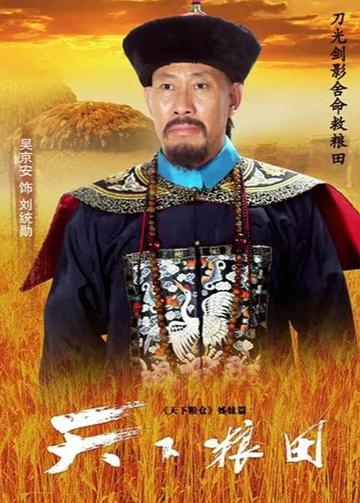
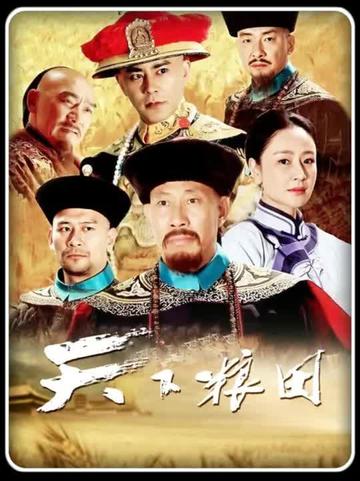
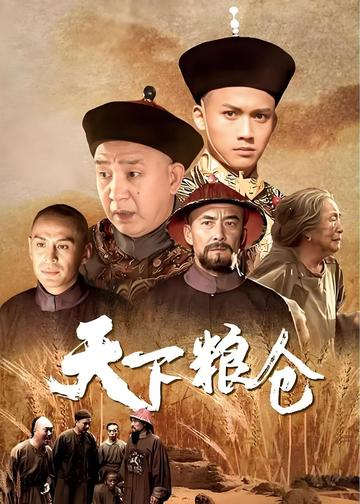
This book is a companion volume to "The Granary of the World", written by the famous screenwriter Gao Feng, who has been sharpening his sword for 12 years. The author writes in an elegant and concise style about a "Golden Palace Bird Inspection" in the eighth year of Qianlong's reign, which led to a huge case of avoiding disasters and greedy money, and exposed the unprecedented crisis in the grain fields and granaries of the Qing Dynasty. Liu Tongxun, who returned home due to illness, was ordered to go out and lead Gu Shan, Du Xiao and other newly appointed young officials to break out of the siege and implement Qianlong's policy of opening up wasteland and increasing farmland with his skull as a model. After two years of hard work, the grain fields were in danger and the country's economy gradually recovered.
Food is the most important thing for the people. Throughout the past dynasties, farmland and food have been the most concerned issues for rulers. It is related to the life and death of the people, the country's financial revenue and political stability. As a companion volume to the widely influential "The Granary of the World", this book tells the story of the struggle between a group of capable ministers headed by Liu Tongxun and corrupt officials over farmland issues. The No. 1 Document issued by our government every year for many years is related to the "three rural" issues. With the evolution of socialist modernization, the "three rural" issues have taken on new forms, and farmland problems are not uncommon. How to achieve a balance between the protection of farmland and urban development, and the maintenance of farmers' interests, among other goals, tests the wisdom of our government.
China used to be an agricultural country. The blood and sweat of those predecessors who opened up wasteland and cultivated the land have gradually accumulated into the current prosperous age. At that time, a group of officials were ordered to go to the wasteland, but the local officials turned out to be corrupt. The people lived in poverty and were displaced, triggering a food crisis. They worked hard to complete the great cause of reclamation, but excessive reclamation brought about ecological crisis. This book is of great significance to the modern world, advocating that we learn to master the balance of living with nature.
Run towards the good, and stop listening to unpleasant words. Unpleasant things will pass slowly, and cuteness will happen. I know that you are really working hard on the way to a better place, and don't forget to tell yourself that you have worked hard.
Ma Qimen was the governor of Zhejiang and at the same time in the capital. Can you change your name?
The book "The Grain Fields of the World" shocked me very much and made me very emotional. It tells us to cherish every grain of food, because it is the blood and sweat of farmers. Moreover, through this book, I also learned about some problems and challenges in history, and also learned how to uphold justice and fight against the forces of corruption. I think this book is not only educational, but also interesting and worth reading.
The book depicts capable ministers, such as Liu Tongxun, Sun Jiajin, Tie Gongnan, Gu Shan, etc., And treacherous ministers, such as Ne Qin, Pan Bazhi, etc., Fighting a desperate battle around the fertile land of the Qing Dynasty. The book will locate the Emperor Qianlong who finally turned things around. On the surface, the conclusion is that of Emperor Qianlong, but in fact it is the people who ultimately decide success or failure. However, a novel is a novel after all, and many details are not handled well, and some places are not rigorous. However, the flaws are not concealed. Today, when we attach great importance to basic farmland, I suggest that you read it and take a look at the introduction of good farmland policies in history.
Without Fu Heng, a relative of the emperor and the queen's brother, how could the Neqin party collapse?
Very exciting, majestic, well written, very worth reading
I like history books, good ones