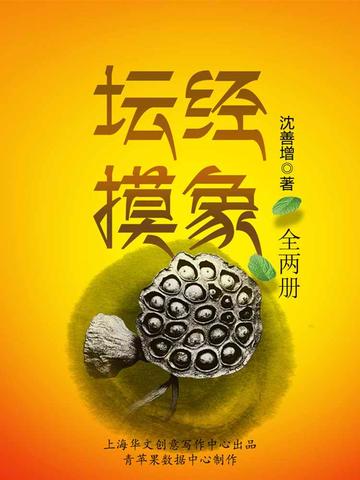
Only with a clear mind can one understand reason, and only with a clear mind can one see one's nature. This book takes a unique approach. It compares the Zongbao version of the "Tan Sutra" with the Dunhuang version paragraph by paragraph, and uses the method of close reading of the text to analyze it in detail. It reads out the "secret reasons" in the "Tan Sutra", goes straight to the "clarification", and writes the "Return to My Tan Sutra" in the true sense. It is Mr. Shen Shanzeng's monograph for his research on Buddhist scriptures. The whole book is divided into two volumes: the first volume contains enlightenment is the enlightenment of Buddha's knowledge, Buddha nature is the vitality, practice is non-attachment, the Sixth Patriarch's Dharma Treasure Altar Sutra, the first level of practice, the second level of prajna, etc.; The second volume contains the third level of questioning, the fourth level of concentration and wisdom, the fifth level of sitting meditation, the sixth level of confession, the seventh level of chance, and the eighth level of suddenness and gradualness.
Reader comments
I learned from this book that the Buddhist scriptures should be said to be the Tan Sutra of the Sixth Patriarch Huineng, which is in the history of Buddhism in China for more than two thousand years. The only text written in China that can be called a sutra, it expounds the profound meaning of Buddhism. The author of the text is Mr. Shen Shanzeng. He believes that the clear mind is the true Dharma body and wisdom and the true meaning of human life. Wisdom is the clear mind, which is called inner learning in Buddhism. Inner learning is inner clarity, and inner clarity is the clear mind. Therefore, only by knowing the mind can we understand the reason, and only by the clear mind can we see faith. The purpose of Buddhism has always been clearly taught to the world, and its influence continues to this day.
The author of this book repeatedly analyzes and discusses in depth based on the classics, integrates them, reveals the secrets, opens up wisdom, and makes clear the wishes of the heart. The publication of this book has an indelible value in the history of interpretation of Buddhist classics and the history of Buddhist cultural research in enlightening Buddhist knowledge. Because the Tantra Sutra is the only "sutra" spoken by Buddha Sakyamuni besides the Tripitaka, and it was written in China, it is of special significance to us Chinese at least. This book has taught me a lot about Buddhism, and it is a compass on our way to enlightenment.
The author's detailed analysis of Buddhist concepts and versions of the Tan Sutra, coupled with the author's unique perspective and insights, allow beginners to better understand and understand the thoughts of the Sixth Patriarch Huineng. To understand one's mind and see one's nature, to become a Buddha by seeing one's nature, is a process of practice. Only by practicing it yourself can you realize what Zen is. As the saying goes, there is a golden house in a book. Read more, realize more, and practice more... Thanks to the author, I have benefited a lot.
It is a very profound Buddhist book, and you really need a lot of courage to really read it. I read the part about Primary 1, but this book can make me feel that Buddhism, as one of the traditional religions, does have extremely rich heritage, and it is difficult for so many people today to choose to believe in Buddhism. For those who believe in Buddhism, this book may be a book worth reading, and it will definitely gain a lot from it!
If you are interested in Buddhism, want to learn more about Buddhism-related knowledge and works, and hope to use the knowledge of Buddhism to guide your life and help you solve problems, then I suggest you read this book. The book elaborates on the author's thoughts on the study of Buddhist scriptures. Only with a clear mind can one understand reason, and only with a clear mind can one see one's nature. Buddha nature is the vitality, and practice means not being attached to the form. Only by understanding the relevant knowledge of Buddhist scriptures in detail can we better understand their true connotation.
Many people in our country believe in Buddhism. This is a book that deeply explores Buddhist classics. Through the study and interpretation of classic texts, the author reveals the profound thoughts and teachings contained in them. This book is famous for its rigorous academic attitude and in-depth analysis. The author helps readers understand the connotation and application of Buddhist teachings through detailed annotations and explanations. If you are interested in Buddhist teachings and philosophical thinking, this book will provide you with valuable reference and inspiration.
I learned from this book that the Buddhist scriptures should be said to be the Tan Sutra of the Sixth Patriarch Huineng, which is in the history of Buddhism in China for more than two thousand years. The only text written in China that can be called a sutra, it expounds the profound meaning of Buddhism. The author of the text is Mr. Shen Shanzeng. He believes that the clear mind is the true Dharma body and wisdom and the true meaning of human life. Wisdom is the clear mind, which is called inner learning in Buddhism. Inner learning is inner clarity, and inner clarity is the clear mind. Therefore, only by knowing the mind can we understand the reason, and only by the clear mind can we see faith. The purpose of Buddhism has always been clearly taught to the world, and its influence continues to this day.
The author of this book repeatedly analyzes and discusses in depth based on the classics, integrates them, reveals the secrets, opens up wisdom, and makes clear the wishes of the heart. The publication of this book has an indelible value in the history of interpretation of Buddhist classics and the history of Buddhist cultural research in enlightening Buddhist knowledge. Because the Tantra Sutra is the only "sutra" spoken by Buddha Sakyamuni besides the Tripitaka, and it was written in China, it is of special significance to us Chinese at least. This book has taught me a lot about Buddhism, and it is a compass on our way to enlightenment.
The author's detailed analysis of Buddhist concepts and versions of the Tan Sutra, coupled with the author's unique perspective and insights, allow beginners to better understand and understand the thoughts of the Sixth Patriarch Huineng. To understand one's mind and see one's nature, to become a Buddha by seeing one's nature, is a process of practice. Only by practicing it yourself can you realize what Zen is. As the saying goes, there is a golden house in a book. Read more, realize more, and practice more... Thanks to the author, I have benefited a lot.
It is a very profound Buddhist book, and you really need a lot of courage to really read it. I read the part about Primary 1, but this book can make me feel that Buddhism, as one of the traditional religions, does have extremely rich heritage, and it is difficult for so many people today to choose to believe in Buddhism. For those who believe in Buddhism, this book may be a book worth reading, and it will definitely gain a lot from it!
If you are interested in Buddhism, want to learn more about Buddhism-related knowledge and works, and hope to use the knowledge of Buddhism to guide your life and help you solve problems, then I suggest you read this book. The book elaborates on the author's thoughts on the study of Buddhist scriptures. Only with a clear mind can one understand reason, and only with a clear mind can one see one's nature. Buddha nature is the vitality, and practice means not being attached to the form. Only by understanding the relevant knowledge of Buddhist scriptures in detail can we better understand their true connotation.
Many people in our country believe in Buddhism. This is a book that deeply explores Buddhist classics. Through the study and interpretation of classic texts, the author reveals the profound thoughts and teachings contained in them. This book is famous for its rigorous academic attitude and in-depth analysis. The author helps readers understand the connotation and application of Buddhist teachings through detailed annotations and explanations. If you are interested in Buddhist teachings and philosophical thinking, this book will provide you with valuable reference and inspiration.