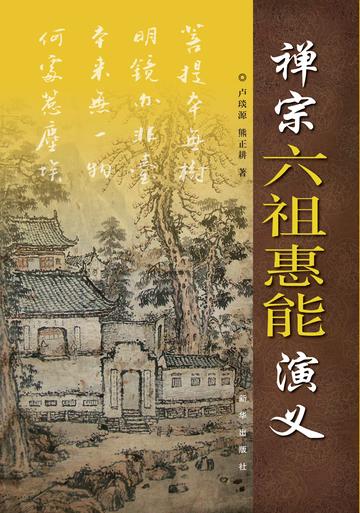
Huineng, whose common surname was Lu, was born on the eighth day of February in the twelfth year of Zhenguan in the Tang Dynasty (AD 638) in Xialu Village, Xinzhou, Lingnan. Huineng lost his father when he was three years old, and he lived with his mother selling firewood and had no chance to read or write. In the Tang Dynasty when Buddhism was prevalent, Huineng studied under Master Hongren, the abbot of Huangmei Dongshan Temple. During the visit to Master Hongren, the Fifth Patriarch, some questions and answers made Master Hongren look upon Huineng with admiration. Huineng's verse: "The bodhi tree has no tree, and the mirror is not a stand. There is nothing in the beginning, so how can it cause dust." It was specially appreciated by the fifth ancestor, Master Hongren, who secretly taught Huineng the Dharma, making him the sixth ancestor of Zen.
On the eighth day of the first lunar month of the first year of Yifeng in the Tang Dynasty (AD 676), Huineng came out of the mountains and came to Nanhai Faxing Temple. Master Yin Zong, the abbot of Faxing Temple, presided over the ceremony and ordained Huineng, officially establishing his status as the "Sixth Patriarch of Zen". From then on, Master Huineng, the Sixth Patriarch, began the great cause of spreading the Dharma and benefiting living beings, and trained thousands of outstanding disciples.
In the first year of Kaiyuan of the Tang Dynasty (713 AD), the Sixth Patriarch Huineng returned to his former residence Guoen Temple. He passed away on the third day of August and his true body returned to Baolin Temple in Caoxi. Later, Shenhui, a disciple of the Sixth Patriarch Huineng, went north to recruit disciples and teach the Dharma, and continued to carry forward the "Sudden Enlightenment" Zen method of the Southern Sect, forming the "One Flower and Five Leaves" Zen school, which eventually became the most influential and widely spread mainstream of Chinese Buddhism. Master Huineng, the Sixth Patriarch, is the true founder of Zen Buddhism in China.
Reader comments
Hui Neng, an eminent monk in the Tang Dynasty and the founder of the Southern School of Zen, is known as the Sixth Patriarch of Zen in the history of Buddhism. Huineng Neng's Zen thoughts can be found in the "Sixth Patriarch's Dharma Treasure Altar Sutra" (referred to as "The Tantra Sutra") written by his disciple Fahai. This sutra was later adapted by the Shenhui sect for a time as evidence for the inheritance of the lineage, so it was mixed with the theory of later rise. However, in general, it can be seen that Huineng advocated abandoning the literal meaning and understanding, and directly clarifying the source of the heart. He said that this state is "like a person drinking water, knowing whether it is cold or warm." He also said: The mind is vast, pervades the Dharma Realm, comes and goes freely, and the mind and body are not stagnant, which is Prajna. All prajna wisdom arises from one's own nature and does not come in from the outside.
Master Huineng is an important figure in Zen Buddhism, a local school of Buddhism in China. He is talented and has extraordinary understanding. He was established as one of the six groups of Zen early on. Later, through the joint efforts of him and his disciples, Zen gradually developed into a nationwide sect and has influenced China for thousands of years. As a biography of Zen Master Huineng, this book uses rich historical materials and Buddhist classics to show his legendary life, allowing readers to understand the growth experience and ideological ideas of this legendary important Buddhist figure, which is of great significance to the promotion of traditional Chinese culture.
Master Huineng, the Sixth Patriarch of Zen Buddhism, is one of the founders of Zen Buddhism and has a very profound influence on Buddhism. This book starts from his childhood and ends with his association with Buddhism. After reading this book, one can't help but sigh that he is indeed one of the classic figures of Buddhism. The author is very impressed by some of the clips: "Huineng knew that his weight was too light and he couldn't step on the hammer, so he found a piece of square stone from the back mountain, drilled a hole and put a rope on it, and tied it to his waist to help him step on the hammer. As time went by, For a long time, the boulders scratched the flesh, and maggots sprouted. Huineng let them eat, but he didn't care. He gritted his teeth and endured the pain, forgetting his body for the sake of the Dharma." This passage vividly describes Master Huineng's perseverance and perseverance. Overall, it is still highly recommended.
From this book, I learned that Huineng pursues knowledge, is not afraid of hardships, and uses his own practical actions to prove the boundlessness of Buddhism.
I feel very good. I like the Sixth Patriarch's Altar Sutra very much. When I read it for the first time, it was like a word that woke me up in a dream🙏Some things are innate. The Zen method of enlightenment is very good. Those who like Zen can learn and refer to it🙏Thanks to the author🙏
This book tells the legendary story of the life of Master Huineng, the sixth ancestor of Zen Buddhism. Master Huineng, the Sixth Patriarch of Zen Buddhism, is one of the famous masters of Buddhism. His thoughts still influence many believers of Buddhism and have spread to all parts of the world. He is known as the "real founder of Zen Buddhism in China". This book tells the story of Master Huineng's life experience based on the relevant legends that have been passed down to this day. Many small things in it reflect Master Huineng's sincerity, kindness, willingness to help others, strong will, and fearlessness of hardships. It contains many short stories and classic scenes of Buddhism.
See your true nature clearly and become a Buddha. The most important thing is to cultivate your mind and maximize your subjective initiative so that you can truthfully respond to objective situations without panicking.
This book has systematic and comprehensive content and detailed explanations. It is a work that systematically introduces the thoughts of Master Huineng, the sixth ancestor of Zen Buddhism. There are a total of forty-three chapters in the book. The author tells the readers about the life of Master Huineng. The language is easy to understand, and there is a thought-provoking philosophy hidden behind the simple language. If you feel anxious or confused due to heavy work and study pressure, this book is a good read to help you grasp the moment and gain peace in life.
The content of the work is colorful and full of positive energy. I like it very much!
The so-called "Zen tea is inseparable." Either recite a chapter of poetry, or drink a cup of tea; the body and mind are not connected, and it is as vast as an empty boat. Wealth also has sufferings, sufferings are in the heart and worries; poverty and lowliness also have happiness, happiness lies in freedom.
Heart! Good! Root! Enlightenment! Null! Not empty! Net! Realm of life!
I learned a lot from this book about the history of Zen Buddhism and the life of the Sixth Patriarch Huineng.
It is good to distribute more books like this, which can help more people have family ties. This way, they will be more ethical to society and their character will be greatly improved.
The meaning of some of these scriptures is unclear, but it does not affect the understanding of sudden enlightenment and Buddhahood. Worth reading.
I truly feel that the Chinese Buddha, the Sixth Patriarch Hui Neng, is in the world and is ministering to all sentient beings. This is really a good book worth reading again and again!
This article mainly tells the story of Huineng, the sixth ancestor of Zen Buddhism, who was born in a poor family and lived in poverty. He could only make a living by selling firewood and had no chance to learn and read. The Tang Dynasty was an era when Buddhism was prevalent. After that, Huineng went to Huangmei Mountain to find Master Hongren. Master Hongren felt that Huineng was talented and had a heart to convert to Buddhism, so he kept him by his side. After that, Huineng continued to study and founded the Zen school. He was the true founder of Zen in our country.
The Sixth Patriarch Hui Neng's Buddhist verses turned out to be enlightening under such circumstances. His state of mind in dealing with the world at this age is so transparent. His body and actions are united in pursuit of the Buddha's nature. His tenacity is amazing, and there is only admiration and admiration in his heart!
A very good book on self-cultivation and spiritual cultivation. It taught me a lot about how to treat people and things.
An absolute classic
Sincere tribute: Master Huineng, the Sixth Patriarch of Namo
The first sutra of Chinese Buddhism.
Amitabha. I am grateful to Master Huineng, the Sixth Patriarch of Namo, I am grateful to the author, and I am grateful for the merits.
Benefited a lot. Be grateful. Amitabha!
I am very grateful to the author for allowing me to read the legendary story of the Sixth Patriarch Huineng. I hope I can see my true nature as soon as possible.
Buddhist scriptures, relic lamps with vast snow shadows, and golden scriptures to ask eminent monks.
Listening to this book calms my soul and makes me feel very happy. It helps me to open up my narrow-minded thinking.
Without practicing the traces or entering into the family, developing the past culture and recounting the works of the ancestors is a new achievement and a new culture. This is well done
The life of the Sixth Patriarch is vividly written and worth reading.
Reading Zen Sutras of the Sixth Patriarch Can Enlighten Wisdom



Hui Neng, an eminent monk in the Tang Dynasty and the founder of the Southern School of Zen, is known as the Sixth Patriarch of Zen in the history of Buddhism. Huineng Neng's Zen thoughts can be found in the "Sixth Patriarch's Dharma Treasure Altar Sutra" (referred to as "The Tantra Sutra") written by his disciple Fahai. This sutra was later adapted by the Shenhui sect for a time as evidence for the inheritance of the lineage, so it was mixed with the theory of later rise. However, in general, it can be seen that Huineng advocated abandoning the literal meaning and understanding, and directly clarifying the source of the heart. He said that this state is "like a person drinking water, knowing whether it is cold or warm." He also said: The mind is vast, pervades the Dharma Realm, comes and goes freely, and the mind and body are not stagnant, which is Prajna. All prajna wisdom arises from one's own nature and does not come in from the outside.
Master Huineng is an important figure in Zen Buddhism, a local school of Buddhism in China. He is talented and has extraordinary understanding. He was established as one of the six groups of Zen early on. Later, through the joint efforts of him and his disciples, Zen gradually developed into a nationwide sect and has influenced China for thousands of years. As a biography of Zen Master Huineng, this book uses rich historical materials and Buddhist classics to show his legendary life, allowing readers to understand the growth experience and ideological ideas of this legendary important Buddhist figure, which is of great significance to the promotion of traditional Chinese culture.
Master Huineng, the Sixth Patriarch of Zen Buddhism, is one of the founders of Zen Buddhism and has a very profound influence on Buddhism. This book starts from his childhood and ends with his association with Buddhism. After reading this book, one can't help but sigh that he is indeed one of the classic figures of Buddhism. The author is very impressed by some of the clips: "Huineng knew that his weight was too light and he couldn't step on the hammer, so he found a piece of square stone from the back mountain, drilled a hole and put a rope on it, and tied it to his waist to help him step on the hammer. As time went by, For a long time, the boulders scratched the flesh, and maggots sprouted. Huineng let them eat, but he didn't care. He gritted his teeth and endured the pain, forgetting his body for the sake of the Dharma." This passage vividly describes Master Huineng's perseverance and perseverance. Overall, it is still highly recommended.
From this book, I learned that Huineng pursues knowledge, is not afraid of hardships, and uses his own practical actions to prove the boundlessness of Buddhism.
I feel very good. I like the Sixth Patriarch's Altar Sutra very much. When I read it for the first time, it was like a word that woke me up in a dream🙏Some things are innate. The Zen method of enlightenment is very good. Those who like Zen can learn and refer to it🙏Thanks to the author🙏
This book tells the legendary story of the life of Master Huineng, the sixth ancestor of Zen Buddhism. Master Huineng, the Sixth Patriarch of Zen Buddhism, is one of the famous masters of Buddhism. His thoughts still influence many believers of Buddhism and have spread to all parts of the world. He is known as the "real founder of Zen Buddhism in China". This book tells the story of Master Huineng's life experience based on the relevant legends that have been passed down to this day. Many small things in it reflect Master Huineng's sincerity, kindness, willingness to help others, strong will, and fearlessness of hardships. It contains many short stories and classic scenes of Buddhism.
See your true nature clearly and become a Buddha. The most important thing is to cultivate your mind and maximize your subjective initiative so that you can truthfully respond to objective situations without panicking.
This book has systematic and comprehensive content and detailed explanations. It is a work that systematically introduces the thoughts of Master Huineng, the sixth ancestor of Zen Buddhism. There are a total of forty-three chapters in the book. The author tells the readers about the life of Master Huineng. The language is easy to understand, and there is a thought-provoking philosophy hidden behind the simple language. If you feel anxious or confused due to heavy work and study pressure, this book is a good read to help you grasp the moment and gain peace in life.
The content of the work is colorful and full of positive energy. I like it very much!
The so-called "Zen tea is inseparable." Either recite a chapter of poetry, or drink a cup of tea; the body and mind are not connected, and it is as vast as an empty boat. Wealth also has sufferings, sufferings are in the heart and worries; poverty and lowliness also have happiness, happiness lies in freedom.
Heart! Good! Root! Enlightenment! Null! Not empty! Net! Realm of life!
I learned a lot from this book about the history of Zen Buddhism and the life of the Sixth Patriarch Huineng.
It is good to distribute more books like this, which can help more people have family ties. This way, they will be more ethical to society and their character will be greatly improved.
The meaning of some of these scriptures is unclear, but it does not affect the understanding of sudden enlightenment and Buddhahood. Worth reading.
I truly feel that the Chinese Buddha, the Sixth Patriarch Hui Neng, is in the world and is ministering to all sentient beings. This is really a good book worth reading again and again!
This article mainly tells the story of Huineng, the sixth ancestor of Zen Buddhism, who was born in a poor family and lived in poverty. He could only make a living by selling firewood and had no chance to learn and read. The Tang Dynasty was an era when Buddhism was prevalent. After that, Huineng went to Huangmei Mountain to find Master Hongren. Master Hongren felt that Huineng was talented and had a heart to convert to Buddhism, so he kept him by his side. After that, Huineng continued to study and founded the Zen school. He was the true founder of Zen in our country.
The Sixth Patriarch Hui Neng's Buddhist verses turned out to be enlightening under such circumstances. His state of mind in dealing with the world at this age is so transparent. His body and actions are united in pursuit of the Buddha's nature. His tenacity is amazing, and there is only admiration and admiration in his heart!
A very good book on self-cultivation and spiritual cultivation. It taught me a lot about how to treat people and things.
An absolute classic
Sincere tribute: Master Huineng, the Sixth Patriarch of Namo The first sutra of Chinese Buddhism.
Amitabha. I am grateful to Master Huineng, the Sixth Patriarch of Namo, I am grateful to the author, and I am grateful for the merits.
Benefited a lot. Be grateful. Amitabha!
I am very grateful to the author for allowing me to read the legendary story of the Sixth Patriarch Huineng. I hope I can see my true nature as soon as possible.
Buddhist scriptures, relic lamps with vast snow shadows, and golden scriptures to ask eminent monks.
Listening to this book calms my soul and makes me feel very happy. It helps me to open up my narrow-minded thinking.
Without practicing the traces or entering into the family, developing the past culture and recounting the works of the ancestors is a new achievement and a new culture. This is well done
The life of the Sixth Patriarch is vividly written and worth reading.
Reading Zen Sutras of the Sixth Patriarch Can Enlighten Wisdom
Very cool! Super pretty
Amitabha Amitabha Amitabha