The author Ian Kershaw uses ten chapters to examine ten interrelated political decisions with huge military implications made by six major countries including the United Kingdom, the United States, the Soviet Union, Germany, Italy and Japan during World War II from May 1940 to December 1941. From Britain's decision to persist in fighting Germany, to Germany's decision to declare war on the United States after Pearl Harbor, to Hitler's decision to exterminate the Jews on the European continent, these decisions transformed two separate wars on the Eurasian continent into a truly global conflict. Although at the end of 1941, the war was still in progress for more than three years, the outcome of World War II was already determined at this time.
Any decision-making is subject to a series of conditions. The political system, decision-making mechanism, ideology, the intelligence information available to decision-makers, domestic public opinion, the international environment, the reason and emotions of decision-makers... These all affected the formation process of these decisions in "World War II". The author fully analyzes the role and influence of these factors in these ten decisions, trying to restore to readers the invisible smoke outside the battlefield at that time. But historical development is not inevitable. The author also specifically analyzes other alternatives that have been abandoned by policymakers, and reasonably speculates on the possible consequences of choosing these alternatives. The analysis of the process by which these alternatives were abandoned highlights the logic behind decision-makers making these fateful choices.
Reader comments
From 1940 to 1941, the situation in World War II changed drastically. After Hitler defeated France, he immediately formulated the "Sea Lion Plan" to bombard London. Churchill chose to resist Germany toughly amidst the artillery fire. The Battle of Britain ended with Germany's defeat. However, Germany's appetite did not shrink because of this. In his eyes, he could no longer tolerate the land on the American continent as a paradise, so Hitler planned to declare war on the United States. At the same time Hitler began to massacre the Jews and planned an attack on the Soviet Union. Hitler was very arrogant this year and made a series of plans. This book is a very thoughtful book. It combines the Eastern and Western battlefields of World War II in this year and analyzes the impact of various decisions. It is very interesting. Of course, history is not accidental. Every decision is affected by the situation at that time, and it affects the whole body. It is a very good book and is worth collecting.
Countries in the world do not develop alone, but rely on each other and connect with each other to form a community with a shared future and develop and progress together. Whether now or historically, we are important forces that influence each other's survival. This book takes the critical period from 1940 to 1941 as the background and provides a detailed analysis of ten decisions that affected the direction of world history. The book first introduces Nazi Germany's Blitzkrieg strategy and Hitler's expansion ambitions, as well as the difficulties faced by the Allied countries that confronted them. Then, the author unfolds the story of these ten important decisions one by one, including Churchill's brave decision-making, Roosevelt's intervention diplomacy, Stalin's prudent strategy, etc.
Choice is such a rare thing. There is often no perfect solution in the world. The author examines ten interrelated political decisions with huge military implications made by six major countries during World War II between May 1940 and December 1941. These decisions transformed two separate wars in Eurasia into a truly global conflict. The rationality and emotions of decision-makers all affected the formation process of these decisions in "World War II". Trying to restore to readers the invisible smoke outside the battlefield at that time. Very nice!
Choice is such a rare thing. There is often no perfect solution in the world. The author examines ten interrelated political decisions with huge military implications made by six major countries during World War II between May 1940 and December 1941. These decisions transformed two separate wars in Eurasia into a truly global conflict. The rationality and emotions of decision-makers all affected the formation process of these decisions in "World War II". Trying to restore to readers the invisible smoke outside the battlefield at that time. Very nice!
What are these ten decisions? For the time being, the world has actually undergone earth-shaking changes in the time period when the author selected the subject, that is, 1940-1941. The two warring parties in World War II were fighting fiercely. It was originally a local conflict in Eurasia precisely because the ten decisions in it spread to the entire world. History is like this, and an idea sometimes completely changes the direction of progress; for readers who are interested in war history, geopolitics, and biographies, this book is the best choice.
From 1940 to 1941, the situation in World War II changed drastically. After Hitler defeated France, he immediately formulated the "Sea Lion Plan" to bombard London. Churchill chose to resist Germany toughly amidst the artillery fire. The Battle of Britain ended with Germany's defeat. However, Germany's appetite did not shrink because of this. In his eyes, he could no longer tolerate the land on the American continent as a paradise, so Hitler planned to declare war on the United States. At the same time Hitler began to massacre the Jews and planned an attack on the Soviet Union. Hitler was very arrogant this year and made a series of plans. This book is a very thoughtful book. It combines the Eastern and Western battlefields of World War II in this year and analyzes the impact of various decisions. It is very interesting. Of course, history is not accidental. Every decision is affected by the situation at that time, and it affects the whole body. It is a very good book and is worth collecting.
"Evening Standard" commented that this is a wonderful historical reconstruction. There are also writers who say it really changed the way we think about World War II. My feeling after reading it was the same as above, as if I had experienced it myself. The author used ten chapters to show the interrelated political decisions of many countries at that time. Through this correlation, I understood the causes and consequences of many events, as well as the strategic decisions on the battlefield. This was another perspective on World War II that inspired me.
A very recommended book. This book starts from a tiny time slice from 1940 to 1941, focusing on the events that happened in these two years. If you read too much history, it is easy to only remember a few big events, and forget that historical events never occur in isolation, and the relationship between them urgently needs to be explored. Kershaw's book focuses on ten decisions over two years. This book helped me connect the dots of historical events and help me understand how World War II unfolded.
The content of this book is so exciting! It details the stories behind some of the key decisions made during World War II and gave me a deeper understanding of that history. I particularly hate those war madmen whose decisions have led to the suffering of countless people. The author's writing style is very clear and the writing style is very vivid, which made it very enjoyable for me to read. I think this book is a good book worth reading for people who like history.
A very recommended book. This book starts from a tiny time slice from 1940 to 1941, focusing on the events that happened in these two years. If you read too much history, it is easy to only remember a few big events, and forget that historical events never occur in isolation, and the relationship between them urgently needs to be explored. Kershaw's book focuses on ten decisions over two years. This book helped me connect the dots of historical events and help me understand how World War II unfolded.
Analyzing from many aspects, we can see the decisions that affected the direction of the world this year.
Very nice! The author states the historical facts objectively and in detail, which is worth reading.
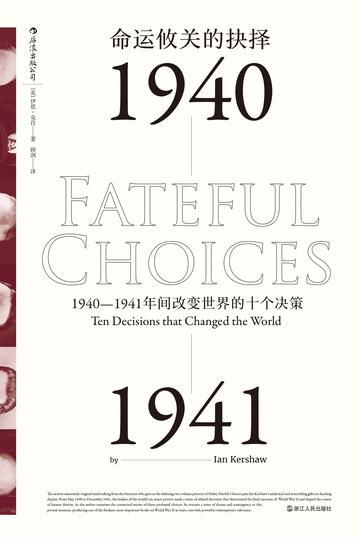

From 1940 to 1941, the situation in World War II changed drastically. After Hitler defeated France, he immediately formulated the "Sea Lion Plan" to bombard London. Churchill chose to resist Germany toughly amidst the artillery fire. The Battle of Britain ended with Germany's defeat. However, Germany's appetite did not shrink because of this. In his eyes, he could no longer tolerate the land on the American continent as a paradise, so Hitler planned to declare war on the United States. At the same time Hitler began to massacre the Jews and planned an attack on the Soviet Union. Hitler was very arrogant this year and made a series of plans. This book is a very thoughtful book. It combines the Eastern and Western battlefields of World War II in this year and analyzes the impact of various decisions. It is very interesting. Of course, history is not accidental. Every decision is affected by the situation at that time, and it affects the whole body. It is a very good book and is worth collecting.
Countries in the world do not develop alone, but rely on each other and connect with each other to form a community with a shared future and develop and progress together. Whether now or historically, we are important forces that influence each other's survival. This book takes the critical period from 1940 to 1941 as the background and provides a detailed analysis of ten decisions that affected the direction of world history. The book first introduces Nazi Germany's Blitzkrieg strategy and Hitler's expansion ambitions, as well as the difficulties faced by the Allied countries that confronted them. Then, the author unfolds the story of these ten important decisions one by one, including Churchill's brave decision-making, Roosevelt's intervention diplomacy, Stalin's prudent strategy, etc.
Choice is such a rare thing. There is often no perfect solution in the world. The author examines ten interrelated political decisions with huge military implications made by six major countries during World War II between May 1940 and December 1941. These decisions transformed two separate wars in Eurasia into a truly global conflict. The rationality and emotions of decision-makers all affected the formation process of these decisions in "World War II". Trying to restore to readers the invisible smoke outside the battlefield at that time. Very nice!
Choice is such a rare thing. There is often no perfect solution in the world. The author examines ten interrelated political decisions with huge military implications made by six major countries during World War II between May 1940 and December 1941. These decisions transformed two separate wars in Eurasia into a truly global conflict. The rationality and emotions of decision-makers all affected the formation process of these decisions in "World War II". Trying to restore to readers the invisible smoke outside the battlefield at that time. Very nice!
What are these ten decisions? For the time being, the world has actually undergone earth-shaking changes in the time period when the author selected the subject, that is, 1940-1941. The two warring parties in World War II were fighting fiercely. It was originally a local conflict in Eurasia precisely because the ten decisions in it spread to the entire world. History is like this, and an idea sometimes completely changes the direction of progress; for readers who are interested in war history, geopolitics, and biographies, this book is the best choice.
From 1940 to 1941, the situation in World War II changed drastically. After Hitler defeated France, he immediately formulated the "Sea Lion Plan" to bombard London. Churchill chose to resist Germany toughly amidst the artillery fire. The Battle of Britain ended with Germany's defeat. However, Germany's appetite did not shrink because of this. In his eyes, he could no longer tolerate the land on the American continent as a paradise, so Hitler planned to declare war on the United States. At the same time Hitler began to massacre the Jews and planned an attack on the Soviet Union. Hitler was very arrogant this year and made a series of plans. This book is a very thoughtful book. It combines the Eastern and Western battlefields of World War II in this year and analyzes the impact of various decisions. It is very interesting. Of course, history is not accidental. Every decision is affected by the situation at that time, and it affects the whole body. It is a very good book and is worth collecting.
"Evening Standard" commented that this is a wonderful historical reconstruction. There are also writers who say it really changed the way we think about World War II. My feeling after reading it was the same as above, as if I had experienced it myself. The author used ten chapters to show the interrelated political decisions of many countries at that time. Through this correlation, I understood the causes and consequences of many events, as well as the strategic decisions on the battlefield. This was another perspective on World War II that inspired me.
A very recommended book. This book starts from a tiny time slice from 1940 to 1941, focusing on the events that happened in these two years. If you read too much history, it is easy to only remember a few big events, and forget that historical events never occur in isolation, and the relationship between them urgently needs to be explored. Kershaw's book focuses on ten decisions over two years. This book helped me connect the dots of historical events and help me understand how World War II unfolded.
The content of this book is so exciting! It details the stories behind some of the key decisions made during World War II and gave me a deeper understanding of that history. I particularly hate those war madmen whose decisions have led to the suffering of countless people. The author's writing style is very clear and the writing style is very vivid, which made it very enjoyable for me to read. I think this book is a good book worth reading for people who like history.
A very recommended book. This book starts from a tiny time slice from 1940 to 1941, focusing on the events that happened in these two years. If you read too much history, it is easy to only remember a few big events, and forget that historical events never occur in isolation, and the relationship between them urgently needs to be explored. Kershaw's book focuses on ten decisions over two years. This book helped me connect the dots of historical events and help me understand how World War II unfolded.
Analyzing from many aspects, we can see the decisions that affected the direction of the world this year.
Very nice! The author states the historical facts objectively and in detail, which is worth reading.