This book mainly explores the ethical dilemmas faced by people in ancient times, including some fascinating questions. Which should come first, family ties or the law? Should the law be made public to the entire society? Should rebels from the enemy camp be welcomed with open arms? Are all wars of aggression unjust? When the stakes are high enough, is betraying one's principles for personal gain the only morally acceptable choice?
With a modern perspective informed by knowledge of both East and West, past and present, the book reflects on ancient Chinese society. Its narrative is fluent and natural, drawing on a wealth of sources while getting straight to the heart of its ideas without becoming difficult to understand. Even the most ordinary reader can follow the book, tracing clues through its witty prose, discovering keen insights, and savoring the pleasures of wisdom and debate.
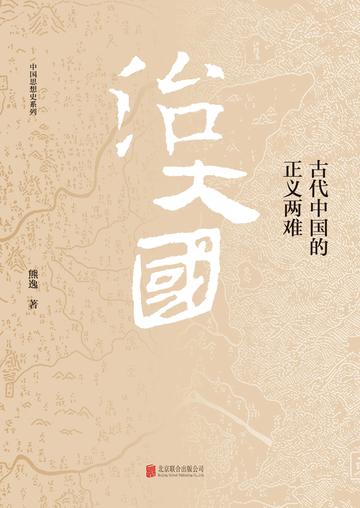

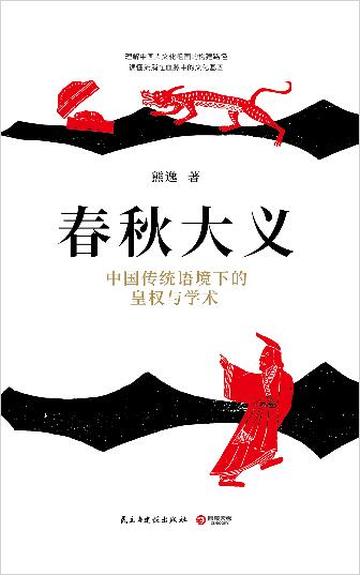
This book is the first part of the author's conceptual history series, which mainly explores the ancient people's complex, clear or vague understanding of the issue of justice. Different from the history of ideas that focuses on major thinkers and ideological masterpieces, the author's so-called history of ideas focuses on various popular social concepts or social trends of thought. This book mainly discusses the ethical dilemmas faced by the ancients, such as which comes first between family affection and national law; whether everyone should be equal before the law; when the interests are large enough, whether the only moral choice is to ignore one's duty for profit...
This book let me know: As early as two thousand years ago, Plato discussed the issue of justice and believed that the borders of a country are the borders of justice. This concept has been controversial in the Western world for more than two thousand years, until history enters modern times. One of the peculiarities of modernity is that the boundaries of justice transcend the borders of the state. By this standard, many modern people are actually ancient people, but ancient Confucians are modern people - they advocate punishing the people and punishing crimes, and believe that invading evil countries is not only a good deed, but also an obligation that benevolent people must fulfill. Legalists also support aggression, but from a different starting point. Legalists regard aggression as a necessary behavior to detoxify and nourish the country. They believe that there will always be some toxins gradually accumulated in a country. Without aggression, these toxins cannot be discharged. As for who fired the first shot, it didn't matter to them.
Governing a big country is like cooking a small dish; the emperors of ancient China had absolute power, but it was not easy to be praised as a virtuous person and be supported by all generations. This book records the moral dilemmas of royal power that appeared in ancient times; such as Shun's trade-off between family affection and national law; or The latter is that the deontological principles of Wei Prime Minister in military struggles also reflect the moral beliefs of Confucianists. Of course you can find these clauses in the Four Books and Five Classics, but there is such a historical treatise with sharp arguments and rich arguments. Why not open it first and take a look?
This book let me know: As early as two thousand years ago, Plato discussed the issue of justice and believed that the borders of a country are the borders of justice. This concept has been controversial in the Western world for more than two thousand years, until history enters modern times. One of the peculiarities of modernity is that the boundaries of justice transcend the borders of the state. By this standard, many modern people are actually ancient people, but ancient Confucians are modern people - they advocate punishing the people and punishing crimes, and believe that invading evil countries is not only a good deed, but also an obligation that benevolent people must fulfill. Legalists also support aggression, but from a different starting point. Legalists regard aggression as a necessary behavior to detoxify and nourish the country. They believe that there will always be some toxins gradually accumulated in a country. Without aggression, these toxins cannot be discharged. As for who fired the first shot, it didn't matter to them.
I originally thought it was an academic monograph discussing serious issues, but after opening it, I found that it was not obscure at all. It talks about some very real dilemmas, such as which comes first between family ties and national laws, whether legal provisions should be made public to the whole society, whether insurgents in the enemy camp should be warmly accepted by us, whether all aggressive wars are unjust, and when the interests are large enough, whether self-interest is the only moral choice. These questions are very interesting, and the book also gives the pros and cons views, which is very inspiring.
The ethical dilemmas mentioned in this book reminded me of some of my own confusions after becoming a mother. For example, when educating children, should we pay more attention to strict requirements, or should we give more freedom and care? The ideas in the book gave me some inspiration and let me understand the trade-offs and choices I need to make in different situations. The content of this book is profound and simple, even people like me who don't have much academic background can easily understand it. It's really good!