Stats
9.2Score
12Chapters
Tags
Synopsis
Reader comments
In booklists 2





Are There Any Addictive Novels♀
I really like reading novels where the male protagonist has a lot of breasts.
73.5MViews644Books2dUpdated



Begging for Western Religions
It doesn't matter what gender or what the protagonist is, but he must be a fanatical believer who is willing to sacrifice everything, preferably a leader. There is a feeling of crazy beliefs and dark impulses hidden under the surface calmness.
1.7MViews164Books7dUpdated
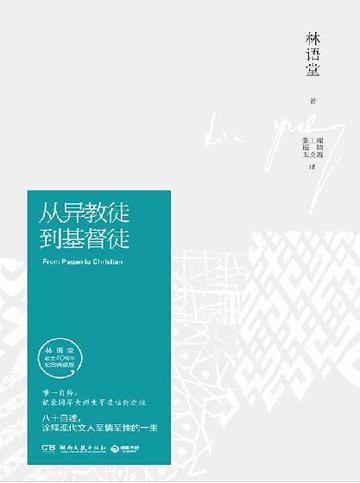
While reading this book, I couldn't help but compare it with another autobiography of Lin Yutang. Even if they have the same life experience, the perceptions of life in the autobiographies of those in their forties and those in their eighties are different. Especially in comparison, we can see what changes have occurred in Lin Yutang's concept of life. Does he still persist in what he has always insisted on, and what he has abandoned? What is particularly interesting is that Lin Yutang's father was a priest, and he received Christian culture since he was a child. After he became an adult, he was exposed to many other religious cultures, including Confucianism, Buddhism and Taoism. In the end, he returned to Christian culture, which fits the book "From Pagan to Christian". I have to say whether this is an accident or a necessity.
Lin Yutang wrote in the preface of the book: This book is not written for those who have no time to discuss religion and will never join the pursuit of religion, because this book will not arouse their interest. Nor is this book written for the self-sufficient Christian who is completely satisfied with what he knows, who feels he has something to rely on, who never has any doubts. I have no sympathy with those who believe they have a seat in heaven. I only speak to those who ask "where are we going on this trip?" I am speaking to those who, in order to have peace of mind during the voyage, think that they must first look at the odometer and find out the correct latitude and longitude.
This is the journey of seeking advice from Lin Yutang, a master of traditional Chinese culture. It records the transformation of his own religious beliefs, from initially believing in other religions or atheism to accepting Christian beliefs. For converts from pagans to Christians, they usually need to accept the basic tenets and doctrines of Christianity, undergo baptism, and attend church services. In addition, they also need to gradually integrate into the Christian community to establish connections with other believers and share experiences of growing in their faith. Lin Yutang also recorded his conversion experience in the book.
In this book, Confucianism, Taoism, Buddhism and materialism are analyzed, and Lin Yutang's insights on different religious cultures are also added. Lin Yutang talks about the relationship between reason and religion, Buddhism, and Plato. After constant doubts, denials, twists and turns, fog, and being lost in pain, the Christianity he finally found became his faith. Lin Yutang received Western education when he was growing up. After being exposed to a large number of traditional works, he found Christianity as his own faith. The changes in Lin Yutang's faith journey are also explained in this book his unique perspective on issues. It is a good book.
This is a summary of the author's own experience, what he sees and feels in the process of exploration and faith. Different from the forms of gifting or buying and selling that require money, the author believes that the best way to "get religion" is to walk through its path. Because faith does not involve any external environment, it is a very pure dialogue between oneself and God from beginning to end. It is an inner thought, not a gift. In the process of reading this work, I gradually entered the author's heart and realized the purity of faith and the powerful spiritual power that faith gives people.
People's thoughts will continue to change with changes in personal experience. Mr. Lin Yutang's early experience of understanding and admiring Confucianism, Buddhism and Taoism, and his later experience of believing in Christianity, these experiences together formed his understanding of different spiritual thoughts and the path to change in his personal concepts. From Mr. Lin Yutang's understanding of Christian teachings in the book, it can be seen that he has added the Confucianism of the Chinese people and has his own views, and does not fully admire Western Christian teachings. Regarding religion, I personally believe that it is actually the sustenance of human beings' own spirituality, so even within the general framework of doctrine, everyone will still have their own opinions.
Okay, this is my first time listening to this book