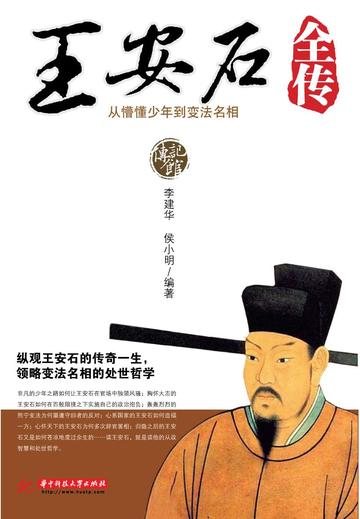
Wang Anshi, with his extraordinary talent and courage, was ordered to turn the tide when the Northern Song Dynasty was in decline, and launched a vigorous Xining Reform. Wang Anshi undoubtedly violently attacked traditional feudal ideas and systems. His series of measures such as rectifying the imperial court and consolidating border defenses also gave the Northern Song Dynasty a brief period of vitality. From this point of view, his achievements are indelible. How did Wang Anshi's extraordinary journey as a young man make him successful, and how did he, who was born as a commoner, take the lead in the officialdom and carry out reforms? After experiencing the failure of the political reform and the pain of losing his son, how did he devote himself to Buddhism to soothe his pain?
Reader comments
After reading this book, I am full of respect for Wang Anshi. How can there be such a selfless and noble person in this world? This cannot be learned no matter how hard I study. He was well-read in poetry and books, had great talents, and had the belief to lead the emperors Yao and Shun. He is dedicated to public service and does not seek fame, wealth or enjoyment. Fortunately, after meeting Song Shenzong, the emperor and his ministers trusted each other and worked together to reform. Although "Wang Anshi's Reform" is not perfect, it is very forward-looking. With the purpose of developing production, enriching the country and strengthening the army to save the Song Dynasty from crisis, it centered on "financial management" and "reorganization of the army" and involved all aspects of politics, economy, military, society, culture and thought. He worked hard and paid a lot for these reforms, but he inevitably violated the interests of vested interests.
Wang Anshi lived in a special era in China. China was transforming from a feudal agricultural civilization to a scientific and technological system civilization. Wang Anshi saw the possibility that China could become a country with institutions, new culture and new technologies. He tried to push China in this new direction. Focusing on the goal of enriching the country and strengthening the army, he reformed laws and established systems. His reform method has the spirit of three inadequacies: "There is no fear of changes in nature, no law of ancestors, and no sympathy for people's words." He was the first person to propose that "people's words are not enough for compassion."
This is a biographical work that vividly displays Wang Anshi's life experience and thoughts. Through rhetorical techniques such as metaphor and parallelism, the author brings readers into that turbulent era and deeply explores Wang Anshi's thoughts and contributions. This book is like a picture scroll, describing Wang Anshi's life in detail. Through accurate descriptions and real scenes, the author outlines Wang Anshi's image as an important politician and thinker. His reform ideas and reform measures had a profound impact on the society at that time. As the book says: "Wang Anshi is a thinker and doer who has worked hard for the prosperity of the country and the well-being of the people throughout his life."
"Between Jingkou and Guazhou, Zhongshan is only separated by several mountains." People who grew up in Nanjing naturally love and hate Wang Anshi. This famous fellow in history not only added glory to his hometown, but he was also the murderer who destroyed the surface of Xuanwu Lake. Wang Anshi was determined to reform and was committed to rectifying all aspects of the weak Song Dynasty system in order to achieve the resurgence of the Zhao family's rule. However, due to the failure to properly handle conflicts in all aspects, especially the resistance from conservative groups, the reform ultimately failed. In addition, Wang Anshi is also a famous poet and thinker in ancient times. This book contains detailed information and smooth writing. It is a must-read biography of Wang Anshi.
Wang Anshi lived in a special era in China. China was transforming from a feudal agricultural civilization to a scientific and technological system civilization. Wang Anshi saw the possibility that China could become a country with institutions, new culture and new technologies. He tried to push China in this new direction. Focusing on the goal of enriching the country and strengthening the army, he reformed laws and established systems. His reform method has the spirit of three inadequacies: "There is no fear of changes in nature, no law of ancestors, and no sympathy for people's words." He was the first person to propose that "people's words are not enough for compassion."
This book gave me a deeper understanding of Wang Anshi. He stepped forward to carry out reforms when the Northern Song Dynasty was in decline. He was really courageous! Moreover, the author wrote about Wang Anshi's life in great detail, which made me seem to see all the things he experienced. I think I should be like Wang Anshi, bravely face difficulties and work hard to achieve my goals💪.
As a great reform pioneer in the eleventh century, although he failed, he left a mark in history. Compared with Wang Anshi's achievements in other areas, because he has memorized poems since he was a child, he is more familiar with his name as the Eight Great Masters of the Tang and Song Dynasties. It is difficult to carry out the reform of a dynasty by oneself. You have never seen how many people have been involved in it throughout the ages. Change, if you want to change, you will change. Once the interests of those at the top are touched, all those who benefit will be your stumbling block. For people in the court, they are accustomed to the old ideas and think that is right. This is a belief they have adhered to for decades. It is extremely difficult to change, so the reform will eventually fail.
I love Wang Anshi. He is courageous, knowledgeable, talented and capable.
This is a biographical work that vividly displays Wang Anshi's life experience and thoughts. Through rhetorical techniques such as metaphor and parallelism, the author brings readers into that turbulent era and deeply explores Wang Anshi's thoughts and contributions. This book is like a picture scroll, describing Wang Anshi's life in detail. Through accurate descriptions and real scenes, the author outlines Wang Anshi's image as an important politician and thinker. His reform ideas and reform measures had a profound impact on the society at that time. As the book says: "Wang Anshi is a thinker and doer who has worked hard for the prosperity of the country and the well-being of the people throughout his life."
Good! Very historical price.
The content is very colorful
You can read it several times!
Basically consistent with historical facts, the characters are vividly portrayed.


After reading this book, I am full of respect for Wang Anshi. How can there be such a selfless and noble person in this world? This cannot be learned no matter how hard I study. He was well-read in poetry and books, had great talents, and had the belief to lead the emperors Yao and Shun. He is dedicated to public service and does not seek fame, wealth or enjoyment. Fortunately, after meeting Song Shenzong, the emperor and his ministers trusted each other and worked together to reform. Although "Wang Anshi's Reform" is not perfect, it is very forward-looking. With the purpose of developing production, enriching the country and strengthening the army to save the Song Dynasty from crisis, it centered on "financial management" and "reorganization of the army" and involved all aspects of politics, economy, military, society, culture and thought. He worked hard and paid a lot for these reforms, but he inevitably violated the interests of vested interests.
Wang Anshi lived in a special era in China. China was transforming from a feudal agricultural civilization to a scientific and technological system civilization. Wang Anshi saw the possibility that China could become a country with institutions, new culture and new technologies. He tried to push China in this new direction. Focusing on the goal of enriching the country and strengthening the army, he reformed laws and established systems. His reform method has the spirit of three inadequacies: "There is no fear of changes in nature, no law of ancestors, and no sympathy for people's words." He was the first person to propose that "people's words are not enough for compassion."
This is a biographical work that vividly displays Wang Anshi's life experience and thoughts. Through rhetorical techniques such as metaphor and parallelism, the author brings readers into that turbulent era and deeply explores Wang Anshi's thoughts and contributions. This book is like a picture scroll, describing Wang Anshi's life in detail. Through accurate descriptions and real scenes, the author outlines Wang Anshi's image as an important politician and thinker. His reform ideas and reform measures had a profound impact on the society at that time. As the book says: "Wang Anshi is a thinker and doer who has worked hard for the prosperity of the country and the well-being of the people throughout his life."
"Between Jingkou and Guazhou, Zhongshan is only separated by several mountains." People who grew up in Nanjing naturally love and hate Wang Anshi. This famous fellow in history not only added glory to his hometown, but he was also the murderer who destroyed the surface of Xuanwu Lake. Wang Anshi was determined to reform and was committed to rectifying all aspects of the weak Song Dynasty system in order to achieve the resurgence of the Zhao family's rule. However, due to the failure to properly handle conflicts in all aspects, especially the resistance from conservative groups, the reform ultimately failed. In addition, Wang Anshi is also a famous poet and thinker in ancient times. This book contains detailed information and smooth writing. It is a must-read biography of Wang Anshi.
Wang Anshi lived in a special era in China. China was transforming from a feudal agricultural civilization to a scientific and technological system civilization. Wang Anshi saw the possibility that China could become a country with institutions, new culture and new technologies. He tried to push China in this new direction. Focusing on the goal of enriching the country and strengthening the army, he reformed laws and established systems. His reform method has the spirit of three inadequacies: "There is no fear of changes in nature, no law of ancestors, and no sympathy for people's words." He was the first person to propose that "people's words are not enough for compassion."
This book gave me a deeper understanding of Wang Anshi. He stepped forward to carry out reforms when the Northern Song Dynasty was in decline. He was really courageous! Moreover, the author wrote about Wang Anshi's life in great detail, which made me seem to see all the things he experienced. I think I should be like Wang Anshi, bravely face difficulties and work hard to achieve my goals💪.
As a great reform pioneer in the eleventh century, although he failed, he left a mark in history. Compared with Wang Anshi's achievements in other areas, because he has memorized poems since he was a child, he is more familiar with his name as the Eight Great Masters of the Tang and Song Dynasties. It is difficult to carry out the reform of a dynasty by oneself. You have never seen how many people have been involved in it throughout the ages. Change, if you want to change, you will change. Once the interests of those at the top are touched, all those who benefit will be your stumbling block. For people in the court, they are accustomed to the old ideas and think that is right. This is a belief they have adhered to for decades. It is extremely difficult to change, so the reform will eventually fail.
I love Wang Anshi. He is courageous, knowledgeable, talented and capable.
This is a biographical work that vividly displays Wang Anshi's life experience and thoughts. Through rhetorical techniques such as metaphor and parallelism, the author brings readers into that turbulent era and deeply explores Wang Anshi's thoughts and contributions. This book is like a picture scroll, describing Wang Anshi's life in detail. Through accurate descriptions and real scenes, the author outlines Wang Anshi's image as an important politician and thinker. His reform ideas and reform measures had a profound impact on the society at that time. As the book says: "Wang Anshi is a thinker and doer who has worked hard for the prosperity of the country and the well-being of the people throughout his life."
Good! Very historical price.
The content is very colorful
You can read it several times!
Basically consistent with historical facts, the characters are vividly portrayed.