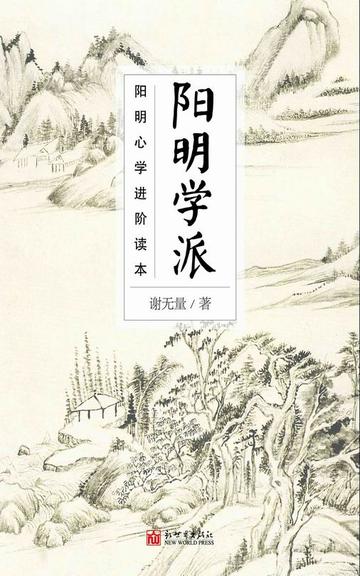
The Yangming School, also known as the Yaojiang School, was founded by the great Confucian Wang Shouren of the Ming Dynasty. Because he once built a house in his hometown of Yangming Cave and was known as Mr. Yangming in the world, the school was called the Yangming School. This school advocated the theories of "mind is reason", "unity of knowledge and action", and "leading to conscience", etc., And later divided into seven schools including Zhejiang Wang School, Jiangyou Wang School, and Taizhou Wang School. The Yangming School was a famous school in the ideological and academic field in the middle and late Ming Dynasty. Its theory was one of the mainstream theories in the middle and late Ming Dynasty. It was later spread to Japan and had a great influence on Japan and East Asia. The core of the Yangming School's ideological system is "leading to conscience." It includes several aspects such as the mind is reason, the unity of knowledge and action, the conscience, and the benevolence of all things. The basic point and starting point of his ideological system is based on the criticism of Zhu Xi's theory of studying things to achieve knowledge.
This book is divided into four parts with twenty chapters. The first part is an introduction explaining the brief biography of Yangming and the relationship between Yangming and Lu Xiangshan; the second part is about Yangming's philosophy of knowledge, which includes the view of the universe, the outlook on life, and the view of the unity of heaven and earth; the third part is about Yangming's ethics: the theory of human nature, the theory of mind as reason, the theory of the unity of knowledge and action, etc.; The fourth part is Yangming's comments on ancient and modern scholarship: commentaries on the Three Religions, Zhu Xi's final conclusions in his later years, assumptions about the Five Classics, etc.
Reader comments
This book introduces in detail the core ideas and development process of Yangming School. It allowed me to understand the true meaning of Wang Yangming's doctrines such as "To Conscience" and "Unity of Knowledge and Action". The unique viewpoints and in-depth analysis in the book gave me a deeper understanding of the Yangming School. This reminds me of the Analects of Confucius, which are both classic works on the study of ancient philosophical thoughts.


This book introduces in detail the core ideas and development process of Yangming School. It allowed me to understand the true meaning of Wang Yangming's doctrines such as "To Conscience" and "Unity of Knowledge and Action". The unique viewpoints and in-depth analysis in the book gave me a deeper understanding of the Yangming School. This reminds me of the Analects of Confucius, which are both classic works on the study of ancient philosophical thoughts.