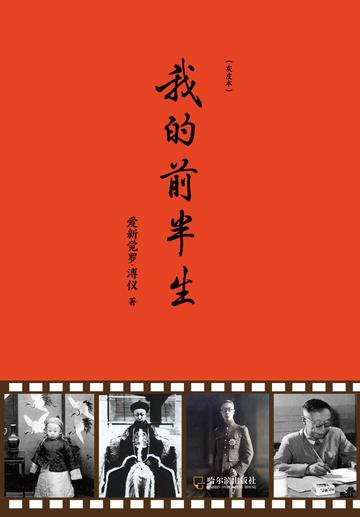
This book is a "reflective" autobiography written by Aisin Giorro Puyi, the last emperor of the Qing Dynasty in China, while he was in the Fushun War Prisoners Detention Center. The book unfolds in chronological order, starting with his family background, and reviews his entire history when he entered the palace and became emperor at the age of three, and later encountered the Revolution of 1911, abdicated, the founding of the Republic of China, the Beiyang warlords' melee, leaving the palace, staying in Tianjin, becoming the puppet emperor of Manchuria, and fleeing, etc., Until he underwent transformation after liberation and became an ordinary citizen.
The whole book truly presents Puyi's mental outlook as he underwent transformation in prison, and is of rich historical value for understanding Puyi's ideological transformation. The content has not been deleted in any way and remains original. This is a memoir, but also a book of self-reflection under a specific historical environment. From it, we can still clearly glimpse the tragedy and comedy of the last emperor in a specific historical environment. His life path embodies the changes in modern society.
Reader comments
Puyi's life was very cruel. He even had to buy a ticket to go home.
This book was written by the last emperor of the Qing Dynasty and was also written by the only emperor. It has strong authenticity and allows people to understand some of the history of the late Qing Dynasty and modern times.
This is a book worth reading. It contains Puyi's high literary value and Puyi's determination to change his ways.
This is Puyi's memoirs, with Puyi himself telling his own story. The last emperor's glory was gone. He was born in a noble family but could not maintain it. His life was full of twists and turns, and he left this memoir to the world. This book is very meaningful, because the memoirs of the late Qing Dynasty and the early Republic of China written from the perspective of the emperor are very precious, and we can only learn about many contents from Puyi's memories. However, since this book is a subjective account, it cannot be fully trusted, and some accounts have been refuted by historians.
Many people say that Boyi did not mean what he said due to the pressure at the time. In fact, this is not the case. Take the example of dedicating national treasure calligraphy and painting to other countries and cooperating with the Japanese Kwantung Army in Manchukuo's oppression of people's mental, physical, health and life. Although some of them were involuntarily, those ordinary traitors were also buried under the loess involuntarily. Boyi really comes from the heart.
It's very well written. This is the last emperor of China writing his own confession.
The dramatic life experience of the last emperor of the feudal dynasty is worth reading
From your first reaction of being unwilling to divorce, let me see your true nature. It is easy to change a country but hard to change its nature.
There is nothing better than this in a life of ups and downs. The "first half of his life" where he learned about Puyi's sins and the "second half of his life" where he repented. The inclusiveness of the party and the people is amazing.
"Because Guangxu was born in Taiping Lake Old Mansion, even Guangxu's biological father Yixuan could no longer live in the so-called "Holy Land of the Dragon" where the emperor was born. Instead, according to the practice at the time, this place had to be used as a temple or left empty."
After reading this sentence in the book, and then looking at some comments saying that Puyi "had to buy a ticket even to go home in his later years", I found it a bit funny. The group of people who sang praises for the feudal dynasty were not as ideological as Puyi, and they needed reform even more.
If readers in the comment area have such a fate, the choices they make may not be more rational than him [laughing evilly] [laughing evilly]
It can let people know some mysterious past events of the royal family in the late Qing Dynasty, but there are many places in the article that avoid the important and trivial. It is clear that Puyi went to the Northeast voluntarily, but the article highlights the image of Puyi being held hostage by the Japanese.
China will get better and better
It's very interesting and you can learn about the history of the late Qing Dynasty!
Good book, I always like to read the history of Puyi
After reading this, in the face of external humiliation and bullying, we should unite and fight externally as the best choice.
This is Puyi's memoirs, telling Puyi's own story. The last emperor's glory was gone. He was born in a noble family but could not maintain it. His life was full of twists and turns, and he left this memoir to the world. This book is very meaningful, because the memoirs of the late Qing Dynasty and the early Republic of China written from the perspective of the emperor are very precious, and we can only learn about many contents from Puyi's memories. However, since this book is a subjective account, it cannot be fully trusted, and some accounts have been refuted by historians.
History itself is a paradox! History is history and can never be reproduced, but we must understand history on the basis of awareness of historical paradoxes. This historical paradox may never be solved, but we can try our best to get infinitely close to the true overall history of history. Just like truth, it cannot be exhausted, but it can be infinitely close.
Finished~
The past is like a passing cloud, a dream in a red building...
This book is a book of Puyi's self-reflection under a specific historical environment. It unfolds in chronological order, starting from his family background, and reviews his entire history when he entered the palace and became emperor when he was three years old, and then encountered the Revolution of 1911, abdicated, the founding of the Republic of China, the Beiyang warlords' melee, leaving the palace, living in Tianjin, becoming the emperor of Manchuria, and fleeing, etc., Until he underwent transformation after liberation and became an ordinary citizen. The whole book truly presents Puyi's mental outlook as he underwent transformation in prison. The content has not been deleted in any way and remains original. This is a memoir.
A very politically correct book, suitable for postgraduate entrance examinations and for friends to study [Thoughts]
Being able to objectively understand the true situation of history is really gnashing one's teeth and making people sigh.
👍👍👍👍I like it very much, but the fate of the protagonist is bumpy! After reading this, I sympathize with all the experiences.
It can be seen that it is a real feeling!
"An ugly experience that was both dirty and shameful" is how Pu Yi, the author of this book, described the first half of his life. Born in a feudal aristocratic family in 1906, he became the puppet emperor of the empire that was about to collapse at the age of three. The author said that this was an emperor's throne like a "destroying furnace". In the book, the author expresses his sincerity and sharp self-examination, unreservedly telling his mistakes and guilt during that absurd puppet career. This book has extremely high reading value.
Very good, great, excellent
From reality to illusion, from dream to reality, the real Dream of Red Mansions. Ordinary people without great wisdom may only end one chapter.
Puyi's life was very cruel. He even had to buy a ticket to go home.
This book was written by the last emperor of the Qing Dynasty and was also written by the only emperor. It has strong authenticity and allows people to understand some of the history of the late Qing Dynasty and modern times.
This is a book worth reading. It contains Puyi's high literary value and Puyi's determination to change his ways.
This is Puyi's memoirs, with Puyi himself telling his own story. The last emperor's glory was gone. He was born in a noble family but could not maintain it. His life was full of twists and turns, and he left this memoir to the world. This book is very meaningful, because the memoirs of the late Qing Dynasty and the early Republic of China written from the perspective of the emperor are very precious, and we can only learn about many contents from Puyi's memories. However, since this book is a subjective account, it cannot be fully trusted, and some accounts have been refuted by historians.
Many people say that Boyi did not mean what he said due to the pressure at the time. In fact, this is not the case. Take the example of dedicating national treasure calligraphy and painting to other countries and cooperating with the Japanese Kwantung Army in Manchukuo's oppression of people's mental, physical, health and life. Although some of them were involuntarily, those ordinary traitors were also buried under the loess involuntarily. Boyi really comes from the heart.
It's very well written. This is the last emperor of China writing his own confession.
The dramatic life experience of the last emperor of the feudal dynasty is worth reading
From your first reaction of being unwilling to divorce, let me see your true nature. It is easy to change a country but hard to change its nature.
There is nothing better than this in a life of ups and downs. The "first half of his life" where he learned about Puyi's sins and the "second half of his life" where he repented. The inclusiveness of the party and the people is amazing.
"Because Guangxu was born in Taiping Lake Old Mansion, even Guangxu's biological father Yixuan could no longer live in the so-called "Holy Land of the Dragon" where the emperor was born. Instead, according to the practice at the time, this place had to be used as a temple or left empty." After reading this sentence in the book, and then looking at some comments saying that Puyi "had to buy a ticket even to go home in his later years", I found it a bit funny. The group of people who sang praises for the feudal dynasty were not as ideological as Puyi, and they needed reform even more.
If readers in the comment area have such a fate, the choices they make may not be more rational than him [laughing evilly] [laughing evilly]
It can let people know some mysterious past events of the royal family in the late Qing Dynasty, but there are many places in the article that avoid the important and trivial. It is clear that Puyi went to the Northeast voluntarily, but the article highlights the image of Puyi being held hostage by the Japanese.
China will get better and better
It's very interesting and you can learn about the history of the late Qing Dynasty!
Good book, I always like to read the history of Puyi After reading this, in the face of external humiliation and bullying, we should unite and fight externally as the best choice.
This is Puyi's memoirs, telling Puyi's own story. The last emperor's glory was gone. He was born in a noble family but could not maintain it. His life was full of twists and turns, and he left this memoir to the world. This book is very meaningful, because the memoirs of the late Qing Dynasty and the early Republic of China written from the perspective of the emperor are very precious, and we can only learn about many contents from Puyi's memories. However, since this book is a subjective account, it cannot be fully trusted, and some accounts have been refuted by historians.
History itself is a paradox! History is history and can never be reproduced, but we must understand history on the basis of awareness of historical paradoxes. This historical paradox may never be solved, but we can try our best to get infinitely close to the true overall history of history. Just like truth, it cannot be exhausted, but it can be infinitely close. Finished~ The past is like a passing cloud, a dream in a red building...
This book is a book of Puyi's self-reflection under a specific historical environment. It unfolds in chronological order, starting from his family background, and reviews his entire history when he entered the palace and became emperor when he was three years old, and then encountered the Revolution of 1911, abdicated, the founding of the Republic of China, the Beiyang warlords' melee, leaving the palace, living in Tianjin, becoming the emperor of Manchuria, and fleeing, etc., Until he underwent transformation after liberation and became an ordinary citizen. The whole book truly presents Puyi's mental outlook as he underwent transformation in prison. The content has not been deleted in any way and remains original. This is a memoir.
A very politically correct book, suitable for postgraduate entrance examinations and for friends to study [Thoughts]
Being able to objectively understand the true situation of history is really gnashing one's teeth and making people sigh.
👍👍👍👍I like it very much, but the fate of the protagonist is bumpy! After reading this, I sympathize with all the experiences.
It can be seen that it is a real feeling!
"An ugly experience that was both dirty and shameful" is how Pu Yi, the author of this book, described the first half of his life. Born in a feudal aristocratic family in 1906, he became the puppet emperor of the empire that was about to collapse at the age of three. The author said that this was an emperor's throne like a "destroying furnace". In the book, the author expresses his sincerity and sharp self-examination, unreservedly telling his mistakes and guilt during that absurd puppet career. This book has extremely high reading value.
Very good, great, excellent
From reality to illusion, from dream to reality, the real Dream of Red Mansions. Ordinary people without great wisdom may only end one chapter.
A very nice book
The last emperor Puyi truly realized his mistake.
So good, so exciting
I was deeply touched after reading it
Puyi reflected deeply on himself.