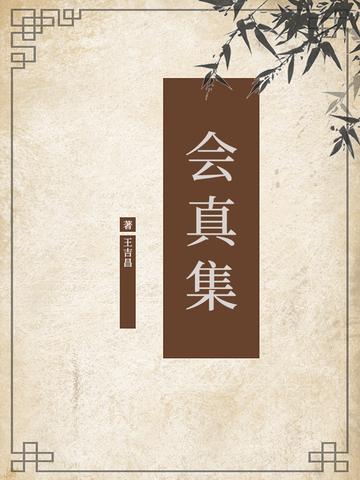
"Huizhenji" is a book on religious philosophy written by Wang Jichang (Jin Dynasty).
Fu Yi is so wide and so big, but it has no body. It begins with one breath, which is Tao.
Yi has three meanings: not easy, easy, and simple? Those who are not easy to change are independent and do not change.
Changes are caused by changes in the four seasons. If it is simple, the world is simple.
The six lines, the inner hexagram, are called chastity, and they are the body of the three talents of heaven, earth and man.
Therefore, the most important thing is called regret, which means that good or bad luck, regret, and stinginess are the things that move.
The lower two lines are for earth, the middle two lines are for people, and the upper two lines are for heaven. There is no position above or below.
The second and fifth books are based on human affairs, so they are called seeing dragons and flying dragons, which are beneficial to seeing adults.
The three or four positions in heaven and earth are not called dragons. It is called the gentleman in human affairs, which is a sign of the connection between heaven and man.
Qiankun is the virtue of heaven and earth.
With the combination of hardness and softness, three boys and three girls are born, and the five materials are divided and controlled. They are called the five elements, which act on behalf of heaven and earth.
The sixty-four hexagrams of later generations are distributed in 384 lines in a year. They are roughly based on the year, month, climate, day and time, and the hexagrams change into twelve hexagrams in one day.
One person is the spirit of all things, his life is complete, and he is one with heaven and earth.