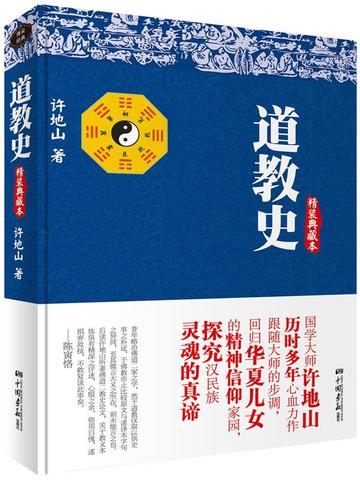
"History of Taoism" is a general history of Taoism, taking time as its warp and sect differentiation as its latitude, and comprehensively and systematically introduces the history of the emergence, development and spread of Taoism. The time limit recorded in the book begins with the social conditions and ideological origins of the Qin and Han Dynasties before the emergence of Taoism, and ends with the spread of contemporary Taoism around the world. The recorded content involves the scriptures, doctrines, characters, religious systems, teaching positions, etc. Of Taoism and its various tribes, as well as Taoist festivals, etiquette, holy places, relics, architecture, literature, art, etc. While conducting a comprehensive investigation of Taoism, "History of Taoism" also makes a profound analysis of the relationship between Taoism and ancient Chinese politics, society, economy, culture, and thought, and also puts forward many new insights into some important historical events and academic issues.
Reader comments
What is metaphysical is called a tool, and what is metaphysical is called a Tao. Taoism or Taoism is an ideological sect that originated in China. Its emergence, development and evolution are directly related to the economic, political and ideological conditions and changes of Chinese society. At the same time, as an ideological guide, it also affects the spiritual world of Chinese people and the development of Chinese social history. The author of this book, Mr. Xu Dishan, is a famous writer in modern my country. His writing style is sophisticated and erudite. He has conducted a systematic and detailed research on the development and correlation of Taoist thought and its main schools.
A general history book of Taoism that takes time as its warp and sect differentiation as its weft. This book not only comprehensively and systematically introduces the history of the emergence, development and spread of Taoism. Moreover, the time limit recorded in the book starts from the social conditions and ideological origins of Qin and Han Dynasties before the emergence of Taoism, and ends with the spread of contemporary Taoism around the world. The first part of this book is a compilation of various Dharma books of Taoism and preparatory Taoism, and the second part is a compilation of the teachings and teachings in the development of Taoism. It is very suitable for reading by friends who are interested in Taoism.
As a local religion rooted in China, the evolution of Taoism reflects the history of China's social development. This book introduces in detail the content changes in the development process of Taoism through the processes of germination, gestation, formation, development and maturity. The book explains in detail the underlying meaning of Tao, Laozi, Qin and Han Dynasty Taoism, Taoist thought, etc., And compiles the essence of thousands of years of Taoist thought for readers. After reading this book, you will feel the crystallization of the wisdom of the Chinese working people and benefit a lot from reading it.
Taoism emphasizes the unity of nature and man. It is a very new teaching and thinking mode in ancient China. It has a profound impact on Chinese thinking, education and etiquette. This book traces the historical and cultural background of the emergence of Taoism, allowing us to understand the reasons why Taoism came into being, as well as the opportunities it has for continuous development and growth, how it draws nutrients from other ideas and continuously innovates its own concepts. These ideas had a profound impact on the development of ancient China.
Taoist thought, a hundred schools of thought contend, and a hundred flowers bloom.


What is metaphysical is called a tool, and what is metaphysical is called a Tao. Taoism or Taoism is an ideological sect that originated in China. Its emergence, development and evolution are directly related to the economic, political and ideological conditions and changes of Chinese society. At the same time, as an ideological guide, it also affects the spiritual world of Chinese people and the development of Chinese social history. The author of this book, Mr. Xu Dishan, is a famous writer in modern my country. His writing style is sophisticated and erudite. He has conducted a systematic and detailed research on the development and correlation of Taoist thought and its main schools.
A general history book of Taoism that takes time as its warp and sect differentiation as its weft. This book not only comprehensively and systematically introduces the history of the emergence, development and spread of Taoism. Moreover, the time limit recorded in the book starts from the social conditions and ideological origins of Qin and Han Dynasties before the emergence of Taoism, and ends with the spread of contemporary Taoism around the world. The first part of this book is a compilation of various Dharma books of Taoism and preparatory Taoism, and the second part is a compilation of the teachings and teachings in the development of Taoism. It is very suitable for reading by friends who are interested in Taoism.
As a local religion rooted in China, the evolution of Taoism reflects the history of China's social development. This book introduces in detail the content changes in the development process of Taoism through the processes of germination, gestation, formation, development and maturity. The book explains in detail the underlying meaning of Tao, Laozi, Qin and Han Dynasty Taoism, Taoist thought, etc., And compiles the essence of thousands of years of Taoist thought for readers. After reading this book, you will feel the crystallization of the wisdom of the Chinese working people and benefit a lot from reading it.
Taoism emphasizes the unity of nature and man. It is a very new teaching and thinking mode in ancient China. It has a profound impact on Chinese thinking, education and etiquette. This book traces the historical and cultural background of the emergence of Taoism, allowing us to understand the reasons why Taoism came into being, as well as the opportunities it has for continuous development and growth, how it draws nutrients from other ideas and continuously innovates its own concepts. These ideas had a profound impact on the development of ancient China.
Taoist thought, a hundred schools of thought contend, and a hundred flowers bloom.