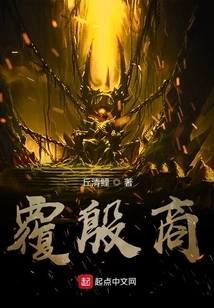
Overthrow the Yin Shang
by Qiu Qingli
About This Novel
......... Three thousand years ago, the bloody Yin Shang Dynasty. The mysterious dynasty shrouded in fog worshiped ghosts and gods, enjoyed blood sacrifices, and lowly people were slaughtered wantonly. A human sacrifice narrowly survived the ritual of offering sacrifices to heaven. In this era, witches and ghosts are rampant, and demonic flames are raging in the sky. The reborn slave has to fight against a terrifying and powerful country... (Lao Bai's text, low-demon world, unorthodox historical text.)
Official Sources
What Readers Think
Rating
Community(0)
Official(41)Scraped 2mo ago
King Zhou of the Shang Dynasty had already abolished the use of human priests and the system of slavery, but the leader of the largest slave trade in the country was Huangshu Yabigan, so Bigan died. King Wu Jifa's order to attack Zhou, Prime Minister Jiang Shang, wrote an article in the anti-Zhou text, which was because King Zhou abolished the use of humans as priests for ghosts and gods.
About King Zhou's reforms
I read that many people in the comment area said that King Zhou's reforms weakened the divine power, and he was destroyed by Zhou because of this. I have to say something here. First, the Shang Dynasty was not a unified country, but an alliance of states. Shang was only the most powerful country among them. Shang used force to frighten other countries, and all countries paid tribute to Shang. If Shang weakened, all countries would rebel. Second, the sacrifice objects and habits of each country in the Shang Alliance are different. There is no unified religion among the Shang and other countries. At most, there is some consensus. This kind of thing has very weak binding force. If a country attacks the Shang under the banner of disrespecting ghosts and gods, it is most likely because the power of Shang is weak rather than disrespecting ghosts and gods. To sum up, this is what many people in the comment area think: King Zhou wanted to change this era, but ended up being killed by the villain King Zhou because he violated religious interests. The likelihood of this happening is low. It is very likely that the already weak Shang monarch wanted to take action on his country's religion to restore national strength and continue his rule, but he failed and was destroyed by his original younger brother. Also, someone in the comments said that there were human sacrifices in Zhou Dynasty. Can you show me the information? I only know that there were living people buried with them in Zhou Dynasty, but later it was changed to straw men and figurines. I really don't know that there were human sacrifices in Zhou Dynasty.
The beginning was okay, but later on it became a myth. More and more words were used in myths and legends, and it continued to get closer to the list of gods. If you look closely at the full text, it is a combination of Western Gladiators and the Romance of the Gods.
I deeply hate the name of husband and wife. Any historical novel written before the Yuan Dynasty should not use this name.
Why is it said that Zhou's destruction of Shang was "the new life of China": How terrifying was the real Shang Dynasty? The Paper 2019-05-21 15:07 Original title: China's Rebirth-Rethinking the Yin and Zhou Dynasties More than a thousand years BC, the era of King David of Israel in (Old Testament), the era of wild legends (Fengshen Yanyi). King Zhou of Shang, who was in his prime, came to rule the "world" and ruled the North China Plain, the easternmost part of the Eurasian continent. At this time, King Wen of Zhou was just a small tribal chief far away in the western border (today's Shaanxi). For several generations, the Zhou people were subservient to the Shang Dynasty. King Wen Jichang was already over fifty years old. He was quite an old man at that time, and he was obsessed with the weird gossip divination, which cast a gloomy atmosphere over this small country. A merchant army suddenly marched to the west, arrested Ji Chang, and escorted him to Yin, the capital of the Shang Dynasty. This is a customary disciplinary expedition for merchants. For hundreds of years, King Shang maintained his rule over the hundreds of states and tribes he conquered in this way. The result this time was very different. Dusty Nightmare Today, three thousand years later, in Anyang, Henan, the ruins of the last capital of the Shang Dynasty are buried in the loess: Yin Ruins. Over the past century, archaeologists have unearthed an astonishing number of murdered corpses here, and the oracle bone inscriptions unearthed together show that they died in bloody sacrificial ceremonies by merchants. The piles of skeletons tell the world: buried here is a forgotten bloody civilization, a nightmare of terrifying and long years. Next to a palace in Yinxu, more than 100 murder sacrificial pits were unearthed, containing nearly 600 bones of murdered people. Most of these corpses had their bodies and heads separated. They were beheaded and then thrown into the pit. There are also 17 young children who died tragically buried in the two pits. The foundation of this palace was also accompanied by murderous sacrifices: a corpse was rammed under all the pillars; the gate was built on the bones of 15 people, three of whom only had heads. There is a human sacrifice field in the Shang Wang Mausoleum area, which is more than twice the size of the playground. Nearly 3,500 human bones were unearthed and buried in more than 900 sacrificial pits. There are many corpses with heads and heads in different places. Some pits only contain skulls, or only bodies, or even living people who were buried in the struggle. There were also human sacrifice sites outside the royal tomb area. For example, in a pit in Hougang, there were buried the skeletons of 73 victims, most of whom were male teenagers under the age of 20, and there were even the skeletons of more than a dozen young children. Wherever the merchant culture went, such as the early Shang Dynasty ruins in Yanshi, Henan and Zhengzhou, and even in the southeast to Tongshan, Jiangsu, there were also ruins of large-scale human sacrifice sites. Years of natural changes and man-made changes have destroyed the Yin Ruins. It is unclear how many such human sacrifice sites there were in the entire Shang Dynasty. These sites have different ages, indicating that the practice of human sacrifice continued for many years. It is by no means the product of a tyrant's whim, but the norm of an ancient civilization. But before being exposed by the shovels of archaeologists, ancient Chinese historical documents never mentioned this custom of merchants. After King Wu of Zhou, the son of King Wen, destroyed the Shang Dynasty, the Yin capital was abandoned and buried, and the merchants' customs also disappeared like clouds. But why did the people of the Zhou Dynasty delete their memories of that bloody era? What does this have to do with their rise, the destruction of Shang, and the establishment of the Zhou Dynasty? Oracles and archaeological excavations raise these questions for us. If you try to answer it, you must collect as rare and ethereal information as auspicious pieces of information from ancient Confucian scriptures and ancient historical documents, and combine them with archaeological materials to restore the nightmare that has been buried for three thousand years-no, the facts. The Shang Dynasty and its officials: Qiang and Zhou Merchants arose in the East. The core area of their rule was in the northeastern part of today's Henan Province, belonging to the east of the Chinese world. For the foreign people in the west (today's Shanxi and Shaanxi areas), merchants called them "Qiang". The character in the oracle bone inscriptions is shaped like a big-horned sheep's head, which represents the people who live in the mountains and herd cattle and sheep for a living. This is just a general term. The "Qiang" people include countless loose ethnic states and tribes that are not affiliated with each other. Two hundred years before King Zhou of the Shang Dynasty, a queen of the Shang King, "Fu Hao", led an army to conquer the west and expanded the power of the Shang Dynasty to the Qiang area. That expedition was the largest in the oracle bone literature, with a total army of 13,000 people. Compared with the barbarians in the west, merchants had advanced bronze smelting technology and strong and sharp weapons; they also had a unique technology for recording language: writing, thus forming a huge military and administrative machine, as well as a civilization with a high degree of division of labor. This is unimaginable to the barbarian tribes. Merchants never used their own culture to change the minds of barbarians. They just want to maintain military conquest. The Shang kings were accustomed to patrolling the frontiers with their armies, using force to intimidate small neighboring states and keep them in submission. When necessary, they would carry out punitive wars in the style of killing chickens to scare monkeys. The mainland of the Shang Dynasty was not much larger than today's Henan Province. As for the Western tribe "Zhou", the merchants were a bit unclear about its origins because it was too small. The Zhou people's epics tell their own early history, mixed with a lot of mythology. Legend has it that the ancestor of the Zhou clan was a woman named "Jiang Yuan". She stepped on the footprints of a giant in the wilderness, became pregnant and gave birth to a son, Houji, and gave birth to the Zhou clan. In the language of the Shang and Zhou dynasties, Jiang means Qiang, so the Zhou people also belong to the broad Qiang people. After they formed a tribe, they gave themselves the surname "Ji" and called other surrounding tribes the surname "Jiang". This signifies that the blood relationship between them has become distant and they can intermarry with each other. According to western customs, people of the same surname and ethnicity cannot intermarry. It was not until the generation of Gu Gong Danfu, the grandfather of King Wen Jichang, that there were more reliable records. The Zhou people originally lived in the mountains and were no different from barbaric peoples (actually their close relatives, the Qiang people). Gu Gongdanfu led his tribe to move out of the mountains, along a small river to the edge of the Weihe Plain, and began agricultural reclamation. From then on, they broke away from barbarism and entered a more "civilized" way of life. These epics are mixed with Zhou people's self-praise and are only partially reliable. Judging from archaeological excavations, the civilizations in the Weihe River Basin in Guanzhong during this period were all similar. Each ethnic group had only a few thousand or ten thousand people, living a life of planting millet, sorghum, and raising cattle and sheep. Their main agricultural tools are ground stone tools, and they use rough gray pottery at home. Only the upper-class clan leaders have some imported luxuries, such as jade and copperware. The Zhou people were no more "civilized" than their Qiang neighbors. In the eyes of businessmen, they are all equally backward and not worthy opponents at all. The biggest change that Gu Gongdanfu brought to the Zhou people was that he joined the powerful Shang Dynasty and became the merchant's ruling agent in the Far West. At that time, the Zhou clan was just a small tribe with a few thousand people. What use was it to the huge Shang Dynasty that ruled a population of nearly one million? As revealed by archaeological excavations at the Yin Ruins, merchants believed that God and ancestors were responsible for all misfortunes and blessings in the world, and the flesh and blood of foreigners was the best gift to God and ancestors-the word "sacrifice" in oracle bone inscriptions means holding a piece of meat in one hand and offering it to the altar. The main source of people for their sacrifices is the Qiang people. According to the human sacrifice records in oracle bone inscriptions, the Qiang people accounted for more than half of those killed, and they were called "human sacrifices." After Danfu led the Zhou people to join the merchants, his most important responsibility was to provide Qiang human sacrifices to the Shang Dynasty. This was history that was deliberately buried and forgotten by the Zhou people later, but the unearthed oracle bones revealed a little information. The Zhou people themselves have no writing. The character "Zhou" in oracle bone inscriptions was created by merchants. Businessmen have a special verb for murder and sacrifice: "use". Countless pieces of oracle bone inscriptions about sacrifices record that the Shang king "used" Qiang men, women, cattle and sheep to offer sacrifices to the gods. The word "zhou" in the oracle bone inscriptions is a combination of the two characters "yong" and "kou"; (Shuowen Jiezi) also explains the word "zhou" as "from yong, from mouth" - in the eyes of businessmen, the characteristic of the "zhou" tribe is the population that contributes to "yong". "Zhou Fangbo" oracle bone rubbings ("Zhenwang Qi also has a large armor, Zhou Fangbo, luzheng, not left, and blessed by the recipient.") (Zhouyuan oracle bones H11:84) This is an oracle bone rubbing unearthed from the Zhouyuan site. The general content of the inscription is: The King of Shang offered sacrifices to the late king Taijia and asked if it was suitable to be named Zhou Fang Bo (canonizing the leader of the Zhou people as Fang Bo); the more complex glyph behind the word "Bo" shows a woman holding a woman with a basin for collecting blood underneath. This is the way to sacrifice during divination; the divination results show that everything is auspicious. Then, an envoy from the Shang Dynasty should have brought this piece of oracle bone to canonize Zhou Fangbo. It was the appointment document of the Shang Dynasty. As for which King of Shang issued this appointment, and which generation of Zhou Fangbo was ennobled (Gu Gong, Ji Li or King Wen), it is difficult to judge. It is worth noting that the land where this piece of oracle bones was unearthed is the Zhouyuan area where Gu Gongdanfu led his people to move; this piece of oracle bones were stored together with other oracle bones from the first half of the Western Zhou Dynasty, and may have been buried in the middle of the Western Zhou Dynasty. There is another even scarier way of writing the word "zhou" for businessmen: the small squares of the word "Yong" are filled with dots. The dots on oracle bones represent blood, which comes from killed human sacrifices and is the freshest food for the gods. Oracle bone inscriptions also specifically describe the use of blood for sacrifice: a raised altar, with blood represented by dots dripping down. In terms of blood relationship, the behavior of Gu Gong Danfu and the Zhou people was a shameless betrayal of the people in their hometown. By hunting the Qiang people, the Zhou people became the bloody agents of the Shang Dynasty in the west, and received corresponding rewards. Sharp copper weapons can help them capture prey; the military technology of merchants' horse-drawn chariots may also have been imported into the Zhou people at this time.
Gunpowder? Cannon?
Forget about gunpowder, how can we create cannons?
From (Kingdom of God)
Son of Fengtian, Emperor Wu of the founding dynasty. Greatly break the demonic path and set the central plains of the cauldron. Traveling all over the world, Yi and Di surrendered. Powerful in the universe, for eternity..." The son of Fengtian, the founding emperor of the dynasty. He defeated the demons and established the Central Plains. The people of the Qin Dynasty can enjoy peace and be grateful to the emperor for eternity!
I guess it's a good start.
It was good in the early stage, but I still don't understand why I want to save Young Master Yang's life. It's so stupid and does a lot of harm but no benefit.
It turns out that Chinese ethics have been around since the Zhou Dynasty, and people in the past had low levels of ethics and morals, especially in their views on sex, which were very open-minded. The businessmen were dissolute, arrogant and lustful, addicted to alcohol and murder. There was even a primitive reproductive worship that still remained in their customs. Being naked and exposed was the norm in their lives. Food and color are like eating millet, what is the shame of it? Therefore, in the eyes of businessmen, the behavior of cow fleas is just ugly and ridiculous, not humiliating. "... Aren't you afraid of infectious diseases if you are so promiscuous?" Nie Shang understood the businessman a little better.
slave sacrifice
Emperor Xin of the Shang Dynasty seems to have abolished human sacrifice
Rating
Community(0)
Official(41)Scraped 2mo ago
King Zhou of the Shang Dynasty had already abolished the use of human priests and the system of slavery, but the leader of the largest slave trade in the country was Huangshu Yabigan, so Bigan died. King Wu Jifa's order to attack Zhou, Prime Minister Jiang Shang, wrote an article in the anti-Zhou text, which was because King Zhou abolished the use of humans as priests for ghosts and gods.
About King Zhou's reforms
I read that many people in the comment area said that King Zhou's reforms weakened the divine power, and he was destroyed by Zhou because of this. I have to say something here. First, the Shang Dynasty was not a unified country, but an alliance of states. Shang was only the most powerful country among them. Shang used force to frighten other countries, and all countries paid tribute to Shang. If Shang weakened, all countries would rebel. Second, the sacrifice objects and habits of each country in the Shang Alliance are different. There is no unified religion among the Shang and other countries. At most, there is some consensus. This kind of thing has very weak binding force. If a country attacks the Shang under the banner of disrespecting ghosts and gods, it is most likely because the power of Shang is weak rather than disrespecting ghosts and gods. To sum up, this is what many people in the comment area think: King Zhou wanted to change this era, but ended up being killed by the villain King Zhou because he violated religious interests. The likelihood of this happening is low. It is very likely that the already weak Shang monarch wanted to take action on his country's religion to restore national strength and continue his rule, but he failed and was destroyed by his original younger brother. Also, someone in the comments said that there were human sacrifices in Zhou Dynasty. Can you show me the information? I only know that there were living people buried with them in Zhou Dynasty, but later it was changed to straw men and figurines. I really don't know that there were human sacrifices in Zhou Dynasty.
The beginning was okay, but later on it became a myth. More and more words were used in myths and legends, and it continued to get closer to the list of gods. If you look closely at the full text, it is a combination of Western Gladiators and the Romance of the Gods.
I deeply hate the name of husband and wife. Any historical novel written before the Yuan Dynasty should not use this name.
Why is it said that Zhou's destruction of Shang was "the new life of China": How terrifying was the real Shang Dynasty? The Paper 2019-05-21 15:07 Original title: China's Rebirth-Rethinking the Yin and Zhou Dynasties More than a thousand years BC, the era of King David of Israel in (Old Testament), the era of wild legends (Fengshen Yanyi). King Zhou of Shang, who was in his prime, came to rule the "world" and ruled the North China Plain, the easternmost part of the Eurasian continent. At this time, King Wen of Zhou was just a small tribal chief far away in the western border (today's Shaanxi). For several generations, the Zhou people were subservient to the Shang Dynasty. King Wen Jichang was already over fifty years old. He was quite an old man at that time, and he was obsessed with the weird gossip divination, which cast a gloomy atmosphere over this small country. A merchant army suddenly marched to the west, arrested Ji Chang, and escorted him to Yin, the capital of the Shang Dynasty. This is a customary disciplinary expedition for merchants. For hundreds of years, King Shang maintained his rule over the hundreds of states and tribes he conquered in this way. The result this time was very different. Dusty Nightmare Today, three thousand years later, in Anyang, Henan, the ruins of the last capital of the Shang Dynasty are buried in the loess: Yin Ruins. Over the past century, archaeologists have unearthed an astonishing number of murdered corpses here, and the oracle bone inscriptions unearthed together show that they died in bloody sacrificial ceremonies by merchants. The piles of skeletons tell the world: buried here is a forgotten bloody civilization, a nightmare of terrifying and long years. Next to a palace in Yinxu, more than 100 murder sacrificial pits were unearthed, containing nearly 600 bones of murdered people. Most of these corpses had their bodies and heads separated. They were beheaded and then thrown into the pit. There are also 17 young children who died tragically buried in the two pits. The foundation of this palace was also accompanied by murderous sacrifices: a corpse was rammed under all the pillars; the gate was built on the bones of 15 people, three of whom only had heads. There is a human sacrifice field in the Shang Wang Mausoleum area, which is more than twice the size of the playground. Nearly 3,500 human bones were unearthed and buried in more than 900 sacrificial pits. There are many corpses with heads and heads in different places. Some pits only contain skulls, or only bodies, or even living people who were buried in the struggle. There were also human sacrifice sites outside the royal tomb area. For example, in a pit in Hougang, there were buried the skeletons of 73 victims, most of whom were male teenagers under the age of 20, and there were even the skeletons of more than a dozen young children. Wherever the merchant culture went, such as the early Shang Dynasty ruins in Yanshi, Henan and Zhengzhou, and even in the southeast to Tongshan, Jiangsu, there were also ruins of large-scale human sacrifice sites. Years of natural changes and man-made changes have destroyed the Yin Ruins. It is unclear how many such human sacrifice sites there were in the entire Shang Dynasty. These sites have different ages, indicating that the practice of human sacrifice continued for many years. It is by no means the product of a tyrant's whim, but the norm of an ancient civilization. But before being exposed by the shovels of archaeologists, ancient Chinese historical documents never mentioned this custom of merchants. After King Wu of Zhou, the son of King Wen, destroyed the Shang Dynasty, the Yin capital was abandoned and buried, and the merchants' customs also disappeared like clouds. But why did the people of the Zhou Dynasty delete their memories of that bloody era? What does this have to do with their rise, the destruction of Shang, and the establishment of the Zhou Dynasty? Oracles and archaeological excavations raise these questions for us. If you try to answer it, you must collect as rare and ethereal information as auspicious pieces of information from ancient Confucian scriptures and ancient historical documents, and combine them with archaeological materials to restore the nightmare that has been buried for three thousand years-no, the facts. The Shang Dynasty and its officials: Qiang and Zhou Merchants arose in the East. The core area of their rule was in the northeastern part of today's Henan Province, belonging to the east of the Chinese world. For the foreign people in the west (today's Shanxi and Shaanxi areas), merchants called them "Qiang". The character in the oracle bone inscriptions is shaped like a big-horned sheep's head, which represents the people who live in the mountains and herd cattle and sheep for a living. This is just a general term. The "Qiang" people include countless loose ethnic states and tribes that are not affiliated with each other. Two hundred years before King Zhou of the Shang Dynasty, a queen of the Shang King, "Fu Hao", led an army to conquer the west and expanded the power of the Shang Dynasty to the Qiang area. That expedition was the largest in the oracle bone literature, with a total army of 13,000 people. Compared with the barbarians in the west, merchants had advanced bronze smelting technology and strong and sharp weapons; they also had a unique technology for recording language: writing, thus forming a huge military and administrative machine, as well as a civilization with a high degree of division of labor. This is unimaginable to the barbarian tribes. Merchants never used their own culture to change the minds of barbarians. They just want to maintain military conquest. The Shang kings were accustomed to patrolling the frontiers with their armies, using force to intimidate small neighboring states and keep them in submission. When necessary, they would carry out punitive wars in the style of killing chickens to scare monkeys. The mainland of the Shang Dynasty was not much larger than today's Henan Province. As for the Western tribe "Zhou", the merchants were a bit unclear about its origins because it was too small. The Zhou people's epics tell their own early history, mixed with a lot of mythology. Legend has it that the ancestor of the Zhou clan was a woman named "Jiang Yuan". She stepped on the footprints of a giant in the wilderness, became pregnant and gave birth to a son, Houji, and gave birth to the Zhou clan. In the language of the Shang and Zhou dynasties, Jiang means Qiang, so the Zhou people also belong to the broad Qiang people. After they formed a tribe, they gave themselves the surname "Ji" and called other surrounding tribes the surname "Jiang". This signifies that the blood relationship between them has become distant and they can intermarry with each other. According to western customs, people of the same surname and ethnicity cannot intermarry. It was not until the generation of Gu Gong Danfu, the grandfather of King Wen Jichang, that there were more reliable records. The Zhou people originally lived in the mountains and were no different from barbaric peoples (actually their close relatives, the Qiang people). Gu Gongdanfu led his tribe to move out of the mountains, along a small river to the edge of the Weihe Plain, and began agricultural reclamation. From then on, they broke away from barbarism and entered a more "civilized" way of life. These epics are mixed with Zhou people's self-praise and are only partially reliable. Judging from archaeological excavations, the civilizations in the Weihe River Basin in Guanzhong during this period were all similar. Each ethnic group had only a few thousand or ten thousand people, living a life of planting millet, sorghum, and raising cattle and sheep. Their main agricultural tools are ground stone tools, and they use rough gray pottery at home. Only the upper-class clan leaders have some imported luxuries, such as jade and copperware. The Zhou people were no more "civilized" than their Qiang neighbors. In the eyes of businessmen, they are all equally backward and not worthy opponents at all. The biggest change that Gu Gongdanfu brought to the Zhou people was that he joined the powerful Shang Dynasty and became the merchant's ruling agent in the Far West. At that time, the Zhou clan was just a small tribe with a few thousand people. What use was it to the huge Shang Dynasty that ruled a population of nearly one million? As revealed by archaeological excavations at the Yin Ruins, merchants believed that God and ancestors were responsible for all misfortunes and blessings in the world, and the flesh and blood of foreigners was the best gift to God and ancestors-the word "sacrifice" in oracle bone inscriptions means holding a piece of meat in one hand and offering it to the altar. The main source of people for their sacrifices is the Qiang people. According to the human sacrifice records in oracle bone inscriptions, the Qiang people accounted for more than half of those killed, and they were called "human sacrifices." After Danfu led the Zhou people to join the merchants, his most important responsibility was to provide Qiang human sacrifices to the Shang Dynasty. This was history that was deliberately buried and forgotten by the Zhou people later, but the unearthed oracle bones revealed a little information. The Zhou people themselves have no writing. The character "Zhou" in oracle bone inscriptions was created by merchants. Businessmen have a special verb for murder and sacrifice: "use". Countless pieces of oracle bone inscriptions about sacrifices record that the Shang king "used" Qiang men, women, cattle and sheep to offer sacrifices to the gods. The word "zhou" in the oracle bone inscriptions is a combination of the two characters "yong" and "kou"; (Shuowen Jiezi) also explains the word "zhou" as "from yong, from mouth" - in the eyes of businessmen, the characteristic of the "zhou" tribe is the population that contributes to "yong". "Zhou Fangbo" oracle bone rubbings ("Zhenwang Qi also has a large armor, Zhou Fangbo, luzheng, not left, and blessed by the recipient.") (Zhouyuan oracle bones H11:84) This is an oracle bone rubbing unearthed from the Zhouyuan site. The general content of the inscription is: The King of Shang offered sacrifices to the late king Taijia and asked if it was suitable to be named Zhou Fang Bo (canonizing the leader of the Zhou people as Fang Bo); the more complex glyph behind the word "Bo" shows a woman holding a woman with a basin for collecting blood underneath. This is the way to sacrifice during divination; the divination results show that everything is auspicious. Then, an envoy from the Shang Dynasty should have brought this piece of oracle bone to canonize Zhou Fangbo. It was the appointment document of the Shang Dynasty. As for which King of Shang issued this appointment, and which generation of Zhou Fangbo was ennobled (Gu Gong, Ji Li or King Wen), it is difficult to judge. It is worth noting that the land where this piece of oracle bones was unearthed is the Zhouyuan area where Gu Gongdanfu led his people to move; this piece of oracle bones were stored together with other oracle bones from the first half of the Western Zhou Dynasty, and may have been buried in the middle of the Western Zhou Dynasty. There is another even scarier way of writing the word "zhou" for businessmen: the small squares of the word "Yong" are filled with dots. The dots on oracle bones represent blood, which comes from killed human sacrifices and is the freshest food for the gods. Oracle bone inscriptions also specifically describe the use of blood for sacrifice: a raised altar, with blood represented by dots dripping down. In terms of blood relationship, the behavior of Gu Gong Danfu and the Zhou people was a shameless betrayal of the people in their hometown. By hunting the Qiang people, the Zhou people became the bloody agents of the Shang Dynasty in the west, and received corresponding rewards. Sharp copper weapons can help them capture prey; the military technology of merchants' horse-drawn chariots may also have been imported into the Zhou people at this time.
Gunpowder? Cannon?
Forget about gunpowder, how can we create cannons?
From (Kingdom of God)
Son of Fengtian, Emperor Wu of the founding dynasty. Greatly break the demonic path and set the central plains of the cauldron. Traveling all over the world, Yi and Di surrendered. Powerful in the universe, for eternity..." The son of Fengtian, the founding emperor of the dynasty. He defeated the demons and established the Central Plains. The people of the Qin Dynasty can enjoy peace and be grateful to the emperor for eternity!
I guess it's a good start.
It was good in the early stage, but I still don't understand why I want to save Young Master Yang's life. It's so stupid and does a lot of harm but no benefit.
It turns out that Chinese ethics have been around since the Zhou Dynasty, and people in the past had low levels of ethics and morals, especially in their views on sex, which were very open-minded. The businessmen were dissolute, arrogant and lustful, addicted to alcohol and murder. There was even a primitive reproductive worship that still remained in their customs. Being naked and exposed was the norm in their lives. Food and color are like eating millet, what is the shame of it? Therefore, in the eyes of businessmen, the behavior of cow fleas is just ugly and ridiculous, not humiliating. "... Aren't you afraid of infectious diseases if you are so promiscuous?" Nie Shang understood the businessman a little better.
slave sacrifice
Emperor Xin of the Shang Dynasty seems to have abolished human sacrifice
Featured in 8 Booklists
Official(8)
Type: overhead low magic It's very interesting. The current historical novels and recommended books are very suitable for novices, but old bookworms still don't like them very much. Good books still have to be read over and over by themselves.
What a miserable protagonist. Travel through time and become a slave. Abuse.
🌲History/Alternate History🌲Boost Grassroots Rise, Power, Cthulhu, Warrior. 📆Entered on 2019.09.09 (Monday)
A rare text that travels back to the Yin and Shang Dynasties. It's not just about farming, there are many descriptions of supernatural powers and adventures. A unique interpretation of ancient myths, legends and supernatural powers! Reinterpret ancient myths and legends from a new perspective!
You Might Also Like
Zhao Was King During the Warring States Period
Ximengfu
The Rise of the Middle Ages
A Little Knowledge
Reborn Female General
Qianshan Tea Guest
Everyone Asks Me to Be the Emperor
Four Generations Of Rape
Twenty-seven Years
Rongke
Han Dao Tianxia
Zhuang Buzhou
The Song of Neon Clothes and Iron Clothes
Chris Webber
Emperor Ming Rises from the Sea
Muzi Blue
I Was Not King in the Spring and Autumn Period
Xihe Chenhao
King of Ross
Ivan The Terrible