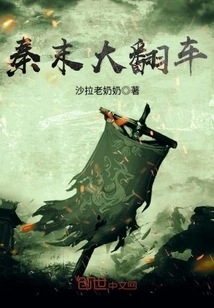
The Great Overturn in the Late Qin Dynasty
by Salad Granny
About This Novel
Due to a roommate's driving error, a car accident took away the lives of nine people. Faced with a history that had long been changed by his companions, the most cowardly and trashy protagonist in history was born. Others have great ambitions, but I am bound by the sword. Please surrender. Others are gentle all day in the countryside, but I am always surrounded by conspiracy. Everyone has grown up. Without capital, you can only live like a dog. (This article is really annoying, don't bring in the protagonist, otherwise it will be very annoying)
Official Sources
What Readers Think
Rating
Community(0)
Official(5)Scraped 1mo ago
Asking to chat
Is there any cutie who has some advice?
It's still pretty cool, but updates are a bit slow.
Breaking zero comments, although I haven't read it, I've read it as long as it's about the Qin Dynasty.
Statement of purpose
When I wrote this book, I didn't think much about competing for hegemony, so although this element is present, it is by no means the focus. So what is the theme of this book? My answer is survival in troubled times and romantic heroism. The first is my understanding of hegemony. There are many history books about troubled times, and the protagonists will embark on the path of striving for hegemony, but I personally think that this is not the only path. There are many factors that determine whether a protagonist chooses to pursue hegemony. The first is whether he or she has such an idea. I often imagine that if I traveled back to the end of Qin, who would I most want to be, Liu Bang or Zhang Liang? In the end, my choice was Zhang Liang. As an anti-conspiracy activist, I believe that history is a combination of reality and romance (the two are not contradictory). If I were Zhang Liang, I would also meet my own Liu Bang. I would be willing to push this man to the throne, and I would choose to retire after success. Second, the most important thing on the road to hegemony is ability. My protagonists are all ordinary people, without golden fingers or superhuman IQs. Their understanding of the history of science and technology is also one-sided and limited, and cannot form a system. Therefore, without going through the baptism of troubled times, they are not capable of embarking on the road of fighting for hegemony. This is why the protagonists are timid in the early stage. In addition, there are many elements for hegemony, so I won't go into details here. Then there is the general idea of my book. The historical chain reaction and the differentiation of the time-travelers are the main themes of the plot. The timelines that time travelers travel through are different, and being a time traveler will inevitably have an impact on the historical process. The protagonist travels later in time, and the history at this time has been changed by previous time travellers. I call it a historical chain reaction. Then there is the differentiation of time-travelers. I said before that the hardening of troubled times will give a person the ability to compete for hegemony, and it will also give him the ambition to compete for hegemony. Of course, there will also be "Zhang Liang" who meets his "Liu Bang". This is their differentiation. The environment and personality determine that they cannot get together. As for the ending, because it is not mainly a hegemony route, and there are actually nine protagonists (I just chose one of the unique perspectives), the ending is very uncertain. Regarding this, I can only say that "The Great Overturn at the End of the Qin Dynasty" is not only about overturning and time travel, but also about being overturned after time traveling. As for who or what it is, I have no idea ( ̄▽ ̄)σ, after all, I can always listen to opinions.
,! ! ! ? ! ? !
A piece of shit that is inferior to women! ! ! ! ! ! !
Rating
Community(0)
Official(5)Scraped 1mo ago
Asking to chat
Is there any cutie who has some advice?
It's still pretty cool, but updates are a bit slow.
Breaking zero comments, although I haven't read it, I've read it as long as it's about the Qin Dynasty.
Statement of purpose
When I wrote this book, I didn't think much about competing for hegemony, so although this element is present, it is by no means the focus. So what is the theme of this book? My answer is survival in troubled times and romantic heroism. The first is my understanding of hegemony. There are many history books about troubled times, and the protagonists will embark on the path of striving for hegemony, but I personally think that this is not the only path. There are many factors that determine whether a protagonist chooses to pursue hegemony. The first is whether he or she has such an idea. I often imagine that if I traveled back to the end of Qin, who would I most want to be, Liu Bang or Zhang Liang? In the end, my choice was Zhang Liang. As an anti-conspiracy activist, I believe that history is a combination of reality and romance (the two are not contradictory). If I were Zhang Liang, I would also meet my own Liu Bang. I would be willing to push this man to the throne, and I would choose to retire after success. Second, the most important thing on the road to hegemony is ability. My protagonists are all ordinary people, without golden fingers or superhuman IQs. Their understanding of the history of science and technology is also one-sided and limited, and cannot form a system. Therefore, without going through the baptism of troubled times, they are not capable of embarking on the road of fighting for hegemony. This is why the protagonists are timid in the early stage. In addition, there are many elements for hegemony, so I won't go into details here. Then there is the general idea of my book. The historical chain reaction and the differentiation of the time-travelers are the main themes of the plot. The timelines that time travelers travel through are different, and being a time traveler will inevitably have an impact on the historical process. The protagonist travels later in time, and the history at this time has been changed by previous time travellers. I call it a historical chain reaction. Then there is the differentiation of time-travelers. I said before that the hardening of troubled times will give a person the ability to compete for hegemony, and it will also give him the ambition to compete for hegemony. Of course, there will also be "Zhang Liang" who meets his "Liu Bang". This is their differentiation. The environment and personality determine that they cannot get together. As for the ending, because it is not mainly a hegemony route, and there are actually nine protagonists (I just chose one of the unique perspectives), the ending is very uncertain. Regarding this, I can only say that "The Great Overturn at the End of the Qin Dynasty" is not only about overturning and time travel, but also about being overturned after time traveling. As for who or what it is, I have no idea ( ̄▽ ̄)σ, after all, I can always listen to opinions.
,! ! ! ? ! ? !
A piece of shit that is inferior to women! ! ! ! ! ! !
You Might Also Like
Possessed by Lu Bu
The King Is No More Than A Hegemon
Hanxiang
Jie And 2
The Poor Man's Two Thousand Years
Non-player Character

Reborn Female General
Qianshan Tea Guest
Tomorrow
Jie And 2
Shao Song
Grenades Are Afraid Of Water
My Father, Emperor Gaozu of the Han Dynasty
History Wolf
My Brother-in-law is the Prince
Go Up The Mountain And Hit The Tiger On The Forehead
Qin Gong
When It Rains, I Bring A Knife
The World's Heroes
Gao Yue