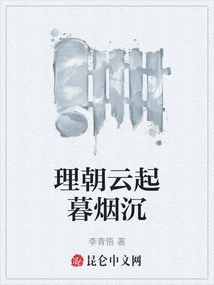
The Morning Clouds Rise and the Evening Smoke Sinks
by Li Qingwu
About This Novel
"Li" clearly refers to Emperor Lizong of the Song Dynasty. The rising clouds and the falling smoke depict the changes and ups and downs of the Song Dynasty under his rule. It is as full of historical vicissitudes and dynamic pictures as the rising clouds and the falling smoke. It also has a mysterious and far-reaching artistic conception. Zhao Yun, Emperor Lizong of the Song Dynasty, was the fifth emperor of the Southern Song Dynasty. His original name was Zhao Yuju, and he came from a distant clan. His early life was relatively ordinary, but later he was favored by Shi Miyuan, and through a series of operations, he was established as the prince of Ning Zong. In the seventeenth year of Jiading (1224), after Song Ningzong died, Zhao Yun succeeded to the throne. In the early days of Song Lizong's reign, the government was controlled by the powerful Prime Minister Shi Miyuan, making it difficult for him to do anything. After Shi Miyuan's death, Emperor Lizong of the Song Dynasty began to rule personally. He admired Neo-Confucianism and regarded it as the official orthodox thought, which had a profound impact on the cultural and ideological fields of the Southern Song Dynasty. Politically, he intended to make a difference, and in the early stage he also took some measures to rectify the administration of officials. In terms of external affairs, Lizong of the Song Dynasty maintained a joint alliance with Mongolia in the early days to destroy the Jin Dynasty. In the first year of Duanping (1234), the Southern Song Dynasty and Mongolia joined forces to attack the Jin Kingdom, averting the shame of Jingkang. However, the Southern Song Dynasty later wanted to take advantage of the Mongolian withdrawal to regain the three capitals (Kaifeng Prefecture in Tokyo, Henan Prefecture in Xijing, and Yingtian Prefecture in Nanjing), which triggered the Song-Mongolian War. This war plunged the Southern Song Dynasty into a long-term military crisis and consumed a lot of manpower and material resources. In the late Song Dynasty, Lizong's politics gradually became corrupt. He indulged in pleasure, favored Concubine Yan and others, and reused treacherous ministers such as Ding Daquan and Jia Sidao, which led to chaos in the government and decline in national power. He reigned for forty years, and died in the fifth year of Jingding (1264). His posthumous title was Emperor Jiandao, Beidede, Revive Liewenrenrenwushengming, Anxiao Emperor, and his temple name Lizong.
Official Sources
What Readers Think
Rating
Community(0)
Rating
Community(0)
You Might Also Like
Overthrow the Han Dynasty
Grenades Are Afraid Of Water
Reborn Female General
Qianshan Tea Guest
I'm Not a Savage
Jie And 2
I
Wang Zijun
Da Qin, Rebelled and Had His Heart Eavesdropped by Zulong
Just Forget It
Daming: Recognize Zhu Yuanzhang as His Grandfather at the Beginning!
Anti-travel Cat
The First Minister of the Ming Dynasty
History Turns To Ashes
My Father, Emperor Gaozu of the Han Dynasty
History Wolf
My Brother-in-law is the Prince
Go Up The Mountain And Hit The Tiger On The Forehead
Qin Gong
When It Rains, I Bring A Knife