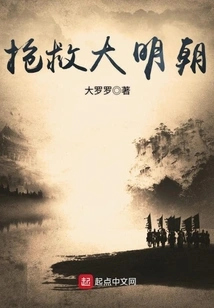
Save the Ming Dynasty
by Daluoluo
About This Novel
The thief Zhu Cixiang is more treacherous than a traitor, and more deceptive than Li Zicheng! --Chuang King Li Zi founded Mahuya Mountain and looked to the southeast with a lot of emotion. This son of Cixi is disobedient, unfilial, treacherous and cruel. It is like the reincarnation of Cao Cao and the resurrection of Sima, making him the emperor. The traitors, treacherous ministers and unruly people all over the world will definitely miss me! --Emperor Chongzhen of the Ming Dynasty cried bitterly in front of the Xiaoling Mausoleum of the Ming Dynasty. I am wronged! I, Hong Chengchou, am really not an internal agent of the Zhu thief Cihong. I am completely loyal to the Qing Dynasty! --Hong Chengchou, Minister of War of the Qing Dynasty, shouted loudly on the execution ground. Father, don't run away, sons and ministers should be filial! --These are the true words of the Ming Dynasty Prince Zhu Cixiang, who was possessed by the soul of an honest child from the 21st century, holding a sword and chasing Emperor Chongzhen. Book club group: 959444276
Official Sources
What Readers Think
Rating
Community(0)
Official(274)Scraped 2mo ago
support
Read history, look at history, practice brings true knowledge, knowledge of civilization First of all, as a senior reader, I have been reading books for more than ten years. I also wrote a few books intermittently, and of course I read more. The history of the Ming Dynasty, as one of the four major disaster areas in ancient times, I often pay attention to and participate in this issue. Before discussing the history of the Ming Dynasty, we have several questions that cannot be avoided. ① Primitive society, slave society, semi-slave and semi-feudal society, feudal society, and modern society. Which one is closer to modern society? Of course, you can look at the history of the East and the West. It was the West that first entered modern society and then led the world. Comparing all aspects one by one, you will find that the primitive society is closer to modern society. Are you surprised by this result? ② Analyzing Eastern history, if all the ancient farming dynasties belonged to feudal society, then the minority regimes (such as Yueshi, Xiongnu, Koryo, Dali, Liang, Jin, Yuan, Mongolia, Manchu Qing), were they slave societies (or semi-slave and semi-feudal societies)? Why feudal society basically cannot defeat slave society? Why is it that a large population cannot defeat a small population? The answer is obviously because the mobilization ability of feudal society is not as good as that of slave society, so it cannot defeat it. ③All the farming dynasties in the East, starting from the Qin Dynasty, were almost all feudal societies. The rulers have always governed the country with Confucianism alone, and the mobilization ability is only the right of the royal family. In the West, various sects and kingdoms have been combined. Both the sects and the kings have the mobilization ability. Sometimes the king is not as good as the pope. It is interesting to compare and find that the emperor has no one to check and balance, but the king has the pope to check and balance. Isn't it interesting? Then we have a question, why does the emperor have no checks and balances? It's because the church cannot develop. Why? Because the church has been suppressed by the rulers in the East (Buddhism in Thailand became the Shaolin Temple in the East, Christians became red-haired ghosts, and local Taoism and Red Lotus were rebels), haha! Have you discovered that the West is more ignorant than ours? ④Why can the West take the lead in developing modern society (and even have the throne), but the East cannot, but must look to the West for guidance? It is not because Easterners are not as smart as Westerners. The only answer is that we have taken a detour, and we are going further and further on the detour and are unwilling to come down. ④After reading the above articles, you will find that our feudal society is not as good as the slave society in the West (the West was a slave society in the Middle Ages). Of course, we do not look at the problem from the perspective of the rulers, but from the perspective of the masses. Did this result subvert your knowledge? Did you feel shocked? So let's discuss when did we in the East start to take a detour. Looking back on our history, it was not until Qin Shihuang that we began to only focus on Confucianism and abolished hundreds of schools of thought. Well, we started from the Warring States Period. What are the deeds of Qin Shihuang? Building the Great Wall and the Terracotta Warriors unites the six kingdoms, only respecting Confucianism and abolishing hundreds of schools of thought. The Great Wall Terracotta Warriors and Horses are tourist attractions, uniting the six kingdoms is an achievement, and respecting Confucianism is a fault. Is it different from what we have learned? Finally, as time progresses, our horizons will become wider and wider, and our knowledge will become more profound. Let's work hard together! Everyone
How the old Ming Dynasty was reborn, let's see the reorganization experts come to Beijing
This book is indeed very unique. Books about the late Ming Dynasty are very cheap and unfold the story from the perspective of the royal family in the late Ming Dynasty. This writing method that takes the advantages of the late Ming Dynasty as the starting point is innovative in itself. How the Ming Dynasty was reorganized, how it returned to its peak, and how the old system regained new vitality. This prospect is really exciting!
Haha, the protagonist is better than Zhao Ritian.
To be honest, Emperor Chongzhen is a good emperor, if it is in peacetime. The late Ming Dynasty cannot be saved by just one prince. It is difficult to stop the rolling wheel of history. You can just say that during that period, business could not save anyone, there was no food, and just two coins would lead to inflation. At that time, there was no old man Yuan Longping who invented hybrid rice for you to keep you fed and drunk. The result of no food was that money was not money at all. If you go to Venezuela and take a look, what is the difference between money and paper? It is true that there is no money. Moreover, the real ruling class of the Ming Dynasty was the clan. If there was a rebel in the clan and they were not united, how would it be easy to lead the team? Power is dispersed and the emperor has no power anymore. What should we do? Emperor Chongzhen asked his ministers to raise funds, but no one was willing to contribute money. They were all crying about poverty. When the Qing army entered the pass, they held a knife to their necks, and everyone was extremely rich.
How did this book get on the list?
What the author writes is a bit taken for granted. First of all, can governing a country be the same as governing a company? Do you want to know about the party struggle? Do you want to know more about the eight major businessmen who betrayed the country? Li Zicheng surrounded Beijing. Someone in Beijing opened the city gate to find out? Secondly, there were no commercial taxes in the late Ming Dynasty, and they all relied on collecting taxes from the people. That's why Wei Zhongxian forced commercial taxes to be collected. After Wei Zhongxian's death, the commercial taxes were gone. At the end of the Ming Dynasty, the national tax revenue was only a few million silver. When the author talks about moving to the south, don't you think that the south is the headquarters of the Donglin Party and the Eight Major Businessmen. Do you expect to collect their taxes and ask them to help you save the situation? Nanqian does not deny that there is hope to save the situation, but you must have the ability to break their power network! After the Ming Dynasty and the Qing Dynasty faced each other, they could still fight with each other, and the good situation of dividing the river and governing it was pushed back by others. You will know that governing the country is not that simple.
Stop writing it, it's already disturbing at the beginning.
Li Zicheng is here in four days. What company are you still talking about? What's the use of running out? At that time, Li Zicheng's influence was much more powerful than that of the emperor. Who would dare to take you in? He also said that the merchants' taxes were not paid to the treasury. Haha, they didn't pay them! What you pay is not called taxes, it is money to bribe officials. There are still people who evade taxes in modern society. At that time, the country was in such a bad state. Do you think businessmen can pay taxes?
Why did the author say in another book that the Song Dynasty, the poorest among the Han dynasties, was rich?
This book is quite to my taste, and I read the first hundred or so chapters of the author's The Traitor World when I was catching up. I don't know where the evidence comes from because the author said in his book The Traitor of the World that the Song Dynasty was richer than the Ming Dynasty. Historians have long concluded that the Song Dynasty was poor and weak. Even Zhu Xi said that the Northern Song Dynasty collapsed because of lack of money. The Ming Dynasty was as far away as the Han and Tang Dynasties, and the Long Song Dynasty ruled! As for the Riverside Scene during the Qingming Festival, I only said that Shanghai is still one of the world's financial centers, a poor country but a rich city. In an agricultural society, there is no GDP. Food is the unit to measure a country's wealth. The Song Dynasty established the Yihe River three times and transformed the Central Plains into primeval forests. Why could the Jin Dynasty reach Kaifeng directly? It was the Song Dynasty that turned the Central Plains into an uninhabited land for thousands of miles, with no city to defend. All kinds of exorbitant taxes and miscellaneous taxes, and exploitation were the most severe in all dynasties. Ouyang Xiu and Su Shi both said: The methods of exploitation in ancient times were all used in the Song Dynasty, and they were seven times heavier. Therefore, a large number of farmers went bankrupt and were forced to work in cities. There were famines and peasant uprisings every year. In the face of uprisings, the Song Dynasty took the young and strong back to the army to raise them, and let the old and weak starve to death. This was also one of the reasons for redundant troops. However, the Song Dynasty had some troubles. It returned to the Yi River three times and killed the two enemies of Jin and Yuan. It took Zhu Yuanzhang of the Ming Dynasty decades to restore the Central Plains. In addition to food, another condition to measure the prosperity of a country is to have enough food and to build a lot of infrastructure at the same time. The Ming Dynasty could do exactly this, but the Song Dynasty could not, because the Song Dynasty also needed to import grain from the Jin Kingdom.
I feel like Jiang Daming's character is gone in this book. As an emperor, the prince actually had the idea of paying tribute to the Tatars. Moreover, the protagonist throughout the book looked at the Ming Dynasty from a capitalist perspective and even wanted to turn the Ming Dynasty into a capitalist country. But have you ever thought that if it became a capitalist country, would the Ming Dynasty still be the Ming Dynasty? Is it really okay for a country that only cares about profit and a country controlled by various consortiums to be like this? And there is a saying that capital has no borders and no nations. Compared with this one (Rescuing the Ming Dynasty), I prefer another book about the last Ming Dynasty (The Last Ruthless Man of the Ming Dynasty)
After reading less than ten pictures, I listened to the author's analysis. To be honest, I don't even know where to complain! The most talked about thing here is moving to the south. Do you think you are the only one who has thought of it? No one else can think of it? It simply won't work in that situation! Northern power groups must abandon their foundations when they move south. No one can make a choice without a knife on their necks. Moreover, the southern forces must give up their interests, because the north must be orthodox. This is even more impossible. The bottles and jars in your house can be taken away if someone asks for them. Are you willing? So don't even think about it, moving south is simply not feasible! That means heaven and earth are all against you! Then, the author listed a series of advantages after moving south, including money, soldiers, and talents! Which of the questions is yours? The most ridiculous thing includes Zheng Zhilong! He is a pirate himself, brother! Why should I listen to you? When we discussed moving south, we could take our time and even take a few years to do it. Bring your entire family and even your troops with you! This is called migrating south, and the best you can think of is fleeing south. What's the use of running away alone? I have no money and no soldiers. He is just a puppet emperor! Don't you know what Emperor Xian of the Han Dynasty was like? The author also uses statistical analysis to say that the Ming Dynasty is not bad at all, as long as you have money, you can fight. But it's actually rotten at the root! No matter how much money you give to your subordinates, they will only support their own private soldiers! Officers and soldiers are still like beggars, whether they have food or clothing to eat! How many famous historical figures have analyzed things, are you the only one who is smart? The Ming Dynasty was inevitably destroyed from the Wanli period! Those above are fighting for power and those below are engaging in corruption and bribery. People are starving! Nothing you do at this time is of any use! Only by overthrowing and starting over can there be hope! It's not like the author said that China has great potential and can survive immediately if it changes its ruler! Ming Dynasty is like a terminal cancer. You have sores on your head and thick discharge on your soles. Do you want him to scrape the poison on you? Is it possible? No one can hurt themselves. We can only use the help of others to kill all those with vested interests! Only by redistributing social resources can we survive! As an emperor of the Ming Dynasty, can you kill yourself and all your ministers with a knife?
It is understandable to compare the Ming Dynasty to a company. The author really treats a country as a company. The situation can be reversed by changing the management. The trade deficit and market share are still stable, and he still wants to turn losses into profits. The second chapter keeps saying that the Ming Dynasty is not dead, and it is said that the upper class is rotten. The author has no clue what kind of people are at the bottom of the Ming Dynasty. It is a common problem of the feudal dynasty that the imperial power does not go to the countryside. In addition, Li Zicheng arrived in the capital in two or three days. The border towns were defeated, and the imperial city was plagued by plague. Is there any room for the Ming Dynasty to continue to rot?
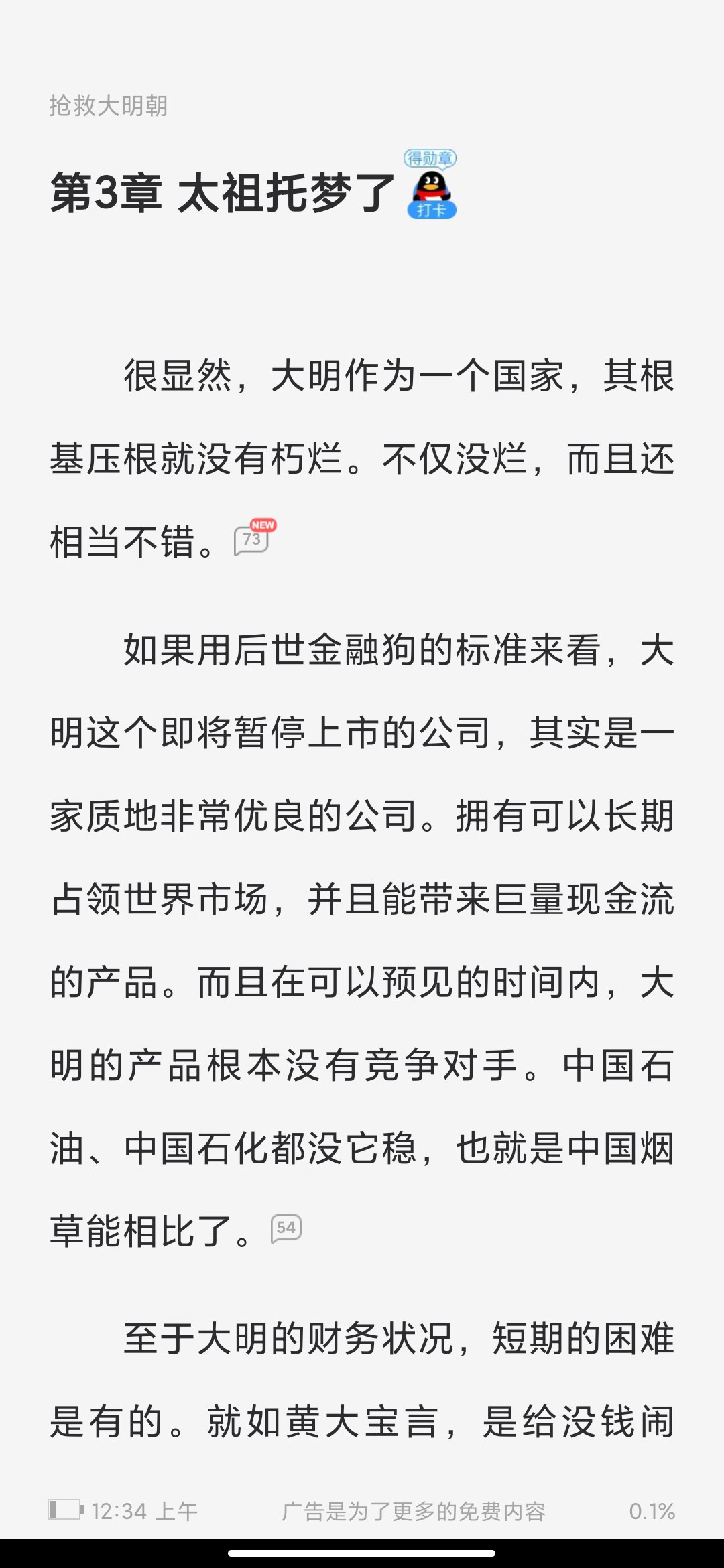
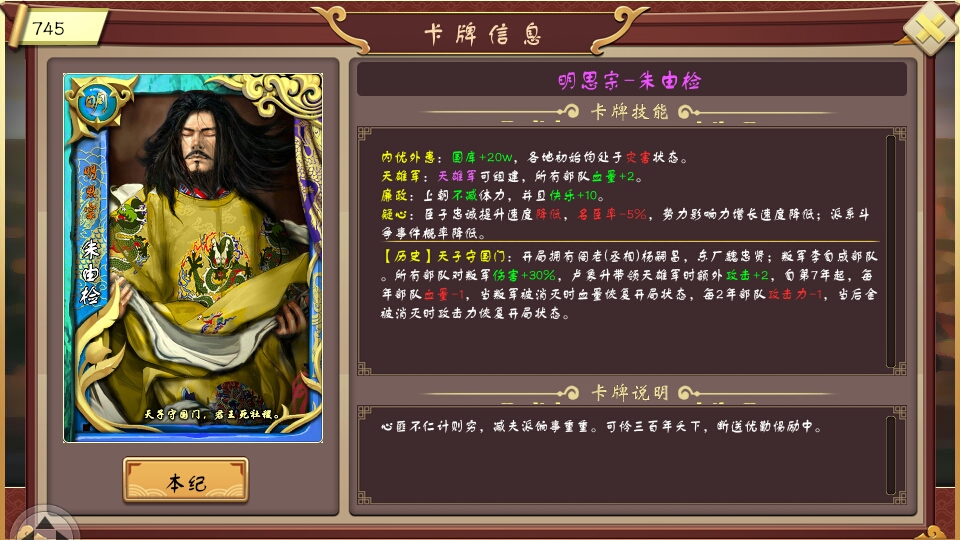
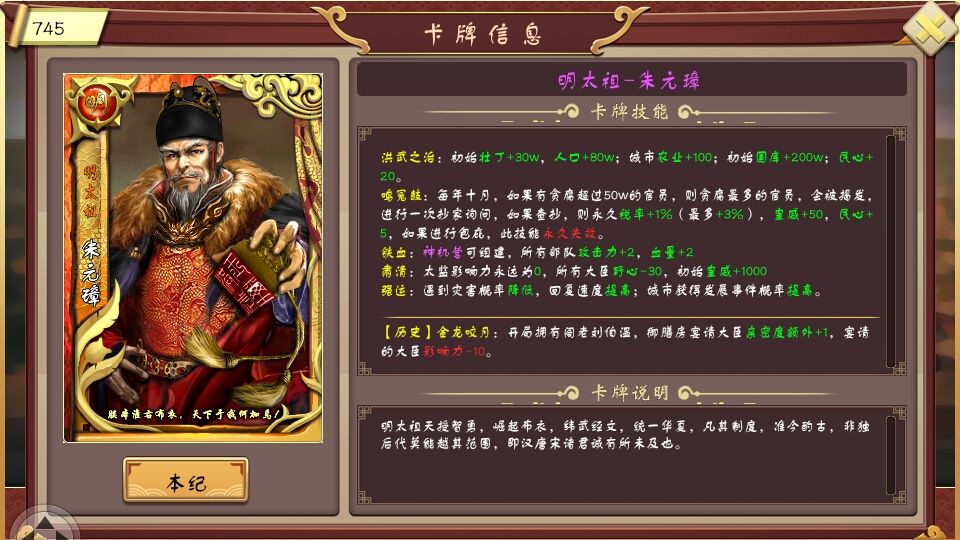
Is anyone playing with this? ...
No text. ..................
Rating
Community(0)
Official(274)Scraped 2mo ago
support
Read history, look at history, practice brings true knowledge, knowledge of civilization First of all, as a senior reader, I have been reading books for more than ten years. I also wrote a few books intermittently, and of course I read more. The history of the Ming Dynasty, as one of the four major disaster areas in ancient times, I often pay attention to and participate in this issue. Before discussing the history of the Ming Dynasty, we have several questions that cannot be avoided. ① Primitive society, slave society, semi-slave and semi-feudal society, feudal society, and modern society. Which one is closer to modern society? Of course, you can look at the history of the East and the West. It was the West that first entered modern society and then led the world. Comparing all aspects one by one, you will find that the primitive society is closer to modern society. Are you surprised by this result? ② Analyzing Eastern history, if all the ancient farming dynasties belonged to feudal society, then the minority regimes (such as Yueshi, Xiongnu, Koryo, Dali, Liang, Jin, Yuan, Mongolia, Manchu Qing), were they slave societies (or semi-slave and semi-feudal societies)? Why feudal society basically cannot defeat slave society? Why is it that a large population cannot defeat a small population? The answer is obviously because the mobilization ability of feudal society is not as good as that of slave society, so it cannot defeat it. ③All the farming dynasties in the East, starting from the Qin Dynasty, were almost all feudal societies. The rulers have always governed the country with Confucianism alone, and the mobilization ability is only the right of the royal family. In the West, various sects and kingdoms have been combined. Both the sects and the kings have the mobilization ability. Sometimes the king is not as good as the pope. It is interesting to compare and find that the emperor has no one to check and balance, but the king has the pope to check and balance. Isn't it interesting? Then we have a question, why does the emperor have no checks and balances? It's because the church cannot develop. Why? Because the church has been suppressed by the rulers in the East (Buddhism in Thailand became the Shaolin Temple in the East, Christians became red-haired ghosts, and local Taoism and Red Lotus were rebels), haha! Have you discovered that the West is more ignorant than ours? ④Why can the West take the lead in developing modern society (and even have the throne), but the East cannot, but must look to the West for guidance? It is not because Easterners are not as smart as Westerners. The only answer is that we have taken a detour, and we are going further and further on the detour and are unwilling to come down. ④After reading the above articles, you will find that our feudal society is not as good as the slave society in the West (the West was a slave society in the Middle Ages). Of course, we do not look at the problem from the perspective of the rulers, but from the perspective of the masses. Did this result subvert your knowledge? Did you feel shocked? So let's discuss when did we in the East start to take a detour. Looking back on our history, it was not until Qin Shihuang that we began to only focus on Confucianism and abolished hundreds of schools of thought. Well, we started from the Warring States Period. What are the deeds of Qin Shihuang? Building the Great Wall and the Terracotta Warriors unites the six kingdoms, only respecting Confucianism and abolishing hundreds of schools of thought. The Great Wall Terracotta Warriors and Horses are tourist attractions, uniting the six kingdoms is an achievement, and respecting Confucianism is a fault. Is it different from what we have learned? Finally, as time progresses, our horizons will become wider and wider, and our knowledge will become more profound. Let's work hard together! Everyone
How the old Ming Dynasty was reborn, let's see the reorganization experts come to Beijing
This book is indeed very unique. Books about the late Ming Dynasty are very cheap and unfold the story from the perspective of the royal family in the late Ming Dynasty. This writing method that takes the advantages of the late Ming Dynasty as the starting point is innovative in itself. How the Ming Dynasty was reorganized, how it returned to its peak, and how the old system regained new vitality. This prospect is really exciting!
Haha, the protagonist is better than Zhao Ritian.
To be honest, Emperor Chongzhen is a good emperor, if it is in peacetime. The late Ming Dynasty cannot be saved by just one prince. It is difficult to stop the rolling wheel of history. You can just say that during that period, business could not save anyone, there was no food, and just two coins would lead to inflation. At that time, there was no old man Yuan Longping who invented hybrid rice for you to keep you fed and drunk. The result of no food was that money was not money at all. If you go to Venezuela and take a look, what is the difference between money and paper? It is true that there is no money. Moreover, the real ruling class of the Ming Dynasty was the clan. If there was a rebel in the clan and they were not united, how would it be easy to lead the team? Power is dispersed and the emperor has no power anymore. What should we do? Emperor Chongzhen asked his ministers to raise funds, but no one was willing to contribute money. They were all crying about poverty. When the Qing army entered the pass, they held a knife to their necks, and everyone was extremely rich.
How did this book get on the list?
What the author writes is a bit taken for granted. First of all, can governing a country be the same as governing a company? Do you want to know about the party struggle? Do you want to know more about the eight major businessmen who betrayed the country? Li Zicheng surrounded Beijing. Someone in Beijing opened the city gate to find out? Secondly, there were no commercial taxes in the late Ming Dynasty, and they all relied on collecting taxes from the people. That's why Wei Zhongxian forced commercial taxes to be collected. After Wei Zhongxian's death, the commercial taxes were gone. At the end of the Ming Dynasty, the national tax revenue was only a few million silver. When the author talks about moving to the south, don't you think that the south is the headquarters of the Donglin Party and the Eight Major Businessmen. Do you expect to collect their taxes and ask them to help you save the situation? Nanqian does not deny that there is hope to save the situation, but you must have the ability to break their power network! After the Ming Dynasty and the Qing Dynasty faced each other, they could still fight with each other, and the good situation of dividing the river and governing it was pushed back by others. You will know that governing the country is not that simple.
Stop writing it, it's already disturbing at the beginning.
Li Zicheng is here in four days. What company are you still talking about? What's the use of running out? At that time, Li Zicheng's influence was much more powerful than that of the emperor. Who would dare to take you in? He also said that the merchants' taxes were not paid to the treasury. Haha, they didn't pay them! What you pay is not called taxes, it is money to bribe officials. There are still people who evade taxes in modern society. At that time, the country was in such a bad state. Do you think businessmen can pay taxes?
Why did the author say in another book that the Song Dynasty, the poorest among the Han dynasties, was rich?
This book is quite to my taste, and I read the first hundred or so chapters of the author's The Traitor World when I was catching up. I don't know where the evidence comes from because the author said in his book The Traitor of the World that the Song Dynasty was richer than the Ming Dynasty. Historians have long concluded that the Song Dynasty was poor and weak. Even Zhu Xi said that the Northern Song Dynasty collapsed because of lack of money. The Ming Dynasty was as far away as the Han and Tang Dynasties, and the Long Song Dynasty ruled! As for the Riverside Scene during the Qingming Festival, I only said that Shanghai is still one of the world's financial centers, a poor country but a rich city. In an agricultural society, there is no GDP. Food is the unit to measure a country's wealth. The Song Dynasty established the Yihe River three times and transformed the Central Plains into primeval forests. Why could the Jin Dynasty reach Kaifeng directly? It was the Song Dynasty that turned the Central Plains into an uninhabited land for thousands of miles, with no city to defend. All kinds of exorbitant taxes and miscellaneous taxes, and exploitation were the most severe in all dynasties. Ouyang Xiu and Su Shi both said: The methods of exploitation in ancient times were all used in the Song Dynasty, and they were seven times heavier. Therefore, a large number of farmers went bankrupt and were forced to work in cities. There were famines and peasant uprisings every year. In the face of uprisings, the Song Dynasty took the young and strong back to the army to raise them, and let the old and weak starve to death. This was also one of the reasons for redundant troops. However, the Song Dynasty had some troubles. It returned to the Yi River three times and killed the two enemies of Jin and Yuan. It took Zhu Yuanzhang of the Ming Dynasty decades to restore the Central Plains. In addition to food, another condition to measure the prosperity of a country is to have enough food and to build a lot of infrastructure at the same time. The Ming Dynasty could do exactly this, but the Song Dynasty could not, because the Song Dynasty also needed to import grain from the Jin Kingdom.
I feel like Jiang Daming's character is gone in this book. As an emperor, the prince actually had the idea of paying tribute to the Tatars. Moreover, the protagonist throughout the book looked at the Ming Dynasty from a capitalist perspective and even wanted to turn the Ming Dynasty into a capitalist country. But have you ever thought that if it became a capitalist country, would the Ming Dynasty still be the Ming Dynasty? Is it really okay for a country that only cares about profit and a country controlled by various consortiums to be like this? And there is a saying that capital has no borders and no nations. Compared with this one (Rescuing the Ming Dynasty), I prefer another book about the last Ming Dynasty (The Last Ruthless Man of the Ming Dynasty)
After reading less than ten pictures, I listened to the author's analysis. To be honest, I don't even know where to complain! The most talked about thing here is moving to the south. Do you think you are the only one who has thought of it? No one else can think of it? It simply won't work in that situation! Northern power groups must abandon their foundations when they move south. No one can make a choice without a knife on their necks. Moreover, the southern forces must give up their interests, because the north must be orthodox. This is even more impossible. The bottles and jars in your house can be taken away if someone asks for them. Are you willing? So don't even think about it, moving south is simply not feasible! That means heaven and earth are all against you! Then, the author listed a series of advantages after moving south, including money, soldiers, and talents! Which of the questions is yours? The most ridiculous thing includes Zheng Zhilong! He is a pirate himself, brother! Why should I listen to you? When we discussed moving south, we could take our time and even take a few years to do it. Bring your entire family and even your troops with you! This is called migrating south, and the best you can think of is fleeing south. What's the use of running away alone? I have no money and no soldiers. He is just a puppet emperor! Don't you know what Emperor Xian of the Han Dynasty was like? The author also uses statistical analysis to say that the Ming Dynasty is not bad at all, as long as you have money, you can fight. But it's actually rotten at the root! No matter how much money you give to your subordinates, they will only support their own private soldiers! Officers and soldiers are still like beggars, whether they have food or clothing to eat! How many famous historical figures have analyzed things, are you the only one who is smart? The Ming Dynasty was inevitably destroyed from the Wanli period! Those above are fighting for power and those below are engaging in corruption and bribery. People are starving! Nothing you do at this time is of any use! Only by overthrowing and starting over can there be hope! It's not like the author said that China has great potential and can survive immediately if it changes its ruler! Ming Dynasty is like a terminal cancer. You have sores on your head and thick discharge on your soles. Do you want him to scrape the poison on you? Is it possible? No one can hurt themselves. We can only use the help of others to kill all those with vested interests! Only by redistributing social resources can we survive! As an emperor of the Ming Dynasty, can you kill yourself and all your ministers with a knife?
It is understandable to compare the Ming Dynasty to a company. The author really treats a country as a company. The situation can be reversed by changing the management. The trade deficit and market share are still stable, and he still wants to turn losses into profits. The second chapter keeps saying that the Ming Dynasty is not dead, and it is said that the upper class is rotten. The author has no clue what kind of people are at the bottom of the Ming Dynasty. It is a common problem of the feudal dynasty that the imperial power does not go to the countryside. In addition, Li Zicheng arrived in the capital in two or three days. The border towns were defeated, and the imperial city was plagued by plague. Is there any room for the Ming Dynasty to continue to rot?
Is anyone playing with this? ...
No text. ..................
You Might Also Like
Reborn Female General
Qianshan Tea Guest
Tomorrow
Jie And 2
Shao Song
Grenades Are Afraid Of Water
Dreaming Back to the Great Spring
Wang Zijun
Why Did the Emperor Rebel?
Yue Qilin
Daming Primary School Students
Go With The Breeze
Guide to Traveling Through the Northern Song Dynasty
Wang Zijun
Ming Dynasty Talker
Go With The Breeze
I Really Don't Do My Job Properly
Who Will I Return To?
Great Qing Dynasty Talker
Melancholy And Laughter