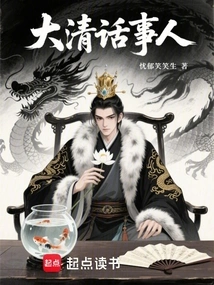
Great Qing Dynasty Talker
About This Novel
If you travel back to the Qing Dynasty, how can you get the first pot of gold for the rebellion? Glass? Perfume? Cement? None. Li Yu, a failed art student, made his first pot of gold with a hand-painted human body painting. The Qing court was cruel, daring to kill, rob, exploit, and confuse right and wrong. The common people are cowardly, able to endure, endure, bully, and self-anaesthetize. Li Yu can only rely on people in the world. Transform Caobang and manage Jiangnan. When his wings are full, he will raise his troops for the Northern Expedition. [Rebellion, weak system, passionate]
Official Sources
What Readers Think
Rating
Community(0)
Official(63)Scraped 2mo ago
The Qing Dynasty set China back a hundred years. Those who overthrew the Qing Dynasty were all outstanding people.
I just love the book about Ching Ching Rebellion! No explanation
I've read almost half of it, it's a really good book, haha
Hi, hi
Wear it clean without causing damage, chrysanthemum set electric drill
Invasion and killing of 50 million people. The Qing Dynasty was so cruel that people felt like clowns when they saw it. All kinds of oppression and prohibition of reading.
Excellent and sophisticated clear-cut rebellion article
To get straight to the point, this article is far ahead of its peers in all aspects. The writing is sophisticated and the plot is smooth, neither suffocating nor exaggerated. The author has a strong literary foundation and can express it freely. It is a good work. The main plot is very simple. The protagonist is a failed art student who travels back in time to the Qianlong era of the Qing Dynasty and becomes the second master of the white paper fan in a certain hall. After being ignorant, he chose to accumulate strength and rebel without hesitation. The overall rebellion process is based on reality and the pace is very slow. Just the preparation alone took more than two hundred chapters. The main reason is that the protagonist has nothing. The system that sent him through time only gave him a small-scale manual lathe and then disappeared completely. As a liberal arts student, the protagonist's efficiency in using this set of lathes was very low. It took him a long time to build a small-scale matchlock gun that he made at home. Then the Qianlong in this article is really strong, although he is greedy for fame and is very happy with his success. But the portrayal is very close to the ruthless political machine in history, that is, Wan Gui Wan, with extremely strong political acumen, the complete annihilation of the Dzungars, as an agricultural country, mobilizing hundreds of thousands of people to serve in the Jinchuan Campaign and other martial arts, which not only frightened the European colonists who were watching, but also frightened the protagonist. He did not dare to determine the true level of the Qing army, so he had to develop carefully. Before the rebellion, he tried to find a way to test it with his own troops and the elites of the Qing army to determine the gap between the two sides. This proved necessary. Compared with the decadent Daoguang of the late Qing Dynasty, the combat effectiveness of the Qing army is terrifying. The popularity of firearms is very high. Combat mobilization has a strong development of civilian potential. Commanders such as the famous general Agui have a strong overall view. The combat effectiveness of elite soldiers such as Sauron Savage and the Eight Banners of Mongolia is off the charts. The key point is that Qianlong himself is not as corrupt as ordinary Qing Dynasty novels. He will be keenly aware of the protagonist's heavy use of gunpowder, and think of the lack of saltpeter in Jiangnan where the protagonist raised an army and commercial sanctions. He would compromise with the foreigners he despised and the local gentry he was wary of. He will calmly admit defeat and use his advantage of a large territory and large population to try to drag the rhythm of the war into a quagmire. In short, it is really strong, and there are many local forces who are foolish and loyal. The protagonist started his career by drawing pornographic pictures, and then took the route of a local bully. While developing his power, he corrupted all parties. Through marriage, giving money and doing bad things together, he quietly tied some local forces onto the rebel chariot. He doesn't believe in so-called loyalty and pays attention to things that come naturally. What he does is not concealed like other Qing Dynasty novels. He purchases supplies, trains weapons, and builds bases step by step. His desire to rebel cannot be concealed at all. The protagonist does not expect it to go smoothly. After a certain period of time, he begins to develop wildly and grabs every day. People who were deeply tied to him naturally joined in at this time, because everyone had the same interests, and thanks to the strict continuous sitting of the Qing Dynasty, no one could get out of the car. The rebellion style is close to the semi-feudal, semi-colonial and semi-capitalist style of the First World War... That is, it has certain advanced features, such as tactical weapons and ways of thinking; it pays attention to navy and artillery; it uses more advanced systems to obtain funds and do trade... At the same time, some of them are perfectly integrated into the ranks. , Such as subsidizing the enemy's food and salary for the whole family of the gentry; expelling prisoners to use as cannon fodder to fill ravines; allowing soldiers to burn, kill and loot to a limited extent, etc... In summary, it is more feasible and realistic based on the times. Although it is terrible, it is better than its peers. The political aspect is also based on this principle. For example, when dealing with foreigners, the weaker Portugal will directly attack and massacre them, while the stronger Britain will first acquiesce to the territory it robbed and prepare for liquidation later (actually Britain is also very mature, thinking that the protagonist will take the initiative to return it if it can win, and silently occupy it if it reaches a stalemate)... In short, there is coordination and compromise. It is not done in one go like Shuangwen, but changes at any time. In terms of emotions, it is purely a political marriage, without real love. The overall style is still very relaxed. The author describes the same thing from the first perspectives of multiple characters and analyzes it from different angles. He is good at breaking through the surface and reflecting the characteristics of the entire era from the description of one incident. I like to blend memes and reflect reality. I have a good sense of scale and it's very natural. He is very professional in the economic, political, and diplomatic aspects of the Qing Dynasty's operation, and has detailed figures and sources of figures. The portrayal of important characters is spot on. For example, the leader of the White Lotus is usually portrayed in online novels as greedy for life and afraid of death. He only knows how to use religion to deceive people for his own enjoyment. His relationship with the protagonist is basically the same as water and fire. In this article, the leader of the White Lotus used his own wisdom to figure out some solutions, and he also realized some truths. After the rebellion started, at the peak of his views on the protagonist, he hoped that the protagonist would go bankrupt and run away to become his second-in-command. He sincerely admired and wanted to reuse the protagonist. It is true that he was corrupted by the limitations of his knowledge and the insufficiency of religion itself, and finally failed. All he wanted to do was run to join the protagonist and become horns together. At the last moment, he regained his original intention during the rebellion, regained his courage and fought until he died and jumped off a cliff with no trace of his body left. Such people are greedy, ignorant and short-sighted, but their idealism is indeed sincere enough that they are still missed by the old believers who fled after their death. Although he knew it was impossible based on his age, he still deceived himself from a religious perspective and continued to fight on the road of rebellion. The disadvantage is that these fully blossoming characterizations make the article more full and vivid. Of course, the article may be a little scattered and confusing at some points, but the flaws are not outweighed. The article's stance is based on the times, and its style has the characteristics of feudal colonial capital, so it may make some people who have received modern education feel uncomfortable. The overall pace, especially the pace in the preparation phase, is very slow... But it is quite fast in the later stages, which is not in line with the usual rhythm of Shuangwen. The protagonist's own level is limited and he cannot consider all aspects of the problem, so some decisions will not be perfect. Please refer to each comment area for details. The quarrel was very fierce, and the kings were all red-faced and talked at length. The specifics may be different. In short, this author's two books both write about Qing Dynasty and rebellion. They are very professional and excellent and worth reading.
What can I say? The plot is very good. The only thing that makes me uncomfortable is that the background of the heroine is the same as the protagonist. I don't understand why such a heroine is arranged. The background can be arranged better. I don't understand why such a background is set. Some readers say that the author has a shoe-breaking habit. Maybe it is true. Maybe there is some. People would say that this is not the key to the heroine, but that the female character who has a relationship with the protagonist has the most roles since her debut, and her position is also extremely important. She manages the finances and logistics of the protagonist, and all the female characters who have a relationship with the protagonist are promoted by this woman. Even if she is not the queen on the surface in the end, she is the queen secretly.
If you want to be clear and rebellious, give it five stars first and then watch it.
I haven't read it yet, but the people are really not good. The people under the Qing Dynasty were the most ignorant.
The writing is smooth and sultry, especially in the early stages. After the rebellion, it became impossible. During the Qianlong period of rebellion, the biggest weapon was deadly propaganda: the Han people were a hundred times more powerful than the Manchus! After several bloody battles, all the Han people in the Green Camp died, and there would be endless conflicts, suspicion of the Han people, the Han people would not dare to use it, and the Manchus would not use it! This is the biggest conspiracy. The conspiracy and saucy manipulations are well written, and the results will definitely be better than they are now.
Mr. Li is considered outstanding among the rebels at the starting point. He has the means, the scheming, and the evil spirit. The key is that he is ruthless, unlike some novice rebels who love the people like their own children despite the poor conditions. His opponents are also ruthless. In addition to not choosing the location of the rebellion, the opponents are very strong, but this can show the power of Mr. Li.
Rating
Community(0)
Official(63)Scraped 2mo ago
The Qing Dynasty set China back a hundred years. Those who overthrew the Qing Dynasty were all outstanding people.
I just love the book about Ching Ching Rebellion! No explanation
I've read almost half of it, it's a really good book, haha
Hi, hi
Wear it clean without causing damage, chrysanthemum set electric drill
Invasion and killing of 50 million people. The Qing Dynasty was so cruel that people felt like clowns when they saw it. All kinds of oppression and prohibition of reading.
Excellent and sophisticated clear-cut rebellion article
To get straight to the point, this article is far ahead of its peers in all aspects. The writing is sophisticated and the plot is smooth, neither suffocating nor exaggerated. The author has a strong literary foundation and can express it freely. It is a good work. The main plot is very simple. The protagonist is a failed art student who travels back in time to the Qianlong era of the Qing Dynasty and becomes the second master of the white paper fan in a certain hall. After being ignorant, he chose to accumulate strength and rebel without hesitation. The overall rebellion process is based on reality and the pace is very slow. Just the preparation alone took more than two hundred chapters. The main reason is that the protagonist has nothing. The system that sent him through time only gave him a small-scale manual lathe and then disappeared completely. As a liberal arts student, the protagonist's efficiency in using this set of lathes was very low. It took him a long time to build a small-scale matchlock gun that he made at home. Then the Qianlong in this article is really strong, although he is greedy for fame and is very happy with his success. But the portrayal is very close to the ruthless political machine in history, that is, Wan Gui Wan, with extremely strong political acumen, the complete annihilation of the Dzungars, as an agricultural country, mobilizing hundreds of thousands of people to serve in the Jinchuan Campaign and other martial arts, which not only frightened the European colonists who were watching, but also frightened the protagonist. He did not dare to determine the true level of the Qing army, so he had to develop carefully. Before the rebellion, he tried to find a way to test it with his own troops and the elites of the Qing army to determine the gap between the two sides. This proved necessary. Compared with the decadent Daoguang of the late Qing Dynasty, the combat effectiveness of the Qing army is terrifying. The popularity of firearms is very high. Combat mobilization has a strong development of civilian potential. Commanders such as the famous general Agui have a strong overall view. The combat effectiveness of elite soldiers such as Sauron Savage and the Eight Banners of Mongolia is off the charts. The key point is that Qianlong himself is not as corrupt as ordinary Qing Dynasty novels. He will be keenly aware of the protagonist's heavy use of gunpowder, and think of the lack of saltpeter in Jiangnan where the protagonist raised an army and commercial sanctions. He would compromise with the foreigners he despised and the local gentry he was wary of. He will calmly admit defeat and use his advantage of a large territory and large population to try to drag the rhythm of the war into a quagmire. In short, it is really strong, and there are many local forces who are foolish and loyal. The protagonist started his career by drawing pornographic pictures, and then took the route of a local bully. While developing his power, he corrupted all parties. Through marriage, giving money and doing bad things together, he quietly tied some local forces onto the rebel chariot. He doesn't believe in so-called loyalty and pays attention to things that come naturally. What he does is not concealed like other Qing Dynasty novels. He purchases supplies, trains weapons, and builds bases step by step. His desire to rebel cannot be concealed at all. The protagonist does not expect it to go smoothly. After a certain period of time, he begins to develop wildly and grabs every day. People who were deeply tied to him naturally joined in at this time, because everyone had the same interests, and thanks to the strict continuous sitting of the Qing Dynasty, no one could get out of the car. The rebellion style is close to the semi-feudal, semi-colonial and semi-capitalist style of the First World War... That is, it has certain advanced features, such as tactical weapons and ways of thinking; it pays attention to navy and artillery; it uses more advanced systems to obtain funds and do trade... At the same time, some of them are perfectly integrated into the ranks. , Such as subsidizing the enemy's food and salary for the whole family of the gentry; expelling prisoners to use as cannon fodder to fill ravines; allowing soldiers to burn, kill and loot to a limited extent, etc... In summary, it is more feasible and realistic based on the times. Although it is terrible, it is better than its peers. The political aspect is also based on this principle. For example, when dealing with foreigners, the weaker Portugal will directly attack and massacre them, while the stronger Britain will first acquiesce to the territory it robbed and prepare for liquidation later (actually Britain is also very mature, thinking that the protagonist will take the initiative to return it if it can win, and silently occupy it if it reaches a stalemate)... In short, there is coordination and compromise. It is not done in one go like Shuangwen, but changes at any time. In terms of emotions, it is purely a political marriage, without real love. The overall style is still very relaxed. The author describes the same thing from the first perspectives of multiple characters and analyzes it from different angles. He is good at breaking through the surface and reflecting the characteristics of the entire era from the description of one incident. I like to blend memes and reflect reality. I have a good sense of scale and it's very natural. He is very professional in the economic, political, and diplomatic aspects of the Qing Dynasty's operation, and has detailed figures and sources of figures. The portrayal of important characters is spot on. For example, the leader of the White Lotus is usually portrayed in online novels as greedy for life and afraid of death. He only knows how to use religion to deceive people for his own enjoyment. His relationship with the protagonist is basically the same as water and fire. In this article, the leader of the White Lotus used his own wisdom to figure out some solutions, and he also realized some truths. After the rebellion started, at the peak of his views on the protagonist, he hoped that the protagonist would go bankrupt and run away to become his second-in-command. He sincerely admired and wanted to reuse the protagonist. It is true that he was corrupted by the limitations of his knowledge and the insufficiency of religion itself, and finally failed. All he wanted to do was run to join the protagonist and become horns together. At the last moment, he regained his original intention during the rebellion, regained his courage and fought until he died and jumped off a cliff with no trace of his body left. Such people are greedy, ignorant and short-sighted, but their idealism is indeed sincere enough that they are still missed by the old believers who fled after their death. Although he knew it was impossible based on his age, he still deceived himself from a religious perspective and continued to fight on the road of rebellion. The disadvantage is that these fully blossoming characterizations make the article more full and vivid. Of course, the article may be a little scattered and confusing at some points, but the flaws are not outweighed. The article's stance is based on the times, and its style has the characteristics of feudal colonial capital, so it may make some people who have received modern education feel uncomfortable. The overall pace, especially the pace in the preparation phase, is very slow... But it is quite fast in the later stages, which is not in line with the usual rhythm of Shuangwen. The protagonist's own level is limited and he cannot consider all aspects of the problem, so some decisions will not be perfect. Please refer to each comment area for details. The quarrel was very fierce, and the kings were all red-faced and talked at length. The specifics may be different. In short, this author's two books both write about Qing Dynasty and rebellion. They are very professional and excellent and worth reading.
What can I say? The plot is very good. The only thing that makes me uncomfortable is that the background of the heroine is the same as the protagonist. I don't understand why such a heroine is arranged. The background can be arranged better. I don't understand why such a background is set. Some readers say that the author has a shoe-breaking habit. Maybe it is true. Maybe there is some. People would say that this is not the key to the heroine, but that the female character who has a relationship with the protagonist has the most roles since her debut, and her position is also extremely important. She manages the finances and logistics of the protagonist, and all the female characters who have a relationship with the protagonist are promoted by this woman. Even if she is not the queen on the surface in the end, she is the queen secretly.
If you want to be clear and rebellious, give it five stars first and then watch it.
I haven't read it yet, but the people are really not good. The people under the Qing Dynasty were the most ignorant.
The writing is smooth and sultry, especially in the early stages. After the rebellion, it became impossible. During the Qianlong period of rebellion, the biggest weapon was deadly propaganda: the Han people were a hundred times more powerful than the Manchus! After several bloody battles, all the Han people in the Green Camp died, and there would be endless conflicts, suspicion of the Han people, the Han people would not dare to use it, and the Manchus would not use it! This is the biggest conspiracy. The conspiracy and saucy manipulations are well written, and the results will definitely be better than they are now.
Mr. Li is considered outstanding among the rebels at the starting point. He has the means, the scheming, and the evil spirit. The key is that he is ruthless, unlike some novice rebels who love the people like their own children despite the poor conditions. His opponents are also ruthless. In addition to not choosing the location of the rebellion, the opponents are very strong, but this can show the power of Mr. Li.
Featured in 10 Booklists
Official(10)
The protagonist colludes with corrupt officials to accumulate strength. Anti-Qing
The main character is an art student who is very good at drawing 3D human bodies. He is a talkative person, so he is naturally anti-green. Summary: Grain (young) It's okay to pass the time, and I don't think it's too toxic at the moment.
A very good piece of Chuan Qingwen. There is a line in it that I particularly like-- "My father-in-law is an old bastard!" The disadvantage is that the author likes to use commas to separate paragraphs. Just like this!
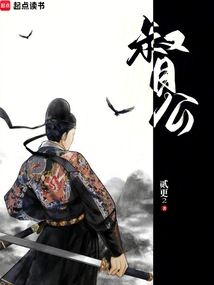
History, if you like it, you can read it, The Rebellion of the Qing Dynasty, that's the story
You Might Also Like

Reborn Female General
Qianshan Tea Guest
I
Wang Zijun
Guide to Traveling Through the Northern Song Dynasty
Wang Zijun
Ming Dynasty Talker
Go With The Breeze
Great Song Dynasty Rascal
Very Useless And Naive
Anti-qing: Starting from the Reincarnation of the Ming Dynasty
Listen To The Wind And Cook The Rainy Night
Tuqing: My First Love Was Cixi
Silent Pastry
Be Domineering and Domineering, Starting from Chinatown
Don't Eat Chopped Green Onion
Anti-qing: Starting from the Jintian Uprising
Listen To The Wind And Cook The Rainy Night
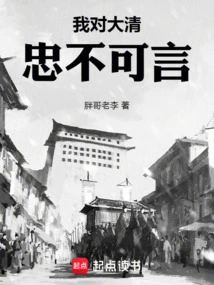
I Am Unspeakably Loyal to the Qing Dynasty
Fat Brother Lao Li