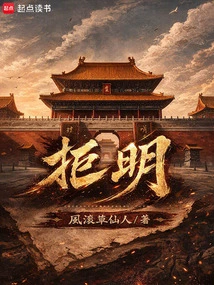
Refusal to Understand
About This Novel
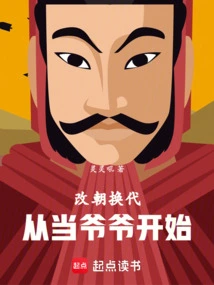
Those who refuse, one is ordinary, the other is extraordinary, unlike others, mastering secrets, and can be a king. He is neither an official nor a citizen, but he is an official and a citizen. He is not decorated with nobles and nobles on the side of the court. -------- The chimney of the kiln factory was still emitting green smoke. The shopkeeper Li Huaiyi squatted at the entrance of the kiln, staring at the fire, but he was thinking about the lazy "ding" when the system settled last night. This system is better than him. From the day he was thrown from a modern social animal to a Ming Dynasty kiln worker, it has only issued an iron rule: if you refuse an official position, you will be rewarded. The more simply you refuse, the more generous the reward will be. From a few taels of silver to lost craftsmanship, it all depends on the sincerity of the person who persuades the official. At first, Li Huaiyi just wanted to be quiet and live a small life guarding the kiln entrance. However, the time traveler's bit of ink can't be covered up. The county magistrate asked him to come out, but he declined: "The common people only know how to burn kilns." System prompt: [Reject an official position once and you will be rewarded with the 'underglaze red stunt']. The magistrate visited the thatched cottage three times, but he declined: "The fire in the kiln is not extinguished, so it is inconvenient to travel far." System settlement: [Reject official position three times to unlock the 'Blue and White Secret Glaze Recipe']. Until the dragon and phoenix porcelain was fired, which shocked Jinling. Zhu Yuanzhang came in disguise and saw that the kiln was full of splendor. He grabbed his wrist and said, "I promise you to be the Minister of the Ministry of Industry and take office immediately." Li Huaiyi bowed: "The common people are scared, but there is really no..." Before he finished speaking, the system's brilliance shined: [Reject the emperor's edict, the ultimate reward: spread the fire of the country's kiln, and shine forever in the Ming Dynasty]. Zhu Yuanzhang looked at the remaining glaze color on his palm, and suddenly bowed deeply to the empty kiln entrance: "Sir, if you don't come out, what will happen to all the people in the world?" -------- Also known as "In the beginning, my father is worshiping heaven, so what the hell can't he become an official?"
Official Sources
What Readers Think
Rating
Community(0)
Official(2)Scraped 1mo ago
Hello readers, I am Tumbleweed (author
I write this just in case someone doesn't understand what the word 'Shu Jun' in the title of the book means. Of course, I know that the people who read the book are all very smart people. If you have different opinions, please use your own opinion. What I explain here is only based on my understanding of these two words. Without further ado, the first thing to understand here is that the word "Shu Jun" needs to be taken apart and understood. What is "pivot" is taken from "Chu Chen Rixuan", which represents a senior official in charge of the country's military and government affairs. He is an auxiliary directly under the emperor. He is a powerful official with more than ten thousand people under one person. It also represents Li Huaiyi who is not an official (he really wanted to be, but couldn't), but as a commoner, he has a core hub position in the fields of business, court, technology, military aircraft, martial arts, etc. What does 'jun' mean? The literal meaning is that you are respected. It implies that Li Huaiyi wanted to achieve the great goal of surpassing the influence of ordinary civilians and taking charge of the overall situation even though he was not an official. In essence, these are all for the purpose of dying under Zhu Yuanzhang's nose... Of course, the word "Shu Jun" has another meaning. That is, another expression of "Zhengjun" refers specifically to those who are talented but unwilling to serve in official positions, and those who are recruited by the court and refuse to serve. The reason why I didn't choose Zhengjun is because the word "Zheng" is a bit unfamiliar. It's okay if I recognize it, but I'm afraid someone will scold me if I don't recognize it... I can't help it. Although the author has a big heart, being scolded will still make him feel uncomfortable, and it may also affect the quality of the writing, etc. Okay, that's it. Here, the author wishes all of you adults a happy old age! Happy New Year! (Hey
Answers to some questions from book friends who are confused about the contents of the book
Some book friends mentioned that the protagonist, the all-powerful Long Aotian, is not quite right. Except for politics, economy, military, and even the machine drawings, which he obtained from his previous life's politics and hobbies, other systems provided him with cement, medical skills, cooking skills, national arts, and firearms modification. Most of them he was unable to master. After all, it was not a framework for cultivating immortals, and his lifespan was limited. He could only pick out three improvements by referring to national arts, and the rest could only be regarded as theoretical knowledge to deal with the enemy. In other words, the protagonist will only pick and learn the things that can play the greatest role for him, and teach others the rest, such as machine blueprints. Without modern tools and no time to study, he can only rely on Zhang Shuhen to put them into practice in the contemporary context, such as cement, given to Zhu For the political purpose of gaining favor, cooking and medical skills also need time to accumulate, so both were handed over to Wan'er, who was more suitable. The latter only selected the parts that could relieve muscle fatigue to learn. It was still under Wan'er's gaze and using companions to increase clinical experience, so he could barely get started. Therefore, talent does not mean that one can master an idea as soon as it comes, and one can grow in martial arts only by sparring with Aman. The modification of firearms is not yet useful, so it is a foreshadowing. As for why the protagonist is trapped in Yingtian Mansion and does not help Lao Zhu's family to do important business, I can only say that ordinary people in the Hongwu Dynasty did not hold any official positions. Even if they were protected by Lao Zhu's family, if they wanted to implement these policies in the Chaotang Group headed by Hu Weiyong, it could be said to be a recipe for death. Moreover, the protagonist was forced into the Zhang Qian case, and he was in a constant conflict with Hu Weiyong. Whenever he dared to leave Yingtian Mansion, he would die outside without going far. The protagonist also tried to vaguely mention whether Hu Weiyong could be dealt with. He could definitely do it, but he should be clear about the consequences of rashly taking action without a suitable excuse. The old Zhu family would not be so stupid. In this case, the protagonist can only participate in political intrigue and internal strife, while increasing his value in the heart of the old Zhu family, while using the momentum of the old Zhu family to develop his own power before the Jin Yiwei spread. If he wants Ying Tianfu Yin's assets, he wants to set up his own intelligence agency, and the same reason is true for sending Zhang Shuhen to the court. He wanted to start the Shilin Talks, but also wanted to improve his reputation in the literary world. He learned martial arts just to not rely on others for everything and to protect himself in critical moments. All he did was to allow himself to stand safely on the side of the court without being an official, not to enter the killing line of Lao Zhu, and not to be easily crushed by the Huaixi nobles and a group of high-ranking officials. There was no disconnect between ability and behavioral logic. The rivers and lakes forces also appear as the protagonist's help, which can be regarded as an introduction. They really come into play when the time is ripe. After the protagonist leaves Yingtian Mansion, there are not many of them. Previously, they mostly stood in line and served as the sword in the hands of the two major forces of the Hongwu Dynasty. The appearance of the protagonist can make the Five Mountains Alliance no longer just a 'useful object', while Wudang Mountain covers the three mountains and appears as a hostile force. But no matter what, the rivers and lakes are the rivers and lakes, and they cannot fight against a large-scale regular army. No matter how high your martial arts skills are, you still have to lie on the ground to fire a salvo, so there will be no possibility of overestimating the guest and even leading to collapse. If you still have any questions, please feel free to ask them again. If there are any questions, I will correct them. If there are no questions, I will answer them.
Rating
Community(0)
Official(2)Scraped 1mo ago
Hello readers, I am Tumbleweed (author
I write this just in case someone doesn't understand what the word 'Shu Jun' in the title of the book means. Of course, I know that the people who read the book are all very smart people. If you have different opinions, please use your own opinion. What I explain here is only based on my understanding of these two words. Without further ado, the first thing to understand here is that the word "Shu Jun" needs to be taken apart and understood. What is "pivot" is taken from "Chu Chen Rixuan", which represents a senior official in charge of the country's military and government affairs. He is an auxiliary directly under the emperor. He is a powerful official with more than ten thousand people under one person. It also represents Li Huaiyi who is not an official (he really wanted to be, but couldn't), but as a commoner, he has a core hub position in the fields of business, court, technology, military aircraft, martial arts, etc. What does 'jun' mean? The literal meaning is that you are respected. It implies that Li Huaiyi wanted to achieve the great goal of surpassing the influence of ordinary civilians and taking charge of the overall situation even though he was not an official. In essence, these are all for the purpose of dying under Zhu Yuanzhang's nose... Of course, the word "Shu Jun" has another meaning. That is, another expression of "Zhengjun" refers specifically to those who are talented but unwilling to serve in official positions, and those who are recruited by the court and refuse to serve. The reason why I didn't choose Zhengjun is because the word "Zheng" is a bit unfamiliar. It's okay if I recognize it, but I'm afraid someone will scold me if I don't recognize it... I can't help it. Although the author has a big heart, being scolded will still make him feel uncomfortable, and it may also affect the quality of the writing, etc. Okay, that's it. Here, the author wishes all of you adults a happy old age! Happy New Year! (Hey
Answers to some questions from book friends who are confused about the contents of the book
Some book friends mentioned that the protagonist, the all-powerful Long Aotian, is not quite right. Except for politics, economy, military, and even the machine drawings, which he obtained from his previous life's politics and hobbies, other systems provided him with cement, medical skills, cooking skills, national arts, and firearms modification. Most of them he was unable to master. After all, it was not a framework for cultivating immortals, and his lifespan was limited. He could only pick out three improvements by referring to national arts, and the rest could only be regarded as theoretical knowledge to deal with the enemy. In other words, the protagonist will only pick and learn the things that can play the greatest role for him, and teach others the rest, such as machine blueprints. Without modern tools and no time to study, he can only rely on Zhang Shuhen to put them into practice in the contemporary context, such as cement, given to Zhu For the political purpose of gaining favor, cooking and medical skills also need time to accumulate, so both were handed over to Wan'er, who was more suitable. The latter only selected the parts that could relieve muscle fatigue to learn. It was still under Wan'er's gaze and using companions to increase clinical experience, so he could barely get started. Therefore, talent does not mean that one can master an idea as soon as it comes, and one can grow in martial arts only by sparring with Aman. The modification of firearms is not yet useful, so it is a foreshadowing. As for why the protagonist is trapped in Yingtian Mansion and does not help Lao Zhu's family to do important business, I can only say that ordinary people in the Hongwu Dynasty did not hold any official positions. Even if they were protected by Lao Zhu's family, if they wanted to implement these policies in the Chaotang Group headed by Hu Weiyong, it could be said to be a recipe for death. Moreover, the protagonist was forced into the Zhang Qian case, and he was in a constant conflict with Hu Weiyong. Whenever he dared to leave Yingtian Mansion, he would die outside without going far. The protagonist also tried to vaguely mention whether Hu Weiyong could be dealt with. He could definitely do it, but he should be clear about the consequences of rashly taking action without a suitable excuse. The old Zhu family would not be so stupid. In this case, the protagonist can only participate in political intrigue and internal strife, while increasing his value in the heart of the old Zhu family, while using the momentum of the old Zhu family to develop his own power before the Jin Yiwei spread. If he wants Ying Tianfu Yin's assets, he wants to set up his own intelligence agency, and the same reason is true for sending Zhang Shuhen to the court. He wanted to start the Shilin Talks, but also wanted to improve his reputation in the literary world. He learned martial arts just to not rely on others for everything and to protect himself in critical moments. All he did was to allow himself to stand safely on the side of the court without being an official, not to enter the killing line of Lao Zhu, and not to be easily crushed by the Huaixi nobles and a group of high-ranking officials. There was no disconnect between ability and behavioral logic. The rivers and lakes forces also appear as the protagonist's help, which can be regarded as an introduction. They really come into play when the time is ripe. After the protagonist leaves Yingtian Mansion, there are not many of them. Previously, they mostly stood in line and served as the sword in the hands of the two major forces of the Hongwu Dynasty. The appearance of the protagonist can make the Five Mountains Alliance no longer just a 'useful object', while Wudang Mountain covers the three mountains and appears as a hostile force. But no matter what, the rivers and lakes are the rivers and lakes, and they cannot fight against a large-scale regular army. No matter how high your martial arts skills are, you still have to lie on the ground to fire a salvo, so there will be no possibility of overestimating the guest and even leading to collapse. If you still have any questions, please feel free to ask them again. If there are any questions, I will correct them. If there are no questions, I will answer them.
You Might Also Like

Reborn Female General
Qianshan Tea Guest
Prime Minister is on Top
Bean Sprouts For Soup
Boiling the Qing Dynasty
Gurunggang
British Literary Giant
Members Are Here
Toyotomi's Wet Dream
Bump Bear
The Power of a Poor Family
Royal Big Mango
I Am a Literary Giant in Russia
Karamazov
My Life as a Samurai in the Late Edo Period of Japan
I Want To Eat Extra Spicy

Literary Master 1879: Traveling Alone in France
The Wind Blows Through The Long Night
Changing Dynasties Starts with Becoming a Grandfather
Lingling Roar