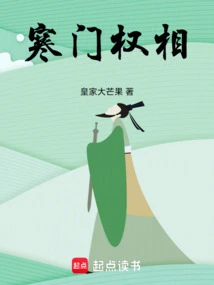
The Power of a Poor Family
About This Novel
In the 19th year of Tiande in the Liang Dynasty, when the fifteen-year-old Qi Zheng was sold to a merchant as a bookboy in Suzhou City; His Royal Highness King Wei, who was ordered to patrol the south of the Yangtze River, hid his whereabouts and arrived in Suzhou quietly. Faced with the dilemma, he followed the instructions of his mother and concubine and visited three great sages one after another. Only three talents recommended by three great sages were harvested. Three days later, outside the mansion where King Wei was staying, everyone headed by King Wei was looking forward to it. But only Qi Zheng appeared. Amidst the sudden scoldings from all around, Qi Zheng slowly took out three invitations from his arms that were sent to him from different channels. Since then, due to fate, the world has been reversed, and the golden scales have turned into dragons, soaring upwards. ... Many years later, Qi, who had grown from a humble scholar to become a powerful prime minister and personally supported two generations of wise kings, began to write his own memoirs, which were regarded as the Bible by future generations: "In the beginning, my dream was very simple. I wanted to ride the best horse, sleep with the most beautiful person, drink the strongest wine, and see the highest scenery. Hey! I didn't expect that they all came true..."
Official Sources
What Readers Think
Rating
Community(0)
Official(15)Scraped 1mo ago
It's far worse than the first one. It's amazing. A poor student was able to read the whole book in an hour. Treat them like family members when they return home. Where has the feudal class solidified? Let's write another one
Questions about the word "humble family"
The word "poor family" has different definitions at different times. What most people know about the poor family relative to the gentry (who control the core political resources) refers to the small and medium-sized landowners who have a certain economic foundation but cannot join the core circle. His notable feature is that he has not held a senior official position of more than two thousand shi for a long time. It is said that there is no poor family in the upper class, and there is no noble family in the lower class. The main focus of the poor family is on political status. But this refers specifically to the clan political system and cannot be applied to any dynasty in ancient times. After passing through the Sui and Tang Dynasties to the Song and Yuan Dynasties, clan politics was shattered and under the impact of the imperial examination system, the definition of a poor family became broad, roughly referring to families with acceptable economic conditions but lacking a prominent political background. In both periods, the poor families were higher than the common people compared to the nobles, that is, at the level of Qianshou. By the time of the Ming and Qing Dynasties, the gentry were completely disillusioned and the landlord class had fully risen. The political definition of a poor family was gone, leaving only the economic definition, which meant having a certain financial strength and being able to afford the education of their children. Therefore, in the set background era, the status of merchants in Jiangnan was gradually lifted, and the protagonist's family's financial strength was acceptable, so there was no problem in being called poor. Moreover, the protagonist's true background has not been mentioned yet, so readers, don't worry. The purpose of explaining this is to avoid causing too many discussions that have nothing to do with the plot and causing misunderstandings for new readers later. I will only explain this once, and I wish you all a happy reading.
Participate instead
IGCV Environmental Hefei Planning Bureau Oh, my brother is very close to odk Bureau Xu Jinjiang😋😋😎

It's humorous, hahaha, and the historical fiction also requires some literary background. Not bad, not bad
The writing is very exciting, the plot is compact, and there is no weak plot.
Two stars⭐️⭐️⭐️⭐️⭐️Give me a three star among three stars
The housekeeper's 500 taels was a failure. As human nature dictates, he either concealed it or told the truth about the 1,000 taels.
There are too few lines about adoptive father Zhou's family. The emotional line can be omitted but it needs to be sorted out every now and then.
Well written, very detailed. The angle is great!
No. I have signed up as a member. Do you still want me to purchase? Is it too outrageous?
Rating
Community(0)
Official(15)Scraped 1mo ago
It's far worse than the first one. It's amazing. A poor student was able to read the whole book in an hour. Treat them like family members when they return home. Where has the feudal class solidified? Let's write another one
Questions about the word "humble family"
The word "poor family" has different definitions at different times. What most people know about the poor family relative to the gentry (who control the core political resources) refers to the small and medium-sized landowners who have a certain economic foundation but cannot join the core circle. His notable feature is that he has not held a senior official position of more than two thousand shi for a long time. It is said that there is no poor family in the upper class, and there is no noble family in the lower class. The main focus of the poor family is on political status. But this refers specifically to the clan political system and cannot be applied to any dynasty in ancient times. After passing through the Sui and Tang Dynasties to the Song and Yuan Dynasties, clan politics was shattered and under the impact of the imperial examination system, the definition of a poor family became broad, roughly referring to families with acceptable economic conditions but lacking a prominent political background. In both periods, the poor families were higher than the common people compared to the nobles, that is, at the level of Qianshou. By the time of the Ming and Qing Dynasties, the gentry were completely disillusioned and the landlord class had fully risen. The political definition of a poor family was gone, leaving only the economic definition, which meant having a certain financial strength and being able to afford the education of their children. Therefore, in the set background era, the status of merchants in Jiangnan was gradually lifted, and the protagonist's family's financial strength was acceptable, so there was no problem in being called poor. Moreover, the protagonist's true background has not been mentioned yet, so readers, don't worry. The purpose of explaining this is to avoid causing too many discussions that have nothing to do with the plot and causing misunderstandings for new readers later. I will only explain this once, and I wish you all a happy reading.
Participate instead
IGCV Environmental Hefei Planning Bureau Oh, my brother is very close to odk Bureau Xu Jinjiang😋😋😎
It's humorous, hahaha, and the historical fiction also requires some literary background. Not bad, not bad
The writing is very exciting, the plot is compact, and there is no weak plot.
Two stars⭐️⭐️⭐️⭐️⭐️Give me a three star among three stars
The housekeeper's 500 taels was a failure. As human nature dictates, he either concealed it or told the truth about the 1,000 taels.
There are too few lines about adoptive father Zhou's family. The emotional line can be omitted but it needs to be sorted out every now and then.
Well written, very detailed. The angle is great!
No. I have signed up as a member. Do you still want me to purchase? Is it too outrageous?
Featured in 1 Booklist

You Might Also Like
Bastard is Invincible
Bean Sprouts For Soup
Reborn Female General
Qianshan Tea Guest
Jiuxi
Bean Sprouts For Soup
I Am Not Talented, but I Am a Famous General in the World
Luohe Qingfeng

Marquis of Jingan
Manke 1
Prime Minister is on Top
Bean Sprouts For Soup
I Am Practicing Daily Life in Wanli
Shangguan Bu Shui

Wife, Don't Do This!
The Crow Flies
Zhenguan First Criminal Case Officer
Gongzi Ke
Datang: Please Return to Heaven
Taiqing Demonic Way