All Writing Skills of Best-selling Authors
About This Novel
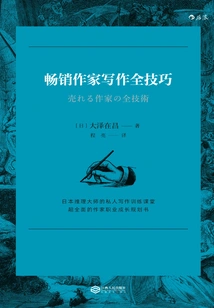
This is a unique guide to novel writing techniques, compiled from a series of "Novel Class" lectures given by Japanese mystery novelist Osawa Zaimasa. This lecture is aimed at twelve young writers selected from Japan, in the form of a "private school held by a master", aiming to teach the authors their creative experience and writing insights in their more than thirty years of writing career. This book condenses a year-long lecture into ten writing courses and four topic reviews. Osawa Zaichang uses vivid cases and humorous and sharp comments to comprehensively break down specific issues such as story structure, character creation, beginning and end layout, text description, dialogue skills, and narrative style in novel creation. In the book, the author candidly shares the living habits, creative mood and survival methods of professional writers - hoping that after reading this book, every reader who aspires to become a writer will be able to find the writing field in which he is good at, know how to better hone his writing skills, and truly become more and more sophisticated.
Official Sources
What Readers Think
Rating
Community(0)
Official(3)Scraped 1mo ago
1. Four Key Points to Becoming a Writer ① Ensure the accuracy of the text ②Reread the manuscript after writing ③Persist in practicing writing every day ④Learn to give up bravely The courage to go round and round, the courage to challenge different genres, and the courage to abandon the work are all important. A poorly written novel has either a poor plot or a poor character, and usually nothing more than the two. If the plot is bad, sometimes you can solve the problem by just going back to a certain point and rewriting from there; if the characters are bad, you basically have to rewrite it from scratch. Don't rely too heavily on clarification through dialogue Sad, angry, miserable experiences are more useful for writing novels than happy ones To describe the tragedy directly is equivalent to painting the stars with one stroke. In contrast, gradually blackening the surroundings of the miserable person to highlight the star in the middle can convey the misery to the reader better. How to create a distinctive character 1. Characters support the plot An interesting novel, an organic combination of characters and plot Be good at conveying atmosphere and don't rely on numbers and proper nouns First of all, it is important not to rely on numbers and proper nouns when describing characters. So how to create a specific image? The answer is to pay attention to creating "atmosphere". Look for words that make the character's image distinct and three-dimensional. 2. There must be a reason for the character to appear. 3. Pay attention to details Depends on whether the character has a distinct personality and seems to really live in your mind You can also make a character sheet and gradually write down your thoughts about each character. You can also add depth to your characters through accumulated notes. Remember, it's the depth of the characters that makes a story interesting. The same protagonist cannot move people's hearts The novel must allow the characters to change as the storyline develops. There is no novel in which the protagonist remains unchanged from beginning to end. The protagonist will change as the plot develops, and the storyline will prompt other characters to change. This process of change can make readers emotionally invested. When writing a novel, you should always be mindful of allowing the reader to invest emotion in the story and the protagonist. When conceiving, please organically combine the development of the story with the changes in the characters. Create impressive and unexpected characters . The character that readers always thought was a good guy turns out to be a bad guy. This is an accident. The setting of "seemingly bad but actually good" can give depth to the story and leave a deep impression on readers. 1. Everything starts with observation How can you create a charismatic character that leaves a deep impression on readers? The key is only one thing, which is "observation". Observe others, nothing more, observe and imagine the people around you. Please keep observing and imagining as much as possible. Please pay more attention to shoes, watches, ties and other items. 2. Look at the end of the other person's line of sight Let me teach you a key to observing others, which is to look at the end of the other person's line of sight. You can understand the other person's interests by observing their gaze. Observation and imagination" are the first steps in creating a charismatic character. 3. Describe strong emotions What kind of expressions do people show, what kind of sounds do they make, and what kind of words do they say when they feel strong emotions, such as anger, shock, or sadness? Observe carefully how people react when they are struck by strong emotions, then try your best to imagine and write about it. The difference between reality and truth To the extent that it's not fake and yet attractive at the same time, I think that's what's authentic. 2. It is the author's duty to pursue the protagonist fiercely It is the author's responsibility to create the situation and pursue the protagonist so that he desires to change or is forced to change. How to act? To what extent can you tolerate it? Which method to choose? The author must feel and think with the protagonist, because this is related to the protagonist's character and character portrayal. However, it is not necessary for "protagonist = author". The character of the protagonist is not the same as the character of the author Character creation also requires a certain degree of reversal of the character's image. 3. Rules in Novels The characters in the novel must be logical, and their logic must be consistent. 1. Walking on the edge of the rules What are the benefits of having the protagonist wander on the edge of the rules? The answer is to quickly add depth to a character. Surprise often adds depth ①If accidents are used well, just like adding spices when cooking, they can make the character's image more vivid and three-dimensional, and the effect is worth looking forward to. ②The fewer characters appear in the screen, the more impact they need. Because the more in-depth the character is, the more solid and substantial the parts that support the plot will become. 4. How to vividly and interestingly describe the character's past and background: Just arrange the memory scene in the "dialogue". ①One way is to create opponents who are good at interjecting. For example, if this character asks "Are you worried about something?", The protagonist can answer "Actually...". ②Another method is to insert the narrative part when the conversation reaches a certain level, add a little supplementary explanation, and then return to the conversation again. The opportunity to enter the memory scene is important. 5. Express the character's personality through wording ①Don't describe your character through narrative Describing characters cannot be done in an easy way. The world as seen by the characters differs from person to person. Only the character's values, stance, thoughts, personality, etc. Are determined. Specialties that I thought were of no use actually shine in unexpected places." 1. Common sense is required to write mystery novels There is an important relationship between the length of the story and the structure of the plot, and the balance between the two is critical. The focus of "original mystery novels" is more on the description of tricks rather than the changes in characters. On the contrary, the protagonists of "hard-boiled mystery novels" undoubtedly change The focus of the interview is to ask about the details and the main part To achieve a successful reversal, foreshadowing is very important. The foreshadowing should be laid in the early stage. For small foreshadowings, don't wait until halfway through the story to bury them. Try to bury them less than a quarter of the way through the story. In order to strengthen the foreshadowing, you should also bury another one in the middle stage. When writing a mystery novel, the reader should use dialogue to let the reader know the truth of the secret when the story is about 80% developed. In the first half of the story, if the author wants to leave some suspense before revealing the mystery, he should use hidden dialogue. The first is "silence" Craft it carefully so that the dialogue doesn't end all at once, and the story will gradually become more intricate, moving the plot forward. 1. Effective conversation skills ①Changing dialogue ②Interesting dialogue ③Sexy conversations By considering dialogue and lines, you can create a more specific and personal character. Character creation depends on combination, gradually writing corresponding lines according to different characters; using dialogue to describe real characters, adding depth to the story. One is the "hidden dialogue" that silences or changes the topic, and the other is the "hidden dialogue" arranged by the author to complete the reversal of the ending. The key to writing dialogue is to "fully immerse yourself in the character." Even if I write female lines, I always read them out loud, and sometimes I even read and write them at the same time. Imagine the character's private life and life, thinking about specific details 2. How to design the plot Be clear about what kind of fun you want to provide your readers One is a "change" novel. What will happen to the protagonist next?" And "how to get out of the crisis." There is an element of thrillingness in any genre. The second type is "puzzle solving" novels 1. The processing of "puzzles" is the key to plot design Foreshadowing is one of the techniques, which is related to the "big reversal" of the ending. Define in your mind "What is the highlight of this novel?" 2. Thinking about the "form" of novels ①After the plot pattern of the novel is determined, it is time to think about the "form" of the novel, that is, what kind of novel to write. ②The key points can simply be the four positions of starting, inheriting, turning and closing. At the beginning there is "starting", passing through "inheriting" and "turning", and finally there is "combining". From "Qi" to "Cheng", should we connect it with a straight line with the shortest distance, or should we arrange a raised hill? Arrange two gentle hills between "Cheng" and "Zhuan", and then rush directly to the peak of "He" to end the story in one breath? From "Inheritance" to "Transfer", you can arrange puzzles or add new characters, hoping to continue to attract readers' attention. 3. Where does the story begin? As mentioned before, "Where the story begins is the author's freedom." Where is the most effective starting point for a novel? It's okay to write in the order of ③④①②⑤⑥⑦⑧. It can even be said that moving ③④, which is prone to weakness, to the beginning, makes ①② become a memory scene, which can keep readers' attention. Once new characters are added, it's time to deal with the old characters. Don't add too many characters, and organize the added parts carefully Carefully design the plot, and make two or three reversals on this basis to enrich the story. 5. Novels need "thorns" What are the requirements for making up interesting stories? First, aim to create a big-picture story. If the plot that originally advances in a straight line is misaligned, the offset should be laid out in advance. And there is another twist before and after the third incident to further deviate the plot. After so many deviations, the story ends up in a place far removed from its original destination. The point of turning in order to create an offset is temporarily called a "jump". If the existing characters alone-that is, the members of your own troupe-cannot make the story jump smoothly, you need to add more members.
Learn more
Learn more and see more to enrich yourself.
Good,,,,,,,,
Rating
Community(0)
Official(3)Scraped 1mo ago
1. Four Key Points to Becoming a Writer ① Ensure the accuracy of the text ②Reread the manuscript after writing ③Persist in practicing writing every day ④Learn to give up bravely The courage to go round and round, the courage to challenge different genres, and the courage to abandon the work are all important. A poorly written novel has either a poor plot or a poor character, and usually nothing more than the two. If the plot is bad, sometimes you can solve the problem by just going back to a certain point and rewriting from there; if the characters are bad, you basically have to rewrite it from scratch. Don't rely too heavily on clarification through dialogue Sad, angry, miserable experiences are more useful for writing novels than happy ones To describe the tragedy directly is equivalent to painting the stars with one stroke. In contrast, gradually blackening the surroundings of the miserable person to highlight the star in the middle can convey the misery to the reader better. How to create a distinctive character 1. Characters support the plot An interesting novel, an organic combination of characters and plot Be good at conveying atmosphere and don't rely on numbers and proper nouns First of all, it is important not to rely on numbers and proper nouns when describing characters. So how to create a specific image? The answer is to pay attention to creating "atmosphere". Look for words that make the character's image distinct and three-dimensional. 2. There must be a reason for the character to appear. 3. Pay attention to details Depends on whether the character has a distinct personality and seems to really live in your mind You can also make a character sheet and gradually write down your thoughts about each character. You can also add depth to your characters through accumulated notes. Remember, it's the depth of the characters that makes a story interesting. The same protagonist cannot move people's hearts The novel must allow the characters to change as the storyline develops. There is no novel in which the protagonist remains unchanged from beginning to end. The protagonist will change as the plot develops, and the storyline will prompt other characters to change. This process of change can make readers emotionally invested. When writing a novel, you should always be mindful of allowing the reader to invest emotion in the story and the protagonist. When conceiving, please organically combine the development of the story with the changes in the characters. Create impressive and unexpected characters . The character that readers always thought was a good guy turns out to be a bad guy. This is an accident. The setting of "seemingly bad but actually good" can give depth to the story and leave a deep impression on readers. 1. Everything starts with observation How can you create a charismatic character that leaves a deep impression on readers? The key is only one thing, which is "observation". Observe others, nothing more, observe and imagine the people around you. Please keep observing and imagining as much as possible. Please pay more attention to shoes, watches, ties and other items. 2. Look at the end of the other person's line of sight Let me teach you a key to observing others, which is to look at the end of the other person's line of sight. You can understand the other person's interests by observing their gaze. Observation and imagination" are the first steps in creating a charismatic character. 3. Describe strong emotions What kind of expressions do people show, what kind of sounds do they make, and what kind of words do they say when they feel strong emotions, such as anger, shock, or sadness? Observe carefully how people react when they are struck by strong emotions, then try your best to imagine and write about it. The difference between reality and truth To the extent that it's not fake and yet attractive at the same time, I think that's what's authentic. 2. It is the author's duty to pursue the protagonist fiercely It is the author's responsibility to create the situation and pursue the protagonist so that he desires to change or is forced to change. How to act? To what extent can you tolerate it? Which method to choose? The author must feel and think with the protagonist, because this is related to the protagonist's character and character portrayal. However, it is not necessary for "protagonist = author". The character of the protagonist is not the same as the character of the author Character creation also requires a certain degree of reversal of the character's image. 3. Rules in Novels The characters in the novel must be logical, and their logic must be consistent. 1. Walking on the edge of the rules What are the benefits of having the protagonist wander on the edge of the rules? The answer is to quickly add depth to a character. Surprise often adds depth ①If accidents are used well, just like adding spices when cooking, they can make the character's image more vivid and three-dimensional, and the effect is worth looking forward to. ②The fewer characters appear in the screen, the more impact they need. Because the more in-depth the character is, the more solid and substantial the parts that support the plot will become. 4. How to vividly and interestingly describe the character's past and background: Just arrange the memory scene in the "dialogue". ①One way is to create opponents who are good at interjecting. For example, if this character asks "Are you worried about something?", The protagonist can answer "Actually...". ②Another method is to insert the narrative part when the conversation reaches a certain level, add a little supplementary explanation, and then return to the conversation again. The opportunity to enter the memory scene is important. 5. Express the character's personality through wording ①Don't describe your character through narrative Describing characters cannot be done in an easy way. The world as seen by the characters differs from person to person. Only the character's values, stance, thoughts, personality, etc. Are determined. Specialties that I thought were of no use actually shine in unexpected places." 1. Common sense is required to write mystery novels There is an important relationship between the length of the story and the structure of the plot, and the balance between the two is critical. The focus of "original mystery novels" is more on the description of tricks rather than the changes in characters. On the contrary, the protagonists of "hard-boiled mystery novels" undoubtedly change The focus of the interview is to ask about the details and the main part To achieve a successful reversal, foreshadowing is very important. The foreshadowing should be laid in the early stage. For small foreshadowings, don't wait until halfway through the story to bury them. Try to bury them less than a quarter of the way through the story. In order to strengthen the foreshadowing, you should also bury another one in the middle stage. When writing a mystery novel, the reader should use dialogue to let the reader know the truth of the secret when the story is about 80% developed. In the first half of the story, if the author wants to leave some suspense before revealing the mystery, he should use hidden dialogue. The first is "silence" Craft it carefully so that the dialogue doesn't end all at once, and the story will gradually become more intricate, moving the plot forward. 1. Effective conversation skills ①Changing dialogue ②Interesting dialogue ③Sexy conversations By considering dialogue and lines, you can create a more specific and personal character. Character creation depends on combination, gradually writing corresponding lines according to different characters; using dialogue to describe real characters, adding depth to the story. One is the "hidden dialogue" that silences or changes the topic, and the other is the "hidden dialogue" arranged by the author to complete the reversal of the ending. The key to writing dialogue is to "fully immerse yourself in the character." Even if I write female lines, I always read them out loud, and sometimes I even read and write them at the same time. Imagine the character's private life and life, thinking about specific details 2. How to design the plot Be clear about what kind of fun you want to provide your readers One is a "change" novel. What will happen to the protagonist next?" And "how to get out of the crisis." There is an element of thrillingness in any genre. The second type is "puzzle solving" novels 1. The processing of "puzzles" is the key to plot design Foreshadowing is one of the techniques, which is related to the "big reversal" of the ending. Define in your mind "What is the highlight of this novel?" 2. Thinking about the "form" of novels ①After the plot pattern of the novel is determined, it is time to think about the "form" of the novel, that is, what kind of novel to write. ②The key points can simply be the four positions of starting, inheriting, turning and closing. At the beginning there is "starting", passing through "inheriting" and "turning", and finally there is "combining". From "Qi" to "Cheng", should we connect it with a straight line with the shortest distance, or should we arrange a raised hill? Arrange two gentle hills between "Cheng" and "Zhuan", and then rush directly to the peak of "He" to end the story in one breath? From "Inheritance" to "Transfer", you can arrange puzzles or add new characters, hoping to continue to attract readers' attention. 3. Where does the story begin? As mentioned before, "Where the story begins is the author's freedom." Where is the most effective starting point for a novel? It's okay to write in the order of ③④①②⑤⑥⑦⑧. It can even be said that moving ③④, which is prone to weakness, to the beginning, makes ①② become a memory scene, which can keep readers' attention. Once new characters are added, it's time to deal with the old characters. Don't add too many characters, and organize the added parts carefully Carefully design the plot, and make two or three reversals on this basis to enrich the story. 5. Novels need "thorns" What are the requirements for making up interesting stories? First, aim to create a big-picture story. If the plot that originally advances in a straight line is misaligned, the offset should be laid out in advance. And there is another twist before and after the third incident to further deviate the plot. After so many deviations, the story ends up in a place far removed from its original destination. The point of turning in order to create an offset is temporarily called a "jump". If the existing characters alone-that is, the members of your own troupe-cannot make the story jump smoothly, you need to add more members.
Learn more
Learn more and see more to enrich yourself.
Good,,,,,,,,