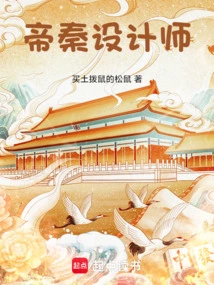
Di Qin Designer
About This Novel
On the way home from shopping for groceries, Li Nian traveled through time and met the First Emperor. In order to avoid being tortured and to survive, Li Nian had no choice but to honestly tell the story of his origins and inform the First Emperor of future events. How will the First Emperor react when he learns that Hu Hai killed his brothers and sisters and Zhao Gao called a deer a horse? What will happen when Liu Bang and Zhang Liang are known? What changes will future generations bring to the world when they come to Great Qin, which has just unified the world? This is the story of a modern man who is greedy for life and afraid of pain after traveling to the Qin Dynasty!
Official Sources
What Readers Think
Rating
Community(0)
Official(53)Scraped 1mo ago
Pig's feet had better hope that Qin Shihuang will live long, and you will definitely die before Qin Shihuang dies.
This book should be changed to, I was a storyteller in the Qin Dynasty after reading almost a hundred chapters, I read Lonely
Promoting Thirteen Incense is a bit like Emperor Jin asking why he doesn't eat meat
Can you please stop writing about Thirteen Incense? Firstly, it's too dramatic. Secondly, in ancient times, spices were not said to be more expensive than gold, at least they were much more expensive than meat. How can ordinary people afford it? Promoting this is a bit like Emperor Jin asking why he didn't eat meat. Feel like an idiot
To be honest, it was good at first, but you can't keep talking about books. How many times are you going to talk about the future generations? It makes me not want to read it. Just talk about it a few times. Why talk so much? What I want to see is the Great Qin you transformed, not you telling me about history and putting the cart before the horse.
The author has a lot of personal stuff, and I won't talk about Confucianism. The Confucianism of the Qin Dynasty and the Confucianism of more than two thousand years later are two different things. Even if the protagonist builds a perfect time traveler, how many years can he inherit it perfectly? How can we ensure that no one will have selfish motives in the future?
To praise Liu Ji like this is to say Pei Gong, especially since the First Emperor also called him Pei Gong.
Everyone is welcome to leave comments!
The book was written by the author alone, and his brain is limited, so there must be problems. You are welcome to leave a message to correct any mistakes and omissions. If anything can be changed, I will try my best to correct it. I have two requests that I hope you guys can take a look at: 1. Don't curse; 2. Don't mislead other readers. Even if the author didn't write like that, don't blame the author. This has a huge impact. Although this book may be a hit, but it can do good things well, right? Thank you to the handsome, wealthy, talented and beautiful people for your support!
Too idealistic, or maybe I'm too picky and prefer to pursue facts.
Brother, you have such wonderful thoughts about the ancients. I have read more than a dozen chapters, and basically my IQ is not very high. It is really about what the protagonist says. Also, don't talk too much about history. I want to see the content of your adaptation. Even if it's about family affairs, you can have some fun, okay, Liu Shui Wen. If you don't want to look up information, you can read about the Qin officials written in the new episode in July. None of the ancient people who could become kings, officials, or generals had simple roles, and there are potatoes. First of all, you only need two potatoes. Without considering the degradation of the seeds, one plant can produce up to 5 to 8 potatoes. Even if you find a place with a suitable temperature, with two types a year, it will still take ten years to barely cover a county. Think of other places, or change it.
Complete attention to detail
I originally planned to just go with the changes, after all, there are so many writing about Qin Dynasty time travel, but when I opened the table of contents, I saw the language barrier at first glance, and I immediately became energetic. It seemed that the author was serious about writing. First, let's explain the language. Although Chinese has strong stability, it is not static. Chinese is divided into Chinese characters and languages. Chinese characters are relatively stable because they are based on graphic characters, while languages are more complex and changeable. Take the language changes in the Guanzhong region as an example. Language and people are inseparable, so the language of a region is closely related to the main ethnic group in the region. Zhou Fangguo used Haojing as its political and cultural center for a period of time, so the language spoken by the Zhou people was the local mainstream language. In the pre-Qin period, the Qin State used Yongcheng and Xianyang as its political and cultural centers for a period of time, so the language spoken by the Qin people was the local mainstream language. By the time of Chang'an in the Western Han Dynasty, it was Chinese. During this period, Guanzhong was still dominated by the Chinese nation, with inheritance and continuity, but the language also began to evolve from the complex ancient Chinese in the pre-Qin period to medieval Chinese. Take the video of a certain up owner as an example. Ancient Chinese had auxiliary syllables, but by the Qin and Han Dynasties, these syllables had been basically eliminated. The Jin Dynasty was a turning point, and ethnic minorities began to move inward. Marked by Liu Yuan's invasion of Chang'an, the language spoken by ethnic minorities became the mainstream language in Guanzhong. At this time, the language no longer inherited the mainstream of the Chinese nation. But then again, why Emperor Xiaowen of the Northern Wei Dynasty was great, because he Through decrees and determination, this trend was forcibly reversed. However, the Northern Wei Dynasty advocated Buddhism, and Buddhist terms were absent in the original Chinese character context, so they were translated into Chinese in Xianbei language, which enriched the content of Chinese and made the difference between medieval Chinese and ancient Chinese ever greater. By the Sui and Tang Dynasties, a unified multi-ethnic country was established, the centripetal force of the huge dynasty was reflected, and the language began to be unified. However, because of the multi-ethnic characteristics, the language was still changing through constant communication. At the same time, it was mentioned that from the Qin State to the Qin Dynasty, whether it was a country or a dynasty, Qin was a multi-ethnic country. Through the conquest of ethnic minorities radiated from Guanzhong, the language was also changing while seizing political potential. Then came the Five Dynasties and Ten Kingdoms. Because the Tang Dynasty was a dynasty with a vast territory and many ethnic groups, its disintegration naturally increased the weight of various ethnic groups. So until the Song and Yuan Dynasties, the ethnic subjects in the Guanzhong area have been changing, and the language has been evolving. Some syllables may be very close to the old Shaanxi we speak today, but they are still very different. By the Ming and Qing Dynasties, today's Old Shaanxi dialect was basically formed, and many authentic Old Shaanxi dialects were derived and matured here. Returning to writing, the evolution of Chinese characters is much more stable than that of language, from oracle bone inscriptions, to bronze inscriptions, to seal script, Li, Xing, Kai and Cao. There are many variations of Chinese characters, but the core meaning is always maintained. Although the meanings of some Chinese characters may be offset and deformed, they are still within the framework of a mature language system. In ancient times, many scholars studied Chinese characters and languages, especially in the Han Dynasty. Due to the expansion of the dynasty, the issue of ethnic languages also attracted academic attention. Yang Xiong wrote "Dialects" and conducted research on the languages of various ethnic groups. At the same time, the Han people did not forget to trace their origins. The "Confucian Slips Hidden on the Wall" event was very rigorous. The bamboo slips inside were all in seal script. Therefore, many scholars in the Han Dynasty started translation activities for ancient texts. Liu Xin organized and annotated the ancient documents. Xu Shen paid more attention to the explanation of the meaning of Chinese characters and wrote "Shuowen Jiezi". At the same time, the study of characters and language has been maintained in all dynasties. Xiao Yan, Emperor Wu of Liang Dynasty, made significant contributions to characters and language. His son Xiao Tong was more prominent in literature and compiled "Selected Works of Zhaoming". Lu Fayan of the Sui Dynasty wrote "Qie Yun". Then the ancient prose movement launched by Han Yu in the Tang Dynasty paid more attention to literary theory, but it had an impact on language and Chinese characters. Ancient scholars continued to study language and characters, which also ensured the inheritance and development of literature. Therefore, the first problem that modern people encounter when traveling to ancient times is language communication. The speech of ancient people is completely different from the speech of modern people. Confucius traveled around the world and mastered many languages in order to teach students from all over the world. Strategist Zhang Yi is so eloquent in diplomacy, but to modern ears, what can he say? I don't understand, I don't understand at all!
Later, I spend a lot of time talking about history, which is too watery.
Rating
Community(0)
Official(53)Scraped 1mo ago
Pig's feet had better hope that Qin Shihuang will live long, and you will definitely die before Qin Shihuang dies.
This book should be changed to, I was a storyteller in the Qin Dynasty after reading almost a hundred chapters, I read Lonely
Promoting Thirteen Incense is a bit like Emperor Jin asking why he doesn't eat meat
Can you please stop writing about Thirteen Incense? Firstly, it's too dramatic. Secondly, in ancient times, spices were not said to be more expensive than gold, at least they were much more expensive than meat. How can ordinary people afford it? Promoting this is a bit like Emperor Jin asking why he didn't eat meat. Feel like an idiot
To be honest, it was good at first, but you can't keep talking about books. How many times are you going to talk about the future generations? It makes me not want to read it. Just talk about it a few times. Why talk so much? What I want to see is the Great Qin you transformed, not you telling me about history and putting the cart before the horse.
The author has a lot of personal stuff, and I won't talk about Confucianism. The Confucianism of the Qin Dynasty and the Confucianism of more than two thousand years later are two different things. Even if the protagonist builds a perfect time traveler, how many years can he inherit it perfectly? How can we ensure that no one will have selfish motives in the future?
To praise Liu Ji like this is to say Pei Gong, especially since the First Emperor also called him Pei Gong.
Everyone is welcome to leave comments!
The book was written by the author alone, and his brain is limited, so there must be problems. You are welcome to leave a message to correct any mistakes and omissions. If anything can be changed, I will try my best to correct it. I have two requests that I hope you guys can take a look at: 1. Don't curse; 2. Don't mislead other readers. Even if the author didn't write like that, don't blame the author. This has a huge impact. Although this book may be a hit, but it can do good things well, right? Thank you to the handsome, wealthy, talented and beautiful people for your support!
Too idealistic, or maybe I'm too picky and prefer to pursue facts.
Brother, you have such wonderful thoughts about the ancients. I have read more than a dozen chapters, and basically my IQ is not very high. It is really about what the protagonist says. Also, don't talk too much about history. I want to see the content of your adaptation. Even if it's about family affairs, you can have some fun, okay, Liu Shui Wen. If you don't want to look up information, you can read about the Qin officials written in the new episode in July. None of the ancient people who could become kings, officials, or generals had simple roles, and there are potatoes. First of all, you only need two potatoes. Without considering the degradation of the seeds, one plant can produce up to 5 to 8 potatoes. Even if you find a place with a suitable temperature, with two types a year, it will still take ten years to barely cover a county. Think of other places, or change it.
Complete attention to detail
I originally planned to just go with the changes, after all, there are so many writing about Qin Dynasty time travel, but when I opened the table of contents, I saw the language barrier at first glance, and I immediately became energetic. It seemed that the author was serious about writing. First, let's explain the language. Although Chinese has strong stability, it is not static. Chinese is divided into Chinese characters and languages. Chinese characters are relatively stable because they are based on graphic characters, while languages are more complex and changeable. Take the language changes in the Guanzhong region as an example. Language and people are inseparable, so the language of a region is closely related to the main ethnic group in the region. Zhou Fangguo used Haojing as its political and cultural center for a period of time, so the language spoken by the Zhou people was the local mainstream language. In the pre-Qin period, the Qin State used Yongcheng and Xianyang as its political and cultural centers for a period of time, so the language spoken by the Qin people was the local mainstream language. By the time of Chang'an in the Western Han Dynasty, it was Chinese. During this period, Guanzhong was still dominated by the Chinese nation, with inheritance and continuity, but the language also began to evolve from the complex ancient Chinese in the pre-Qin period to medieval Chinese. Take the video of a certain up owner as an example. Ancient Chinese had auxiliary syllables, but by the Qin and Han Dynasties, these syllables had been basically eliminated. The Jin Dynasty was a turning point, and ethnic minorities began to move inward. Marked by Liu Yuan's invasion of Chang'an, the language spoken by ethnic minorities became the mainstream language in Guanzhong. At this time, the language no longer inherited the mainstream of the Chinese nation. But then again, why Emperor Xiaowen of the Northern Wei Dynasty was great, because he Through decrees and determination, this trend was forcibly reversed. However, the Northern Wei Dynasty advocated Buddhism, and Buddhist terms were absent in the original Chinese character context, so they were translated into Chinese in Xianbei language, which enriched the content of Chinese and made the difference between medieval Chinese and ancient Chinese ever greater. By the Sui and Tang Dynasties, a unified multi-ethnic country was established, the centripetal force of the huge dynasty was reflected, and the language began to be unified. However, because of the multi-ethnic characteristics, the language was still changing through constant communication. At the same time, it was mentioned that from the Qin State to the Qin Dynasty, whether it was a country or a dynasty, Qin was a multi-ethnic country. Through the conquest of ethnic minorities radiated from Guanzhong, the language was also changing while seizing political potential. Then came the Five Dynasties and Ten Kingdoms. Because the Tang Dynasty was a dynasty with a vast territory and many ethnic groups, its disintegration naturally increased the weight of various ethnic groups. So until the Song and Yuan Dynasties, the ethnic subjects in the Guanzhong area have been changing, and the language has been evolving. Some syllables may be very close to the old Shaanxi we speak today, but they are still very different. By the Ming and Qing Dynasties, today's Old Shaanxi dialect was basically formed, and many authentic Old Shaanxi dialects were derived and matured here. Returning to writing, the evolution of Chinese characters is much more stable than that of language, from oracle bone inscriptions, to bronze inscriptions, to seal script, Li, Xing, Kai and Cao. There are many variations of Chinese characters, but the core meaning is always maintained. Although the meanings of some Chinese characters may be offset and deformed, they are still within the framework of a mature language system. In ancient times, many scholars studied Chinese characters and languages, especially in the Han Dynasty. Due to the expansion of the dynasty, the issue of ethnic languages also attracted academic attention. Yang Xiong wrote "Dialects" and conducted research on the languages of various ethnic groups. At the same time, the Han people did not forget to trace their origins. The "Confucian Slips Hidden on the Wall" event was very rigorous. The bamboo slips inside were all in seal script. Therefore, many scholars in the Han Dynasty started translation activities for ancient texts. Liu Xin organized and annotated the ancient documents. Xu Shen paid more attention to the explanation of the meaning of Chinese characters and wrote "Shuowen Jiezi". At the same time, the study of characters and language has been maintained in all dynasties. Xiao Yan, Emperor Wu of Liang Dynasty, made significant contributions to characters and language. His son Xiao Tong was more prominent in literature and compiled "Selected Works of Zhaoming". Lu Fayan of the Sui Dynasty wrote "Qie Yun". Then the ancient prose movement launched by Han Yu in the Tang Dynasty paid more attention to literary theory, but it had an impact on language and Chinese characters. Ancient scholars continued to study language and characters, which also ensured the inheritance and development of literature. Therefore, the first problem that modern people encounter when traveling to ancient times is language communication. The speech of ancient people is completely different from the speech of modern people. Confucius traveled around the world and mastered many languages in order to teach students from all over the world. Strategist Zhang Yi is so eloquent in diplomacy, but to modern ears, what can he say? I don't understand, I don't understand at all!
Later, I spend a lot of time talking about history, which is too watery.
Featured in 5 Booklists
Official(5)
On the way home from shopping for groceries, Li Nian traveled through time and met the First Emperor. In order to avoid being tortured and to survive, Li Nian had no choice but to honestly tell the story of his origins and inform the First Emperor of future events.
Take your mobile phone and travel to the time after Yingzheng unified the six countries.
The historical article is okay. With Baidu as a golden finger, it changes the Qin Dynasty. It is quite good to look at it from another angle.
On the way home from shopping for groceries, Li Nian traveled through time and met the First Emperor. In order to avoid being tortured and to survive, Li Nian had no choice but to honestly tell the story of his origins and inform the First Emperor of future events. How will the First Emperor react when he learns that Hu Hai killed his brothers and sisters and Zhao Gao called a deer a horse? What will happen when Liu Bang and Zhang Liang are known? What changes will future generations bring to the world when they come to Great Qin, which has just unified the world? This is the story of a modern man who is greedy for life and afraid of pain after traveling to the Qin Dynasty!
You Might Also Like
Reborn Female General
Qianshan Tea Guest
Imperial Master of the Ming Dynasty
West Lake In The Rain
The Good Saint Grandson of the First Emperor
It's March
People in the Song Dynasty Were Lawless
Playing With Basilisk
People in the Three Kingdoms: Starting from Preaching
I Don't Want To Be A Leader

The Leisurely Life of the Tang Prince
Zhang Jiuwen
Farmhouse Letong Passed Through Ancient Times and Received Liu Guanzhang at the Beginning
January Rainy Season
My Father Qin Shihuang
Cause Of Business
Ming Dynasty: I Took My Life to Teach the Prince, and the Emperor Begged Me Not to Die
Li Xiachan
My Aunt is Queen Ma
See The Moonlight