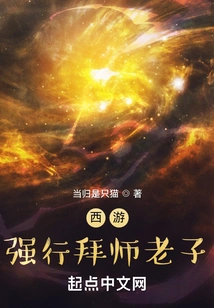
Journey to the West: Forced to Become a Disciple of Laozi
About This Novel
Li Lu traveled to the world of Journey to the West, forced himself to become a disciple of Laozi, and learned the Pangu Dharma. Faced with the monkey that jumped out of the Bagua furnace, faced with Wutian who claimed to be Buddha, faced with Tathagata, faced with the devil Bo Xun and other immortal saints. Li Lu: "Everyone, if the sky falls, I will support it with one force; if the earth joins, I will open it with one palm!" Book club group: 776978724, welcome to join!
Official Sources
What Readers Think
Rating
Community(0)
Official(15)Scraped 2mo ago
Disgusting, that Seven Fairies Dong Yong brought it upon themselves, and the protagonist comes to wipe their butts.
The author first looks at the history of mythology
Li Er is the incarnation of Taiqing. What do you think of accepting a disciple and giving him the title of Tongtian? Not afraid of being killed by Tongtian Cult Leader,
Tongtian leader's disciple Niu Pi😎😋, Niu Niu Niu🐮🐮🐮🐮🐮🐮🐮🐮🐮🐮🐮🐮🐮
Garbage title 😂😂😂
To be honest, I passed by and reviewed it, but I guessed from the comment section that the quality of your book is quite miserable. There is something wrong with the title of your book. Taishang Laojun is the supreme god of Taoism, and he was also the first to appear in the Sanqing Dynasty. Although he was later surpassed by Yuanshi Tianzun and Lingbao Tianzun, his status is also extremely high. Wu Chengen quoted a large number of Taoist and Buddhist scriptures, thus confirming the status of Taishang Taozu in Journey to the West. After all, as I said in the previous sentences, He opened up the heaven and earth, and one of them transformed the Three Pure Ones. Pangu is Him, and Yuanshi is Him. Lingbao is Him, Taishang Laojun is also Him, He is the avenue of all things in the world, all things in the world should be born from Him, and because of mercy and education, all living beings have the opportunity to live forever. Therefore, heaven and earth are not benevolent and treat all things as cud dogs. For heaven and earth, people's offerings of pigs, sheep and cattle are meaningless to dogs made of grass. Therefore, in the eyes of heaven and earth, all things are like this cud dog, and there is not much difference. , This is the same in the eyes of Taishang Laojun, and if there is anything that can make Laojun have to accept him as a disciple, your question has been marked wrong from the beginning~
Very pretty, not bad, hahahaha
I don't know what to say (ー_ー)!! Although there is no copyright dispute between Journey to the West and some Taoist and Buddhist scriptures, it is still hard work to extract it like this! It seems mysterious to those who don't understand it, and a bit confusing to those who have gained a little knowledge. Besides, what is this, Xianxia? Fantasy? Time travel? Or something? The meaning of the protagonist is not just a name, right?
A is not very pretty, and there is nothing exciting about it!
By the way, does this protagonist have a sense of existence?
Plagiarism + mixed scissors
The opening chapter is exactly the same as another one with the protagonist surnamed Su, except that the background of the protagonist has been deleted.
I feel like I can't stand it after reading a few chapters. There is something called fate that cannot bear the name of Tongtian.
Rating
Community(0)
Official(15)Scraped 2mo ago
Disgusting, that Seven Fairies Dong Yong brought it upon themselves, and the protagonist comes to wipe their butts.
The author first looks at the history of mythology
Li Er is the incarnation of Taiqing. What do you think of accepting a disciple and giving him the title of Tongtian? Not afraid of being killed by Tongtian Cult Leader,
Tongtian leader's disciple Niu Pi😎😋, Niu Niu Niu🐮🐮🐮🐮🐮🐮🐮🐮🐮🐮🐮🐮🐮
Garbage title 😂😂😂
To be honest, I passed by and reviewed it, but I guessed from the comment section that the quality of your book is quite miserable. There is something wrong with the title of your book. Taishang Laojun is the supreme god of Taoism, and he was also the first to appear in the Sanqing Dynasty. Although he was later surpassed by Yuanshi Tianzun and Lingbao Tianzun, his status is also extremely high. Wu Chengen quoted a large number of Taoist and Buddhist scriptures, thus confirming the status of Taishang Taozu in Journey to the West. After all, as I said in the previous sentences, He opened up the heaven and earth, and one of them transformed the Three Pure Ones. Pangu is Him, and Yuanshi is Him. Lingbao is Him, Taishang Laojun is also Him, He is the avenue of all things in the world, all things in the world should be born from Him, and because of mercy and education, all living beings have the opportunity to live forever. Therefore, heaven and earth are not benevolent and treat all things as cud dogs. For heaven and earth, people's offerings of pigs, sheep and cattle are meaningless to dogs made of grass. Therefore, in the eyes of heaven and earth, all things are like this cud dog, and there is not much difference. , This is the same in the eyes of Taishang Laojun, and if there is anything that can make Laojun have to accept him as a disciple, your question has been marked wrong from the beginning~
Very pretty, not bad, hahahaha
I don't know what to say (ー_ー)!! Although there is no copyright dispute between Journey to the West and some Taoist and Buddhist scriptures, it is still hard work to extract it like this! It seems mysterious to those who don't understand it, and a bit confusing to those who have gained a little knowledge. Besides, what is this, Xianxia? Fantasy? Time travel? Or something? The meaning of the protagonist is not just a name, right?
A is not very pretty, and there is nothing exciting about it!
By the way, does this protagonist have a sense of existence?
Plagiarism + mixed scissors
The opening chapter is exactly the same as another one with the protagonist surnamed Su, except that the background of the protagonist has been deleted.
I feel like I can't stand it after reading a few chapters. There is something called fate that cannot bear the name of Tongtian.
You Might Also Like
Reborn Female General
Qianshan Tea Guest
Journey to the West, There Are Nine Golden Crows in My Body
Poor Slacker
White Snake Fairy in the World
Hungry Fish
Prehistoric: Beginning with Foolish Old Man Moving the Mountains
Jiuwei Tianmiao
Myth: Dragon King
Jiang Chengxue
I Am the Demon King, the Most Powerful Official in Heaven
Climb To Chang'an
Huang Tingzhidao
Deep Kindness And Great Righteousness
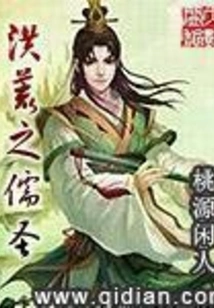
The Confucian Sage of Prehistoric Times
Taoyuan Idler
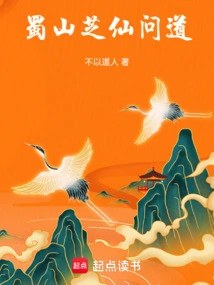
Shushan: Zhixian Asked
Not A Taoist
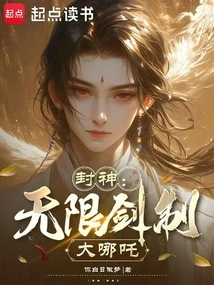
Conferred Gods: Infinite Sword System Da Nezha
You Daydream