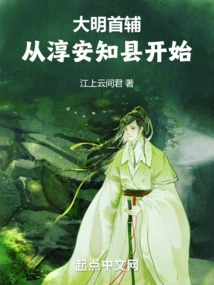
The First Assistant of the Ming Dynasty: Starting from the Magistrate of Chun'an
About This Novel
Traveling to the Ming Dynasty, Li Qingyun became the magistrate of Chun'an County who had just taken office as a new official. In the 40th year of Jiajing, the Dragon Boat Festival is approaching, and he will be blamed for the dykes bursting in nine counties. In order to survive, Li Qingyun decided to save himself. Although trapped in the quagmire, there is still a glimmer of hope. Li Qingyun, who was protecting himself, looked at the people behind him "In this world, everyone has to suffer for the people, but I don't." "I hate non-stick pans more than anything in my life." Wang Yangming, Hai Rui, Zhang Juzheng, Qi Jiguang, Yan Song, Gao Gong, Xu Jie, Xu Guangqi... These characters who have left a strong mark on the history books, you will sing and I will appear. This is an era when talents are emerging in large numbers, and this is an era when the world is constantly changing. Let's look at the turbulent winds and clouds, and the Ming Dynasty breaks through the waves and moves forward.
Official Sources
What Readers Think
Rating
Community(0)
Official(9)Scraped 2mo ago
This book is good food, but it is too ideal.
There were only two paths to reform during the feudal imperial period, either bottom-up or top-down. From the bottom up, the only way to go is rebellion. If you want to redistribute the interests of vested interest groups, they will inevitably lead to fierce resistance and set up numerous obstacles. Reform through non-rebellious methods can only be successful if you have a knife and food in your hands. However, this will conflict with the imperial power. The emperor will not allow his subordinates to hold military power, so bottom-up reforms in non-rebellious methods will inevitably fail. From top to bottom, success can only be achieved if the emperor has the skills and the determination not to lose his will. If the ministers want to change and the emperor makes trouble, it will inevitably lead to failure. Therefore, for any historical novel, no matter what dynasty, as long as it involves the theme of revolutionizing the world, I personally prefer the emperor style or the rebel style. Either the protagonist becomes the emperor and strives for innovation and hegemony, or the protagonist becomes the leader of the rebellion and rebuilds the world. Other themes give me the feeling of being too idealistic. Whether the protagonist is an official or a citizen, as long as he is not an emperor or a rebel, he is putting his ideals and destiny into the hands of others. Whether he can succeed or not depends entirely on the "charity" of the superior! Therefore, although this book is well written, it is too ideal. Especially the era background is the Jiajing Dynasty in the middle and late period. The subsequent Longqing and Wanli are still crappy. In addition, the ancestral precepts and national policies designated by Zhu Yuanzhang, the Taizu of the Ming Dynasty, are too 🐶💩. The protagonist is not the emperor, or does not rebel, and it is impossible to succeed! No matter how good he is, he is just the next Zhang Juzheng. Think about the fate of Zhang Juzheng who had his coffin opened and his body slaughtered. . . Tsk tsk tsk!
I just asked about rebellion?
If you don't rebel during time travel, your life will be in vain when you grow old. Before time travel, I was a low-level social animal, but after time travel, I worked hard to be a cunning rabbit and dead lackey. What is the meaning of this kind of time travel? Don't tell me what Jun Xianchen is saying. It's normal for the handle of the knife to be in someone else's hand and be pinched by someone else. If you travel through time, you won't rebel, and the chrysanthemum will turn around.
It's very beautiful. I want to top up my money once I've had sex for free.
It's even too little. This is enough for anyone to see! It's all on the shelves, you can make money Earn more!
Where is Ben! The book club group!
A friend of yours who is also an author said that you drew a book, but as a result, the book club group has no one.
The previous chapter was fine, but in Chapter 196, three female protagonists appeared directly to help with the experiment, which was too poisonous. As soon as the protagonist does an experiment, a heroine comes to help
How did you convince Squire Chun'an? What agreement was made with Chun'an Squire? During the dialogue, the choices and considerations of the squires of Chun'an were made. Have you ignored these things again? How did the protagonist go from fighting alone to the beginning of an interest group, but you ignored him like this? It's hard not to make people doubt your writing ability.
This book can be a classic
The writing is superb, the characters in the book are detailed, the pace is tight, and you can't put it down.
Just say don't write what you don't understand.
It was very stupid to copy modern things mechanically in ancient times. The author should have a good understanding of why productivity determines production relations, so that he will not be contrary to Tiangang and think that changing production relations can develop productivity. This kind of writing that is divorced from reality is as absurd as the Langya Bang that can conjure up 100,000 cavalry out of thin air in Yunnan.
Rating
Community(0)
Official(9)Scraped 2mo ago
This book is good food, but it is too ideal.
There were only two paths to reform during the feudal imperial period, either bottom-up or top-down. From the bottom up, the only way to go is rebellion. If you want to redistribute the interests of vested interest groups, they will inevitably lead to fierce resistance and set up numerous obstacles. Reform through non-rebellious methods can only be successful if you have a knife and food in your hands. However, this will conflict with the imperial power. The emperor will not allow his subordinates to hold military power, so bottom-up reforms in non-rebellious methods will inevitably fail. From top to bottom, success can only be achieved if the emperor has the skills and the determination not to lose his will. If the ministers want to change and the emperor makes trouble, it will inevitably lead to failure. Therefore, for any historical novel, no matter what dynasty, as long as it involves the theme of revolutionizing the world, I personally prefer the emperor style or the rebel style. Either the protagonist becomes the emperor and strives for innovation and hegemony, or the protagonist becomes the leader of the rebellion and rebuilds the world. Other themes give me the feeling of being too idealistic. Whether the protagonist is an official or a citizen, as long as he is not an emperor or a rebel, he is putting his ideals and destiny into the hands of others. Whether he can succeed or not depends entirely on the "charity" of the superior! Therefore, although this book is well written, it is too ideal. Especially the era background is the Jiajing Dynasty in the middle and late period. The subsequent Longqing and Wanli are still crappy. In addition, the ancestral precepts and national policies designated by Zhu Yuanzhang, the Taizu of the Ming Dynasty, are too 🐶💩. The protagonist is not the emperor, or does not rebel, and it is impossible to succeed! No matter how good he is, he is just the next Zhang Juzheng. Think about the fate of Zhang Juzheng who had his coffin opened and his body slaughtered. . . Tsk tsk tsk!
I just asked about rebellion?
If you don't rebel during time travel, your life will be in vain when you grow old. Before time travel, I was a low-level social animal, but after time travel, I worked hard to be a cunning rabbit and dead lackey. What is the meaning of this kind of time travel? Don't tell me what Jun Xianchen is saying. It's normal for the handle of the knife to be in someone else's hand and be pinched by someone else. If you travel through time, you won't rebel, and the chrysanthemum will turn around.
It's very beautiful. I want to top up my money once I've had sex for free.
It's even too little. This is enough for anyone to see! It's all on the shelves, you can make money Earn more!
Where is Ben! The book club group!
A friend of yours who is also an author said that you drew a book, but as a result, the book club group has no one.
The previous chapter was fine, but in Chapter 196, three female protagonists appeared directly to help with the experiment, which was too poisonous. As soon as the protagonist does an experiment, a heroine comes to help
How did you convince Squire Chun'an? What agreement was made with Chun'an Squire? During the dialogue, the choices and considerations of the squires of Chun'an were made. Have you ignored these things again? How did the protagonist go from fighting alone to the beginning of an interest group, but you ignored him like this? It's hard not to make people doubt your writing ability.
This book can be a classic
The writing is superb, the characters in the book are detailed, the pace is tight, and you can't put it down.
Just say don't write what you don't understand.
It was very stupid to copy modern things mechanically in ancient times. The author should have a good understanding of why productivity determines production relations, so that he will not be contrary to Tiangang and think that changing production relations can develop productivity. This kind of writing that is divorced from reality is as absurd as the Langya Bang that can conjure up 100,000 cavalry out of thin air in Yunnan.
Featured in 3 Booklists
Official(3)
Recommendation index:😜😜😜 Good writing, no systematic writing
⭐⭐⭐ Updates are too slow, but overall the writing is good.
大明王朝1566同人,侧面写出文官士绅地主豪商如何祸害天下,操纵朝政,废立皇帝 推荐 @嘉靖承明 练得身形似鹤形,不怕宫女勒脖颈。 我来问道无他说,朕的儿子也通倭。 大明是火德,所以皇帝易溶于水。 推荐 @万历新明 @独治大明 改革哪有不死人 个人来讲是相信《光从中华来》西方伪史论的,各明朝历史小说极少有写西方伪史的(根本没有)。提到这点的我遇到的只有作者蓝烬的三部曲(革命使徒,征途实录,人革联)。

You Might Also Like
Reborn Female General
Qianshan Tea Guest
Jingming
Winter Thirty Niang
I Served as an Admonisher in the Song Dynasty
Shangguan Bu Shui
The Most Treacherous Minister in Jiajing, Ming Dynasty
Xingchenjiu
Song Dynasty: Starting from the Border County Magistrates, They Began to Dominate the World
Batu Caves

Northern Song Dynasty Official Family
Yue Qilin
My Father is Jiajing
February Is Windy
Ming Dynasty 1566: Regent of the World
Shredded Pork Rice Noodles
When I Was in Hongwu, I Started by Rebelling Against the Party
Abstract Author
I Am Emperor Wanli
Lieutenant Breaking The Thief