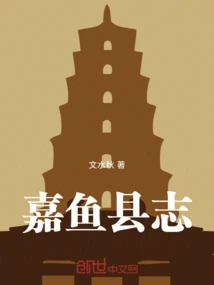
Jiayu County Chronicle
About This Novel
The compilation of "Jiayu County Chronicles" began from the fourth year of Hongwu in the Ming Dynasty (1371) to 2005, and there were a total of thirteen revisions. It was compiled four times in the Ming Dynasty in the fourth year of Hongwu, Yongle, the first year of Zhengtong, and the fourteenth year (compiled by Mo Zhen and Sun Yungong). During the Qing Dynasty, it was revised four times in the 10th year of Kangxi reign (compiled by Li Yuanzhen), the 2nd year of Qianlong reign (compiled by Zhang Qiwei and Li Maosi), the 55th year of Qianlong reign (compiled by Wang Yunming, Fang Bainsheng and Zhang Zongshi), and the 5th year of Tongzhi reign (compiled by Zhong Chuanyi and Yu Kun). In the 14th and 35th years of the Republic of China, the construction was initiated, but it was abandoned due to difficulties in the current situation. After the founding of New China, it was revised in 1983 and 2005. The "Jiayu County Chronicle" was published in the 14th year of Zhengtong (1449) and consists of three volumes. It was edited by Mo Zhen of the Ming Dynasty and compiled by Sun Yungong. This engraving is the earliest extant version, and no previous records exist. There are also copies in Hubei and Shanghai. It is divided into three volumes: upper, middle and lower volumes. The first volume contains the history of construction, divisions, customs, situations, mountains and rivers, villages and towns, household registration, local products, tribute, water conservancy, reserves, services, and offices. The middle volume contains schools, tributes, mandalas, shops, Jindu, bridges, temples, ancestral temples, and historic sites. The volume contains official relics, people, magazines, and poems. There are twenty-six entries in total, each with a small preface. Its content is based on the old records, and the vacancies are corrected, with the addition of "Water Conservancy" and "Reserves", and the missing items of "Services", "Office" and "Office" are filled in. "Ke Gong" contains the reasons why people became official, "Hukou" and "Tribute" are recorded from Hongwu to Zhengtong, and other items can be traced back to the Song Dynasty. This book is collated from a photocopy of the edition held by Wuhan University Press from the National Library of China.
Official Sources
What Readers Think
Rating
Community(0)
Rating
Community(0)
You Might Also Like
Overthrow the Han Dynasty
Grenades Are Afraid Of Water

Reborn Female General
Qianshan Tea Guest

I'm Not a Savage
Jie And 2
I
Wang Zijun
Da Qin, Rebelled and Had His Heart Eavesdropped by Zulong
Just Forget It
Daming: Recognize Zhu Yuanzhang as His Grandfather at the Beginning!
Anti-travel Cat
The First Minister of the Ming Dynasty
History Turns To Ashes
My Father, Emperor Gaozu of the Han Dynasty
History Wolf
My Brother-in-law is the Prince
Go Up The Mountain And Hit The Tiger On The Forehead
Qin Gong
When It Rains, I Bring A Knife