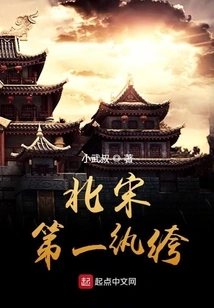
The First Dandy of the Northern Song Dynasty
About This Novel
Cultivation of immortality cannot save the Song Dynasty! Now that he has become the famous uncle Cao Guo in later generations, he will make the originally prosperous Song Dynasty rich and powerful!
Official Sources
What Readers Think
Rating
Community(0)
Official(4)Scraped 1mo ago
hehe
Serve Bianliang with the whole world. The people were so poor that they often revolted. The Song court had money but the common people did not. Take a good look at the history of the Song Dynasty and how many rebellions there were. It seems that millions of people starved to death when Wang Anshi carried out his political reform. What the hell is this called rich?
Information building
1How to take the imperial examination in the Song Dynasty "Regular subjects" are permanent subjects, similar to today's public examinations such as college entrance examinations. The state stipulates the outline, content, time and specific procedures. In addition to Jinshi subjects, there are other subjects, including Nine Classics, Five Classics, Kaiyuan Rites, Three Histories, Three Rites, Three Zhuan, Ming Jing, Ming Fa, Ming Zi and other subjects. All examinees take part in the provincial examination every autumn. The candidates from central and rural areas gather in the capital at the end of winter. In the spring of the following year, the Ministry of Rites presides over the unified national examination. The so-called "Nine Classics" refer to the nine Confucian classics established by the Tang Dynasty, the "Five Classics" refer to the five Confucian classics established in the Western Han Dynasty, the "Kaiyuan Rites" is a large-scale book of rites compiled by the Tang Dynasty, and can also be regarded as a junior college examination for practical "rituals". Among them, "Zhou Li", "Yi Li" and "Book of Rites" can be regarded as specialist examinations on ritual theory. "Three Zhuan" refers to "Zuo Zhuan", "Gongyang Zhuan" and "Guliang Zhuan", which can be regarded as special examinations for the history books of the Ministry of Classics. "Ming Jing" refers to the unified examination of all the classics, which can be regarded as an examination of traditional Confucian exegesis. "Ming Fa" is a legal examination, and "Ming Zi" is a calligraphy examination. Regarding "Jinshi" and "Mingjing", a few more words need to be said. Since the Tang Dynasty, these two major subjects have been the most valued by the candidates. Among the two major subjects, the Jinshi subject is the most important. The reason is very simple: those who succeed in becoming a scholar are very optimistic about their career in the future, and can often climb to the high position of prime minister. The future of those who succeed in the Mingjing is much more bumpy, and only few people can reach high-ranking officials in the end. You can tell at a glance from other minor subjects that even if you pass the exam, you will only be a small business officer for life and it will be difficult to grasp power. The amount of questions in the Song Dynasty's scientific examination was quite large, and it is not like we imagine that you can get fame by answering just one paper. Taking the Jinshi examination as an example, you need to "test one poem, poem, and essay each, write five essays, ten essays on the Analects of Confucius, and ten essays on the meanings of the Spring and Autumn Annals or the Book of Rites." Among them, poems, poems and essays are the most important. The so-called "Tie", the full name is "Tie Jing", that is, the passages in the classics written silently; the so-called "Mo Yi", that is, the written answer to the meaning of the scriptures, is specified as ten items. Why is the dictation of scriptures called "Tie"? Because in this type of examination, the front and back sentences of the original text of the classics are cut off, leaving only one or two sentences or two lines in the middle, and the candidates are asked to complete the front and back. In addition to "Tie Jing" and "Mo Yi", there are also three answers to "Current Affairs Policies". These three items are incidental in the Jinshi examination and are not very important. However, they are very important in the Mingjing subject and are almost the entire examination in this subject. Otherwise, why do Jinshi always look down on those who pass the Mingjing? It is because most of the Mingjing examinations rely on rote memorization, and they are not as literary as the Jinshi examination. Because of the large amount of questions, candidates have to stay in the examination room for three or four days to answer all the questions, whether it is a provincial examination or a general examination.
Little dirty uncle
Uncle dirty uncle, you are back again~🤡
Come on, come on, come on, come on
Come on. It suits my appetite, come on, come on, come on
Rating
Community(0)
Official(4)Scraped 1mo ago
hehe
Serve Bianliang with the whole world. The people were so poor that they often revolted. The Song court had money but the common people did not. Take a good look at the history of the Song Dynasty and how many rebellions there were. It seems that millions of people starved to death when Wang Anshi carried out his political reform. What the hell is this called rich?
Information building
1How to take the imperial examination in the Song Dynasty "Regular subjects" are permanent subjects, similar to today's public examinations such as college entrance examinations. The state stipulates the outline, content, time and specific procedures. In addition to Jinshi subjects, there are other subjects, including Nine Classics, Five Classics, Kaiyuan Rites, Three Histories, Three Rites, Three Zhuan, Ming Jing, Ming Fa, Ming Zi and other subjects. All examinees take part in the provincial examination every autumn. The candidates from central and rural areas gather in the capital at the end of winter. In the spring of the following year, the Ministry of Rites presides over the unified national examination. The so-called "Nine Classics" refer to the nine Confucian classics established by the Tang Dynasty, the "Five Classics" refer to the five Confucian classics established in the Western Han Dynasty, the "Kaiyuan Rites" is a large-scale book of rites compiled by the Tang Dynasty, and can also be regarded as a junior college examination for practical "rituals". Among them, "Zhou Li", "Yi Li" and "Book of Rites" can be regarded as specialist examinations on ritual theory. "Three Zhuan" refers to "Zuo Zhuan", "Gongyang Zhuan" and "Guliang Zhuan", which can be regarded as special examinations for the history books of the Ministry of Classics. "Ming Jing" refers to the unified examination of all the classics, which can be regarded as an examination of traditional Confucian exegesis. "Ming Fa" is a legal examination, and "Ming Zi" is a calligraphy examination. Regarding "Jinshi" and "Mingjing", a few more words need to be said. Since the Tang Dynasty, these two major subjects have been the most valued by the candidates. Among the two major subjects, the Jinshi subject is the most important. The reason is very simple: those who succeed in becoming a scholar are very optimistic about their career in the future, and can often climb to the high position of prime minister. The future of those who succeed in the Mingjing is much more bumpy, and only few people can reach high-ranking officials in the end. You can tell at a glance from other minor subjects that even if you pass the exam, you will only be a small business officer for life and it will be difficult to grasp power. The amount of questions in the Song Dynasty's scientific examination was quite large, and it is not like we imagine that you can get fame by answering just one paper. Taking the Jinshi examination as an example, you need to "test one poem, poem, and essay each, write five essays, ten essays on the Analects of Confucius, and ten essays on the meanings of the Spring and Autumn Annals or the Book of Rites." Among them, poems, poems and essays are the most important. The so-called "Tie", the full name is "Tie Jing", that is, the passages in the classics written silently; the so-called "Mo Yi", that is, the written answer to the meaning of the scriptures, is specified as ten items. Why is the dictation of scriptures called "Tie"? Because in this type of examination, the front and back sentences of the original text of the classics are cut off, leaving only one or two sentences or two lines in the middle, and the candidates are asked to complete the front and back. In addition to "Tie Jing" and "Mo Yi", there are also three answers to "Current Affairs Policies". These three items are incidental in the Jinshi examination and are not very important. However, they are very important in the Mingjing subject and are almost the entire examination in this subject. Otherwise, why do Jinshi always look down on those who pass the Mingjing? It is because most of the Mingjing examinations rely on rote memorization, and they are not as literary as the Jinshi examination. Because of the large amount of questions, candidates have to stay in the examination room for three or four days to answer all the questions, whether it is a provincial examination or a general examination.
Little dirty uncle
Uncle dirty uncle, you are back again~🤡
Come on, come on, come on, come on
Come on. It suits my appetite, come on, come on, come on
You Might Also Like
Possessed by Lu Bu
The King Is No More Than A Hegemon
Hanxiang
Jie And 2
The Poor Man's Two Thousand Years
Non-player Character
Reborn Female General
Qianshan Tea Guest
Tomorrow
Jie And 2
Shao Song
Grenades Are Afraid Of Water
My Father, Emperor Gaozu of the Han Dynasty
History Wolf
My Brother-in-law is the Prince
Go Up The Mountain And Hit The Tiger On The Forehead
Qin Gong
When It Rains, I Bring A Knife
The World's Heroes
Gao Yue