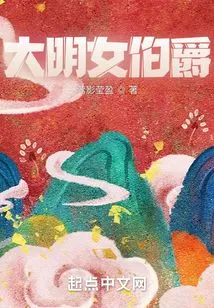
Countess of Ming Dynasty
About This Novel
Essence version: She has tools to manage the world, such as Fan Shenghuai's strategy for governing the country. She traveled to the Ming Dynasty and triggered an economic change. Serious version: During the Yongnian Dynasty, a protracted debate on the reform of postal services finally came to an end in a noisy court discussion. But what was unexpected was that it triggered a chain reaction and started a strange and crazy land speculation model... However, this crazy competition for private capital has not yet ended, and there is another food crisis and silver shortage...
Official Sources
What Readers Think
Rating
Community(0)
Official(3)Scraped 1mo ago
Let's talk about two or three things about writing
About the content: After I added the editor, he said three things: first, the problems in the first few chapters; second, Tai Lao Bai; third, he recommended the poor guy to me. The Poor Man is a good book, but I have only read some of it, and it is my personal reason why I did not continue reading. They are all articles with female protagonists. The editor recommended them to me and maybe I hope I can learn from them. It's just that I have to say that writing this heroine article follows a story line rather than a character line. The target is adaptation. A complete story is the minimum requirement. Regardless of whether it is successful or not, at least it must be structured in this way, so I did not choose a form that is popular with the public, or emotional writing. Maybe that's the reason for the poor results. About writing: A complete story has a beginning, development, climax, and ending, so it also requires certain narrative techniques for clever arrangements. I prefer the narrative methods of Hardy and Bai Xianyong, and I am also trying this writing technique. I felt that this story was too complex to write, and I didn't plan to write three to five million words, but I still immersed myself in the information every day, and no longer cared about techniques. Maybe I dug too many holes and wanted to express too many things, and some of them became blurry. It's quite irritating, I hope I can adjust it, I don't want to write a story that is too complicated, I like a kind of writing with high skills. Regarding Lao Bai: I have always believed that historical texts have no logic without textual research. Whether it is historical facts or fiction, the logic of stories and characters should be based on textual research. Regarding female characters from a female perspective: I generally don't like the female characters portrayed in historical texts. It has nothing to do with whether they have a harem or not, but because there are too many stereotypes. Just like describing female liberation and independence, combined with the current environment, maybe I have more resonance with female autonomy. Isn't the essence of liberation that women make their own decisions? It was, is, and will be for a long time to come. The female characters in this article also have a meaning, which is to let people see what women are like from a female perspective, rather than being stereotyped. Regarding love and love: When it comes to writing about love between men and women, I have to mention Chapter 86. It was deleted after being censored. In fact, I think it's quite unfair. It just quoted a piece of music and lyrics from "The West Chamber" and it was only borrowed after the plot developed. There is no inappropriate description. The ancients would not describe it directly, but would only refer to it, such as flowers and butterflies, which is full of meaning, but never verbose. What surprised me was not the trial, but the censorship mechanism involved. I only knew the key words, but the sentence I quoted only contained flowers, butterflies, clouds, and rain, without any keywords. Are censors so smart now? Can you identify entire seemingly blocked passages in famous novels? If it were replaced by Jin Pinmei, would it have been reviewed? Can Romance of the West Chamber and The Peony Pavilion be censored? About the results: Oh~just let it happen. Regarding whether it was sent to the wrong place: Maybe... I clicked on the wrong one in my hand. Anyway, the next one will definitely be a female video, about female themes. Regarding the first four chapters: Let me tell you a joke. The first four chapters were actually written for the editor to read. I was afraid that they would not be signed, so I wrote them in a very fancy way. However, they were signed very quickly and they became 'redundant'.
About writing
For this book, I set it as the main line of the story rather than the main line of the characters, hoping to express a complete and plot-rich story. Therefore, in terms of writing techniques, I will try to use different narrative angles, camera-based descriptions, and even stream-of-consciousness writing to structure the story. Historical novels have many characters, branches, and textual research. Without skilled writing skills, it would be difficult to write an excellent work that is both rigorous in conception and readable. Judging from the chapters I have presented, my writing skills are still very immature and I need to strengthen my writing training. Why I choose to create stories with the main line instead of characters? I can only say that my personal appeals are different. In fact, I had considered writing about Qin Liangyu before, but I thought that I didn't have enough experience to write about the character of Marquis Zhongzhen, so I didn't dare to write it rashly. Maybe one day, or at a certain stage, I will still consider writing about it. After all, she is a representative of Ming women in my heart. So I imagined a female character, Wu Lan, out of thin air. The origin of this character is from a complex of mine, which is why there are 'long-winded first four chapters'. I started writing it from the day Chongzhen hanged himself. It seems to have nothing to do with the whole novel, but it is not. I have a good impression of the emperor Chongzhen, based on his view of women as an emperor. For emperors in the feudal era, this was especially valuable. His appointment of female officials was not limited to the inner court. In fact, in the Ming Dynasty, there were always outstanding female officials serving the inner court. They used their talents to compete with the emperor instead of competing for favor in the harem. However, there are too few records about them. He made Qin Liangyu the loyal and loyal lord, and wrote a poem praising: "Why should a general be her husband if a woman is willing to accept it?" There are many strange men in the world, but no one is willing to travel thousands of miles on the battlefield. He directly expressed his attitude towards women: women are no less inferior to men when it comes to making contributions. An emperor can break through the feudal barriers of "women don't talk about politics and women don't participate in politics", which is worthy of praise in itself. There is also Bi Zhu, a contemporary of the same period, who is said to have a unique appearance and a young worker named Wen Han. He can also hold a stone bow and is good at fencing. His father was guarding Jiqiu, and the city was surrounded by thieves. He died fighting with all his strength... But when an army broke in, the thieves were as frightened as the whole world, and they were stunned. He cut the canal with his hands, held his head in front of everyone, and said: Those who dare to resist the king's master have such a head! The thieves were defeated and their camps were burned down. The pursuit was futile, but the thieves were defeated. I was just twenty years old...' It's a pity that the Ming Dynasty died before Bi Chu could be granted the title of marquis and general. There is also a fictional Ming Dynasty emperor in this book who also has Chongzhen's views on women. His relationship with the heroine is that of a bole and a good horse. He promotes the heroine in an eclectic way, appoints her as an official, gives her the opportunity to experience at the grassroots level, and participates in the country's economic reform and construction... Although she is not serving the country by joining the army like Qin Liangyu and Bi Zhuo, is she not making contributions and serving the motherland in another way? Let's talk about the writing, the characters, and let's talk about the book itself. The current performance of this book is not good. In fact, I have checked the outline. The story is complete, the logic is self-consistent, and the plot has ups and downs. It is also very satisfying. As for why the performance is not good, I can't control it, but I don't want to change it. Historical novels with female protagonists can also be outstanding if they are written with feelings about family and country. However, the background of this book is the reform in the peaceful era. There are no grand scenes and no historical figures with their own aura to set off the story. The feelings only come from ordinary little people. There may be some tenderness, but it is not a grand epic. I don't want to make any changes because I really like the setting.
It's so stupid. I haven't played around with Writer's Assistant yet. The two login numbers are different. I rack my brains to remember the password every day, and I'm very moved. Next, let's talk about something else. Yesterday I watched the trailer of Da Ming under the microscope. To be honest, Fu Huadao can't keep up with Yu Lou Chun. Although they are not very reliable, the latter is still more pleasing to the eye. As for adding a hat to a net scarf, in fact, in the Ming Dynasty, it was very rude to wear only a net scarf. Let's talk about this book again. It is a light-hearted book and contains many descriptions of social scenes. Some of them may not have much to do with the plot, but they are helpful in building the world in the novel. For example, there will be some descriptions of food and life in the Ming Palace in the book, most of which come from the palace records of the Wanli period. In fact, the food at that time was not much different from modern times. By the way, every emperor has different tastes, so his dietary emphasis is also different. For example, Wanli was so fat because he ate too much. Three daily meals cost 12,000 taels a month. Tianqi liked to eat barbecue and the like. Chongzhen liked light food, and his three meals a month also cost 9,000 taels, but it was still much worse than Wanli. There are too many to list, but in short this is a relatively easy book to read, and the author probably won't make mistakes like adding a hat to the net. Finally, let's canvass for votes. If the voting effect is not good, then the author will have to turn into a storyteller every day and give you a paragraph, saying...
Rating
Community(0)
Official(3)Scraped 1mo ago
Let's talk about two or three things about writing
About the content: After I added the editor, he said three things: first, the problems in the first few chapters; second, Tai Lao Bai; third, he recommended the poor guy to me. The Poor Man is a good book, but I have only read some of it, and it is my personal reason why I did not continue reading. They are all articles with female protagonists. The editor recommended them to me and maybe I hope I can learn from them. It's just that I have to say that writing this heroine article follows a story line rather than a character line. The target is adaptation. A complete story is the minimum requirement. Regardless of whether it is successful or not, at least it must be structured in this way, so I did not choose a form that is popular with the public, or emotional writing. Maybe that's the reason for the poor results. About writing: A complete story has a beginning, development, climax, and ending, so it also requires certain narrative techniques for clever arrangements. I prefer the narrative methods of Hardy and Bai Xianyong, and I am also trying this writing technique. I felt that this story was too complex to write, and I didn't plan to write three to five million words, but I still immersed myself in the information every day, and no longer cared about techniques. Maybe I dug too many holes and wanted to express too many things, and some of them became blurry. It's quite irritating, I hope I can adjust it, I don't want to write a story that is too complicated, I like a kind of writing with high skills. Regarding Lao Bai: I have always believed that historical texts have no logic without textual research. Whether it is historical facts or fiction, the logic of stories and characters should be based on textual research. Regarding female characters from a female perspective: I generally don't like the female characters portrayed in historical texts. It has nothing to do with whether they have a harem or not, but because there are too many stereotypes. Just like describing female liberation and independence, combined with the current environment, maybe I have more resonance with female autonomy. Isn't the essence of liberation that women make their own decisions? It was, is, and will be for a long time to come. The female characters in this article also have a meaning, which is to let people see what women are like from a female perspective, rather than being stereotyped. Regarding love and love: When it comes to writing about love between men and women, I have to mention Chapter 86. It was deleted after being censored. In fact, I think it's quite unfair. It just quoted a piece of music and lyrics from "The West Chamber" and it was only borrowed after the plot developed. There is no inappropriate description. The ancients would not describe it directly, but would only refer to it, such as flowers and butterflies, which is full of meaning, but never verbose. What surprised me was not the trial, but the censorship mechanism involved. I only knew the key words, but the sentence I quoted only contained flowers, butterflies, clouds, and rain, without any keywords. Are censors so smart now? Can you identify entire seemingly blocked passages in famous novels? If it were replaced by Jin Pinmei, would it have been reviewed? Can Romance of the West Chamber and The Peony Pavilion be censored? About the results: Oh~just let it happen. Regarding whether it was sent to the wrong place: Maybe... I clicked on the wrong one in my hand. Anyway, the next one will definitely be a female video, about female themes. Regarding the first four chapters: Let me tell you a joke. The first four chapters were actually written for the editor to read. I was afraid that they would not be signed, so I wrote them in a very fancy way. However, they were signed very quickly and they became 'redundant'.
About writing
For this book, I set it as the main line of the story rather than the main line of the characters, hoping to express a complete and plot-rich story. Therefore, in terms of writing techniques, I will try to use different narrative angles, camera-based descriptions, and even stream-of-consciousness writing to structure the story. Historical novels have many characters, branches, and textual research. Without skilled writing skills, it would be difficult to write an excellent work that is both rigorous in conception and readable. Judging from the chapters I have presented, my writing skills are still very immature and I need to strengthen my writing training. Why I choose to create stories with the main line instead of characters? I can only say that my personal appeals are different. In fact, I had considered writing about Qin Liangyu before, but I thought that I didn't have enough experience to write about the character of Marquis Zhongzhen, so I didn't dare to write it rashly. Maybe one day, or at a certain stage, I will still consider writing about it. After all, she is a representative of Ming women in my heart. So I imagined a female character, Wu Lan, out of thin air. The origin of this character is from a complex of mine, which is why there are 'long-winded first four chapters'. I started writing it from the day Chongzhen hanged himself. It seems to have nothing to do with the whole novel, but it is not. I have a good impression of the emperor Chongzhen, based on his view of women as an emperor. For emperors in the feudal era, this was especially valuable. His appointment of female officials was not limited to the inner court. In fact, in the Ming Dynasty, there were always outstanding female officials serving the inner court. They used their talents to compete with the emperor instead of competing for favor in the harem. However, there are too few records about them. He made Qin Liangyu the loyal and loyal lord, and wrote a poem praising: "Why should a general be her husband if a woman is willing to accept it?" There are many strange men in the world, but no one is willing to travel thousands of miles on the battlefield. He directly expressed his attitude towards women: women are no less inferior to men when it comes to making contributions. An emperor can break through the feudal barriers of "women don't talk about politics and women don't participate in politics", which is worthy of praise in itself. There is also Bi Zhu, a contemporary of the same period, who is said to have a unique appearance and a young worker named Wen Han. He can also hold a stone bow and is good at fencing. His father was guarding Jiqiu, and the city was surrounded by thieves. He died fighting with all his strength... But when an army broke in, the thieves were as frightened as the whole world, and they were stunned. He cut the canal with his hands, held his head in front of everyone, and said: Those who dare to resist the king's master have such a head! The thieves were defeated and their camps were burned down. The pursuit was futile, but the thieves were defeated. I was just twenty years old...' It's a pity that the Ming Dynasty died before Bi Chu could be granted the title of marquis and general. There is also a fictional Ming Dynasty emperor in this book who also has Chongzhen's views on women. His relationship with the heroine is that of a bole and a good horse. He promotes the heroine in an eclectic way, appoints her as an official, gives her the opportunity to experience at the grassroots level, and participates in the country's economic reform and construction... Although she is not serving the country by joining the army like Qin Liangyu and Bi Zhuo, is she not making contributions and serving the motherland in another way? Let's talk about the writing, the characters, and let's talk about the book itself. The current performance of this book is not good. In fact, I have checked the outline. The story is complete, the logic is self-consistent, and the plot has ups and downs. It is also very satisfying. As for why the performance is not good, I can't control it, but I don't want to change it. Historical novels with female protagonists can also be outstanding if they are written with feelings about family and country. However, the background of this book is the reform in the peaceful era. There are no grand scenes and no historical figures with their own aura to set off the story. The feelings only come from ordinary little people. There may be some tenderness, but it is not a grand epic. I don't want to make any changes because I really like the setting.
It's so stupid. I haven't played around with Writer's Assistant yet. The two login numbers are different. I rack my brains to remember the password every day, and I'm very moved. Next, let's talk about something else. Yesterday I watched the trailer of Da Ming under the microscope. To be honest, Fu Huadao can't keep up with Yu Lou Chun. Although they are not very reliable, the latter is still more pleasing to the eye. As for adding a hat to a net scarf, in fact, in the Ming Dynasty, it was very rude to wear only a net scarf. Let's talk about this book again. It is a light-hearted book and contains many descriptions of social scenes. Some of them may not have much to do with the plot, but they are helpful in building the world in the novel. For example, there will be some descriptions of food and life in the Ming Palace in the book, most of which come from the palace records of the Wanli period. In fact, the food at that time was not much different from modern times. By the way, every emperor has different tastes, so his dietary emphasis is also different. For example, Wanli was so fat because he ate too much. Three daily meals cost 12,000 taels a month. Tianqi liked to eat barbecue and the like. Chongzhen liked light food, and his three meals a month also cost 9,000 taels, but it was still much worse than Wanli. There are too many to list, but in short this is a relatively easy book to read, and the author probably won't make mistakes like adding a hat to the net. Finally, let's canvass for votes. If the voting effect is not good, then the author will have to turn into a storyteller every day and give you a paragraph, saying...
You Might Also Like
Possessed by Lu Bu
The King Is No More Than A Hegemon
Hanxiang
Jie And 2
The Poor Man's Two Thousand Years
Non-player Character
Reborn Female General
Qianshan Tea Guest
Tomorrow
Jie And 2
Shao Song
Grenades Are Afraid Of Water
My Father, Emperor Gaozu of the Han Dynasty
History Wolf
My Brother-in-law is the Prince
Go Up The Mountain And Hit The Tiger On The Forehead
Qin Gong
When It Rains, I Bring A Knife
The World's Heroes
Gao Yue