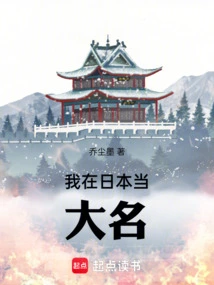
I Am a Daimyo in Japan
by Qiao Chenmo
About This Novel
Japan in the sixteenth century was plagued by frequent wars. On a land of less than 300,000 square kilometers, more than 300 factions are fighting in separate factions, and every village is at war. Peasants are trapped in farming and fighting, and suffer from the uncertainty of life and death; Monster monks incite people's hearts, businessmen are opportunistic. There was also chaos within the samurai, and it was not uncommon for subordinates to conquer their superiors, sons to kill their fathers, and brothers to kill their brothers. In this troubled time, an outsider became a down-and-out famous person. There are retainers inside who are plotting rebellion, and there are powerful enemies waiting around outside. When the wheels of history are about to crush his territory, a counterattack is imminent!
Official Sources
What Readers Think
Rating
Community(0)
Official(23)Scraped 1mo ago
An author who doesn't understand politics, but his writing style is okay, but his wording lacks appropriateness.
After reading Chapter 3, the protagonist is young and his position is unstable. He wants to fight for power and directly meets to ask the people below to vote to support him. When facing the opposition retainers, he makes a bet to regain the lost territory... There is no political skill, let alone political means, and a lack of political literacy. Normal logic should not be to persuade supporters to agree with one's political needs, privately pay benefits to imprison neutral supporters to vote in favor, and then hold a meeting to have one's political needs passed by a majority vote to consolidate political status. Anyway, legitimacy is in one's hands. Instead of holding a meeting to directly vote to seize power and let the people below vote one by one. As a person in power, you really don't know anything about politics. When your every political demand is hesitated, questioned, and opposed by people below, it is a blow to your own prestige. Even if your political demands are finally approved in a hesitant vote, it will only let everyone else see that you lack the ability to govern. Even if you don't say anything, most people will disperse because people who question you will spread the content of the meeting and make people more impetuous. If you have any political needs, don't inform your subordinates in advance and ask for their opinions, but directly hold a meeting to vote. To be honest, unless the superior of Yiyantang orders his subordinates to do this, emperors of all dynasties, not even Qin Shihuang, would dare to do this every day. The protagonist has legitimacy but has not fully taken power because of his young age. It can only be said that he has no political skills at all in his two lives. I admit that he has die-hard loyalists, but the neutral dare to vote for you is all due to the author's luck. If people don't vote for you, to tell the truth, they will lose all the little authority they have. As for the proposal of relying on foresight in advance, to be honest, it seems that the protagonist has no political skills at all. Even if you have real ability, a promise of benefits does not return the rights to you. If you lose, you will lose all your wealth. If you win, you will not be shown the face. If the interests are not balanced in advance, only a fool will vote for you. For the time being, it is just talk on paper.
I was hooked on the first three chapters. This is ancient. No credit to the author. Directly cheat the protagonist and use force to violently seize power. Don't try to balance your wits. It's not that wits are not good. The main reason is that the battle of wits does not conform to the online text. First, the battle of wits requires the author to have a lot of knowledge, which exceeds the cognitive level of all readers. Second, the bedding required is too long. Without the foundation of the first two, the battle of wits will turn into a silly plot. Become the author's self-pleasure.
What kind of uncle is he waiting for the Chinese New Year if he doesn't kill him?
The monarch calls me your lord? Have you read what you wrote?
Throughout Chinese and foreign history, weak masters wanted to seize power. They all rely on instant violence to carry out tactics similar to beheading. Rather than through games in the court. Especially Japan's Warring States Period. You said Owari is a fool, but don't look at him. How did you seize power? There are so many books about the details of Japan's Warring States Period. I don't know how you came up with the idea to write this beginning? Moreover, there are too many examples in the history of the Warring States Period when these weak lords regained their rights.
What's even more stupid is that even the affiliated wealthy families have gypsum rewards, which can be hundreds or hundreds of points. Do you think you are Oda Nobunaga?
It's good to read. I love reading it. I didn't think it was good to read at first. But after I saw that it was written by Hosokawa, I continued reading. It's okay.
The writing is very good. It is a very authentic Japanese Warring States novel without any plug-ins. It is more realistic than Uemoto Hosokawa. I look forward to the follow-up. I highly recommend everyone to read it!
The level of politics is like playing house. From a normal person's perspective, the protagonist is a good-luck loser who only talks empty words.
There are no golden fingers, they are not killing indiscriminately, and they cannot dominate at will. I don't even understand the history of my childhood. If you ask me to watch their strategies to dominate step by step, I am going crazy.
Rating
Community(0)
Official(23)Scraped 1mo ago
An author who doesn't understand politics, but his writing style is okay, but his wording lacks appropriateness.
After reading Chapter 3, the protagonist is young and his position is unstable. He wants to fight for power and directly meets to ask the people below to vote to support him. When facing the opposition retainers, he makes a bet to regain the lost territory... There is no political skill, let alone political means, and a lack of political literacy. Normal logic should not be to persuade supporters to agree with one's political needs, privately pay benefits to imprison neutral supporters to vote in favor, and then hold a meeting to have one's political needs passed by a majority vote to consolidate political status. Anyway, legitimacy is in one's hands. Instead of holding a meeting to directly vote to seize power and let the people below vote one by one. As a person in power, you really don't know anything about politics. When your every political demand is hesitated, questioned, and opposed by people below, it is a blow to your own prestige. Even if your political demands are finally approved in a hesitant vote, it will only let everyone else see that you lack the ability to govern. Even if you don't say anything, most people will disperse because people who question you will spread the content of the meeting and make people more impetuous. If you have any political needs, don't inform your subordinates in advance and ask for their opinions, but directly hold a meeting to vote. To be honest, unless the superior of Yiyantang orders his subordinates to do this, emperors of all dynasties, not even Qin Shihuang, would dare to do this every day. The protagonist has legitimacy but has not fully taken power because of his young age. It can only be said that he has no political skills at all in his two lives. I admit that he has die-hard loyalists, but the neutral dare to vote for you is all due to the author's luck. If people don't vote for you, to tell the truth, they will lose all the little authority they have. As for the proposal of relying on foresight in advance, to be honest, it seems that the protagonist has no political skills at all. Even if you have real ability, a promise of benefits does not return the rights to you. If you lose, you will lose all your wealth. If you win, you will not be shown the face. If the interests are not balanced in advance, only a fool will vote for you. For the time being, it is just talk on paper.
I was hooked on the first three chapters. This is ancient. No credit to the author. Directly cheat the protagonist and use force to violently seize power. Don't try to balance your wits. It's not that wits are not good. The main reason is that the battle of wits does not conform to the online text. First, the battle of wits requires the author to have a lot of knowledge, which exceeds the cognitive level of all readers. Second, the bedding required is too long. Without the foundation of the first two, the battle of wits will turn into a silly plot. Become the author's self-pleasure.
What kind of uncle is he waiting for the Chinese New Year if he doesn't kill him?
The monarch calls me your lord? Have you read what you wrote?
Throughout Chinese and foreign history, weak masters wanted to seize power. They all rely on instant violence to carry out tactics similar to beheading. Rather than through games in the court. Especially Japan's Warring States Period. You said Owari is a fool, but don't look at him. How did you seize power? There are so many books about the details of Japan's Warring States Period. I don't know how you came up with the idea to write this beginning? Moreover, there are too many examples in the history of the Warring States Period when these weak lords regained their rights.
What's even more stupid is that even the affiliated wealthy families have gypsum rewards, which can be hundreds or hundreds of points. Do you think you are Oda Nobunaga?
It's good to read. I love reading it. I didn't think it was good to read at first. But after I saw that it was written by Hosokawa, I continued reading. It's okay.
The writing is very good. It is a very authentic Japanese Warring States novel without any plug-ins. It is more realistic than Uemoto Hosokawa. I look forward to the follow-up. I highly recommend everyone to read it!
The level of politics is like playing house. From a normal person's perspective, the protagonist is a good-luck loser who only talks empty words.
There are no golden fingers, they are not killing indiscriminately, and they cannot dominate at will. I don't even understand the history of my childhood. If you ask me to watch their strategies to dominate step by step, I am going crazy.
Featured in 2 Booklists
Official(2)
The writing is good, the background is detailed, and the grain and grass seedlings are

The author has a certain historical background and understands the cultural background of Japan's Warring States Period. He also carefully shares maps and pictures of historical background objects at that time. The writing style of this book is acceptable. It is a historical text of the Warring States Period that is worth reading. Those who love machinations and wars can read it.



You Might Also Like
The Ambitions of the Kyogoku Family
Kira Kami Sosuke
Reborn Female General
Qianshan Tea Guest
Sweep Yuan
Savages
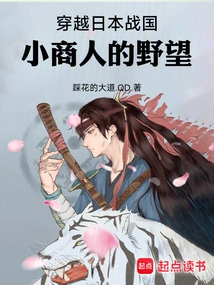
Traveling Through Japan's Warring States Period: the Ambition of a Small Businessman
The Avenue Of Stepping On Flowers. Qd
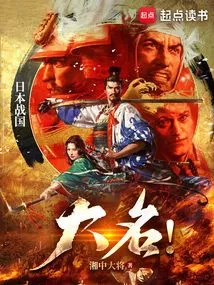
Great Name!
General Of Central Hunan
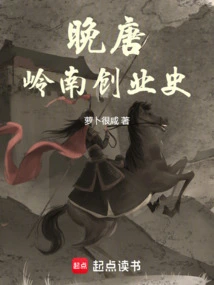
Lingnan Entrepreneurship History in the Late Tang Dynasty
Radish Is Very Salty
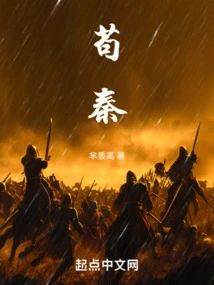
Gou Qin
Mi Muli
My Brother is Gao Huan
The Beast Loves To Eat Crayfish
Medieval Times: I Build a Manor in the Mountains
Roe Deer In A Daze
My Life as a Samurai in the Late Edo Period of Japan
I Want To Eat Extra Spicy