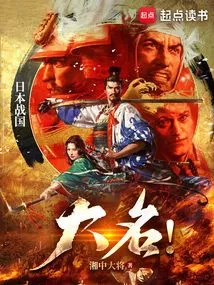
Great Name!
About This Novel
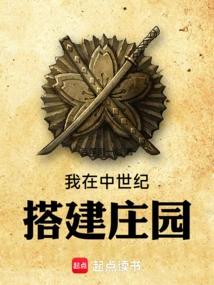
Tsuda Nobutora just wants to survive in this troubled world, and ending the troubled world is the best choice. And his master, Oda Nobunaga, is just one step away from unification! ... June 2, the tenth year of Tianzheng! "Target! Honnoji Temple!" "Forward!"
Official Sources
What Readers Think
Rating
Community(0)
Official(18)Scraped 2mo ago
Summary after reading
There are too many disgusting routines and they are used inappropriately. First, observe filial piety. I don't know if Japan has this tradition. Even if it did, no one would care about it during the Warring States Period, so the protagonist's trash talk is simply rubbish; Secondly, the protagonist's mother has just died. What idiot would come here to marry the protagonist? At least they should bury her first; Thirdly, the protagonist is a territorial samurai. According to the characteristics of that era, his social status is very high. As a result, in the author's writing, he is the same as someone from the bottom of society. He is simply sick and not recovering; Fourth, the protagonist and the person getting married are both people of high social status. As a result, the marriage is just like an elopement. The background of the protagonist is completely wrong. Fifth, regarding the average life expectancy and social customs at that time, the protagonist couldn't say anything about it. What era was it in (excuse my bad language)? This bullshit meme is purely disgusting. The protagonist could have just gotten engaged and waited a few years before taking action. In the end, this ancient meme is completely insulting people's IQ.
No group? No way. There must be a group.
retainer stickers
The old rule is, if you want a role, sign up for it. Don't be too outrageous. If it's outrageous, just cut it. The name must be in line with the characteristics of the Warring States Period.
It's two extremes compared to the previous one, which was about taking the best and taking the best! This book has been licked since Nobunaga made his fortune, Nobunaga's die-hard fan The plot also developed completely according to the original time! I don't understand how the old turtle monkey Mitsuhide and the like can be easily killed without doing anything... Are they afraid that the changes will be too big and difficult to write? Or are you afraid of losing your foresight?
Common Japanese armors and their weights are as follows: - Large armor: usually weighs about 25-26 kilograms, and is mainly composed of helmet, carcass, ribs, sleeves, sandalwood boards, dovetail boards, etc. For example, the famous red silk threat armor weighs 22.6 Kilograms. If missing parts are included, it will be about 26-26.5 Kilograms. - Tamaru: The weight is generally about 12 kilograms. Compared with the large armor, the weight is significantly lighter. The materials are simple and mainly made of bamboo and leather. - Abdominal roll: similar to the body pill, usually weighing around 10-12 kilograms, it is a lightweight armor, mostly used by ordinary soldiers or non-combatants. - Gear: The weight of the armor worn by generals during the Warring States Period varied greatly. For example, the total combat weight of the armor worn by Oda Nobunaga's retainer Mori Ranmaru was 8.9 Kilograms, while ordinary infantry armor generally weighed around 4 kilograms. - Nanman carcass: It is a rather special kind. The weight of two or three carcasses is generally 10.5-12.5Kg; if it is a Nanbar carcass made of double-layer breasts imported from Spain and decorated, the weight may soar to almost 30kg.
It's pretty good among similar articles
It's worth reading, but the typos and occasional sentence breaks are a bit annoying.
The first chapter poisoned me
Even though I have traveled through time, I still smell like a loser. I want to pick up women and lick them. I just said that I shed tears because of my mother's death. Then I called my friend my adoptive father. I laughed while chatting. Tang San is more anthropomorphic than you. Such people deserve to be at the bottom of their lives!
I don't understand what's so good about Japanese historical novels. If you really traveled through time, just go back to China, and then tell the emperor in the name of tribute that Japan has silver. What revenge cannot be avenged, what goals cannot be achieved
Some chapters are very watery, but overall it's nice to watch
Common Japanese armors and their weights are as follows: - Large armor: usually weighs about 25-26 kilograms, and is mainly composed of helmet, carcass, ribs, sleeves, sandalwood boards, dovetail boards, etc. For example, the famous red silk threat armor weighs 22.6 Kilograms. If missing parts are included, it will be about 26-26.5 Kilograms. - Tamaru: The weight is generally about 12 kilograms. Compared with the large armor, the weight is significantly lighter. The materials are simple and mainly made of bamboo and leather. - Abdominal roll: similar to the body pill, usually weighing around 10-12 kilograms, it is a lightweight armor, mostly used by ordinary soldiers or non-combatants. - Gear: The weight of the armor worn by generals during the Warring States Period varied greatly. For example, the total combat weight of the armor worn by Oda Nobunaga's retainer Mori Ranmaru was 8.9 Kilograms, while ordinary infantry armor generally weighed around 4 kilograms. - Nanman carcass: It is a rather special kind. The weight of two or three carcasses is generally 10.5-12.5Kg; if it is a Nanbar carcass made of double-layer breasts imported from Spain and decorated, the weight may soar to almost 30kg. Is your 30kg armor a bit exaggerated?
Rating
Community(0)
Official(18)Scraped 2mo ago
Summary after reading
There are too many disgusting routines and they are used inappropriately. First, observe filial piety. I don't know if Japan has this tradition. Even if it did, no one would care about it during the Warring States Period, so the protagonist's trash talk is simply rubbish; Secondly, the protagonist's mother has just died. What idiot would come here to marry the protagonist? At least they should bury her first; Thirdly, the protagonist is a territorial samurai. According to the characteristics of that era, his social status is very high. As a result, in the author's writing, he is the same as someone from the bottom of society. He is simply sick and not recovering; Fourth, the protagonist and the person getting married are both people of high social status. As a result, the marriage is just like an elopement. The background of the protagonist is completely wrong. Fifth, regarding the average life expectancy and social customs at that time, the protagonist couldn't say anything about it. What era was it in (excuse my bad language)? This bullshit meme is purely disgusting. The protagonist could have just gotten engaged and waited a few years before taking action. In the end, this ancient meme is completely insulting people's IQ.
No group? No way. There must be a group.
retainer stickers
The old rule is, if you want a role, sign up for it. Don't be too outrageous. If it's outrageous, just cut it. The name must be in line with the characteristics of the Warring States Period.
It's two extremes compared to the previous one, which was about taking the best and taking the best! This book has been licked since Nobunaga made his fortune, Nobunaga's die-hard fan The plot also developed completely according to the original time! I don't understand how the old turtle monkey Mitsuhide and the like can be easily killed without doing anything... Are they afraid that the changes will be too big and difficult to write? Or are you afraid of losing your foresight?
Common Japanese armors and their weights are as follows: - Large armor: usually weighs about 25-26 kilograms, and is mainly composed of helmet, carcass, ribs, sleeves, sandalwood boards, dovetail boards, etc. For example, the famous red silk threat armor weighs 22.6 Kilograms. If missing parts are included, it will be about 26-26.5 Kilograms. - Tamaru: The weight is generally about 12 kilograms. Compared with the large armor, the weight is significantly lighter. The materials are simple and mainly made of bamboo and leather. - Abdominal roll: similar to the body pill, usually weighing around 10-12 kilograms, it is a lightweight armor, mostly used by ordinary soldiers or non-combatants. - Gear: The weight of the armor worn by generals during the Warring States Period varied greatly. For example, the total combat weight of the armor worn by Oda Nobunaga's retainer Mori Ranmaru was 8.9 Kilograms, while ordinary infantry armor generally weighed around 4 kilograms. - Nanman carcass: It is a rather special kind. The weight of two or three carcasses is generally 10.5-12.5Kg; if it is a Nanbar carcass made of double-layer breasts imported from Spain and decorated, the weight may soar to almost 30kg.
It's pretty good among similar articles
It's worth reading, but the typos and occasional sentence breaks are a bit annoying.
The first chapter poisoned me
Even though I have traveled through time, I still smell like a loser. I want to pick up women and lick them. I just said that I shed tears because of my mother's death. Then I called my friend my adoptive father. I laughed while chatting. Tang San is more anthropomorphic than you. Such people deserve to be at the bottom of their lives!
I don't understand what's so good about Japanese historical novels. If you really traveled through time, just go back to China, and then tell the emperor in the name of tribute that Japan has silver. What revenge cannot be avenged, what goals cannot be achieved
Some chapters are very watery, but overall it's nice to watch
Common Japanese armors and their weights are as follows: - Large armor: usually weighs about 25-26 kilograms, and is mainly composed of helmet, carcass, ribs, sleeves, sandalwood boards, dovetail boards, etc. For example, the famous red silk threat armor weighs 22.6 Kilograms. If missing parts are included, it will be about 26-26.5 Kilograms. - Tamaru: The weight is generally about 12 kilograms. Compared with the large armor, the weight is significantly lighter. The materials are simple and mainly made of bamboo and leather. - Abdominal roll: similar to the body pill, usually weighing around 10-12 kilograms, it is a lightweight armor, mostly used by ordinary soldiers or non-combatants. - Gear: The weight of the armor worn by generals during the Warring States Period varied greatly. For example, the total combat weight of the armor worn by Oda Nobunaga's retainer Mori Ranmaru was 8.9 Kilograms, while ordinary infantry armor generally weighed around 4 kilograms. - Nanman carcass: It is a rather special kind. The weight of two or three carcasses is generally 10.5-12.5Kg; if it is a Nanbar carcass made of double-layer breasts imported from Spain and decorated, the weight may soar to almost 30kg. Is your 30kg armor a bit exaggerated?
Featured in 3 Booklists
Official(3)
Plot: ❤️❤️❤️❤️🖤 Character: ❤️❤️❤️🖤🖤 The routine of this book is not uncommon in China and Japan, that is, working for Oda and relying on Nobunaga to rise to power, but the author is very good at designing conflicts and character relationships. The several sets of oppositions in the book are very clear and clear, making people understand the difficulty of Oda Nobunaga starting a business. However, the character design is a bit stereotyped and homogeneous, and the marriage in the second chapter is quite interesting. This way, there is no need to write about the relationship between men and women in the future, which is quite refreshing.
🌟🌟🌟Japanese Warring States period, it's good to change the taste occasionally
If you want to get into Japanese Warring States literature, you can try this book. Although I don't know if it's wrong, it seems to be simple and easy to understand. The problem is that it's not satisfying enough.

You Might Also Like
The Ambitions of the Kyogoku Family
Kira Kami Sosuke
Reborn Female General
Qianshan Tea Guest
Fox of France
Bottle Fighter
King of Ross
Ivan The Terrible
Xuande
Yuyan
I, Liu Bian, Sanxing Han Dynasty
Dim Star L
Traveling Through Japan's Warring States Period: the Ambition of a Small Businessman
The Avenue Of Stepping On Flowers. Qd
Toyotomi's Wet Dream
Bump Bear

The Pope Please Ascend the Throne
Generally Cute Caesar
I Was a Plutocrat in World War I: Starting to Save France
Steel Wing Iron Cavalry