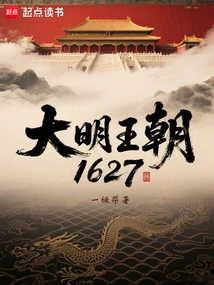
Ming Dynasty 1627
About This Novel
In 1627 of the Ming Dynasty, pig iron cost 9 Wenqian\u002F catty, wheat cost 0.7 Liang\u002F stone, and corn cost 0.5 Liang\u002F stone. In 1627 of the Ming Dynasty, the central tax revenue was approximately 10 million taels of silver + 4 million shi of grain. The local income from Juyin, Minzhuangyin, Lijiayin, and Yizhanyin is equivalent to about 10,000 to 2,000 silver in each county. In 1627 of the Ming Dynasty, the population was about 150 million to 200 million, which was still far from the 400 million of the Manchu Qing Dynasty. A large amount of land has been abandoned in Beizhi, Henan, and Shandong, and Huguang, Yunnan, Guizhou, and Sichuan are far from reaching the limit of development. In 1627 of the Ming Dynasty, after three consecutive years of good weather in Shaanxi, a slight drought finally began this year. Generally speaking, the south is slightly flooded, the north is slightly droughty, and large-scale natural disasters have not yet begun. In 1627 of the Ming Dynasty, a year after Hou Jinhuang Taiji ascended the throne, he alleviated the domestic famine by attacking North Korea. But for this reason, the four-beile Amin, who led the army to attack North Korea, cannot be defeated, and the situation of four-beile co-governance still seems to be unbreakable. --So, I would like to ask, what is the reason for such Tianhu's start, leading to the collapse of the world step by step? --So, let me ask you, when the time traveler comes to this point in time, how difficult will it be to turn the tide? Is it true, as many people say, that the Ming Dynasty in 1627 was irreversibly ruined? --If you also have questions, you may wish to join this large-scale historical simulation script that is completely based on real historical materials. So far, this article has referenced 531 papers, 7188 Jinshi scholars after the eighth year of Wanli period, and 4657 candidates whose biographies can be traced.
Official Sources
What Readers Think
Rating
Community(0)
Official(82)Scraped 1mo ago
Is killing Wei Zhongxian something that humans can do? You are equivalent to Liu Chan killing Zhuge Liang as soon as he ascended the throne.
Does the author live in his own world?
You are an emperor who has just ascended the throne. You have no foundation of your own and yet you become your biggest helper? You are such a talent! Wei Zhongxian is nine thousand years old! A eunuch is basically the one with the greatest power. Would he fight tooth and nail if he knew he was going to die? You have money, soldiers, officials, even you eat and sleep under his supervision. He can take care of you easily, and then you can just find a clan relative to succeed you.
Message to the author
To be honest, does the author know how the civil servants of the Ming Dynasty evaded taxes, poached corners of the court, controlled the army, controlled speech, controlled imperial examinations, and controlled overseas trade? The author far underestimated the power of civil servants and their ruthlessness and shamelessness! Let's talk about tax evasion first. In fact, the imperial court did not give them such a large tax exemption and exemption quota, but they used their power as officials to collect taxes to increase their quota by dozens, hundreds, and thousands of times. They also used their power of public opinion to deliberately propagate that they were all exempted from the imperial court's preferential treatment. There is also the use of power to let family members do business or collect shares from businessmen. Anyway, the entire Shishen Group is all on the same network. You help me, and I help you, from the central government to the local governments, to the talent pool, and local academies. They are all poaching the country. It's a matter of more or less! All land taxes and industrial and commercial taxes are not paid. When the court talks about collecting commercial taxes, it says it is competing for profits with the people. After controlling the army, Yu Qian defended Beijing. After the war, military merit assessment and promotion were transferred from the Governor's Office of the Fifth Army to the Ministry of War. In addition, the Ministry of Household issued food and salary, supervised the military censor, and civilian supervisors. Full control! To control speech, for the emperor, it is either a natural disaster, an ancestral system, or the words of a saint. Where is the power of interpretation? It's in their hands! Taking advantage of the people's natural trust, admiration and reverence for scholars, we can monopolize the right to speak from the central government to the local government and then to the countryside. Controlling the imperial examinations is a good point. After all, too many people are paying attention. It is also part of the cake within the Literati Shen Group and can only protect key groups. It is to use literary skills, writing style, etc. To screen. To control overseas trade, for their own benefit, they directly banned the sea, abolished the navy, burned the sea charts, and even directly introduced Japanese pirates. Can such a group of people wake up after just a few words? They also guide foreigners to attack the capital in order to obtain cheaper supplies for robbery.
As soon as he ascended the throne, he changed his ministers and killed Wei Zhongxian. What should he replace with and what should he kill with? Do you have the halo of the protagonist?
The protagonist has just ascended the throne and does not analyze the situation to sort out the situation of the court, nor does he meet with the eunuchs and foreign ministers to win over his younger brothers. There is nothing in terms of military power, human rights, political power, and financial power. There are no civil and military officials. The situation in the court, parties, civil and military officials, eunuchs, nobles, and the inner palace do not know anything. You don't know who your enemies are and who your friends are. You don't want to stabilize the situation at the beginning, but start trouble as soon as you get up. You are the emperor, and it is best for you to just keep growing. Eunuchs are naturally the emperor's own people, but in the end, they start with their own people. You want to change the eunuch leader all the time. What do you want to change it for? Can you command the people below? What is the source of your power? It is really the emperor's power. Believe it or not, all the people you mentioned will die the next day. I don't know if you dare to kill the emperor. Killing your eunuchs is not easy. Wei Zhongxian, you kill me when you say it, and you use words to force me. There are so many eunuchs under my command, and you don't even have a soldier. If you push me hard, I can call a few eunuchs to kill you that night. I really can't figure out why the protagonist is so hostile to Wei Zhongxian. He has only met Wei Zhongxian a few times and does not understand his political stance. Normal people would know that sending Wei Zhongxian to fight with civil servants would allow the protagonist to reap the benefits. The author also kept researching historical data. What's the use of checking historical data? He doesn't even understand the most basic logic of political struggle. Shouldn't the normal start of the game be to win over nobles first? With the support of nobles, you will have military power. If you don't have soldiers, what will you do? The title of your book, Ming Dynasty 1627, has lowered the quality of the TV series Ming Dynasty 1566. It's like how other people filmed political struggles. If you changed the title, I wouldn't necessarily comment. After reading more than a dozen chapters, I just couldn't stand it anymore. . .
Looking at the dynasty with the thinking of a large enterprise group actually works
The rise and fall of the Ming Dynasty Group (1368-1644) Chapter 1: Entrepreneurship and listing (Hongwu and Yongle Dynasties: 1368-1424) Founder/Chairman: Zhu Yuanzhang (Hongwu) Core asset: An invincible army. Business model: Overthrow the brutal Yuan Dynasty (defeat the monopoly giants of the old market) and provide the core public product of "order and stability". Company structure: Absolute dictatorship: As the sole major shareholder and CEO, Zhu Yuanzhang abolished the prime minister (CEO) and had to do everything personally. He compiled the detailed "Huang Ming Ancestral Instructions" ("Company Basic Law" and "Employee Handbook") in an attempt to regulate all behaviors of future generations. Cost control: Implement the "guard system" (the military is self-sufficient, reducing defense costs) and "physical finance" (reducing currency risks). Internal purge: Through the brutal "Four Major Hongwu Cases", the heroes and elders who might threaten the imperial power were purged (purge of early partners and senior management team), ensuring that 100% control was in the hands of the Zhu family. Company expansion: Chairman: Zhu Di (Yongle) Strategic shift: From internal integration to aggressive expansion. The capital was moved to Beijing (the company headquarters was moved to frontier markets), Zheng He was sent to the West seven times (to carry out large-scale overseas market promotion and exploration), and the "Yongle Dadian" was compiled (to build the company's knowledge base and brand soft power). Rating: This was the company's golden age. The founder is talented and ambitious, with a clear vision and strong control. The company is full of vitality, and its market share (territory) and brand influence (international reputation) have reached their peak. Chapter 2: The Rise of Professional Managers and the Decommissioning of Chairman (mid-term: Renxuan to early Wanli) Company situation: After the founder dies, most of the succeeding chairman (emperor) have mediocre or young abilities and are unable to handle daily affairs as diligently as the founder. Key changes: The formation of the "cabinet" system: The emperor selected talents from senior secretaries (Hanlin bachelors) to form a "cabinet" to assist in processing official documents. This is equivalent to the beginning of a team of professional managers (CEO office). "Biote Draft" and "Approval of Red": The cabinet bachelors put forward their opinions on the memorial ("Biao Draft", which is equivalent to the manager's submission of the plan), and the emperor may give instructions with a red pen ("Publish Red", which is equivalent to the chairman's approval). In the later period, the emperor often gave the power of "approving the red" to the eunuch (secretary of the chairman or director of the office). Evolution of corporate governance structure: Chairman (Emperor): Gradually "off the job" and become a symbolic leader. Board of Directors/Managers (Cabinet): Power is increasing day by day, especially with the emergence of a powerful "CEO" like Zhang Juzheng. He implemented the "One Whip Method" (financial and tax reform), which greatly improved the company's operational efficiency. Board of Supervisors (Eunuch Group): With the power of "approving reds", the Si Li Supervisor has become an important force to check and balance civil servant managers. Evaluation: The company has entered the stage of "separation of ownership and management rights". When the chairman of the board (such as Jiajing and Long Qing) is lazy or young, relying on a team of excellent professional managers (such as Zhang Juzheng), the company can still operate efficiently and even have a "ZTE". However, the internal power struggle (party struggle) also began to intensify, and there was serious internal strife among managers (civilians), supervisory boards (eunuchs), and local branch managers (local officials). Chapter 3: Company Collapse (Late Period: From the Middle to Late Wanli Period to Chongzhen) 1. The chairman is completely disabled and the company's strategy is lost: Emperor Wanli: The long-term absence from court (no board meetings, no approval of documents) has led to paralysis of company decision-making, a large number of senior executive (official) positions are vacant, and the corporate governance structure exists in name only. 2. Internal cultural breakdown and factional fighting: Party struggles are heating up: Donglin Party, Zhejiang Party, Chu Party, Eunuch Party and other factions are engaged in endless internal fighting in order to compete for control of the "manager" team. They no longer care about the overall interests of the company, but the private interests of their own small groups. This is equivalent to company executives arguing and impeaching each other in meetings every day without any intention of running business. 3. Deterioration of financial situation: Cash flow is drying up: On the one hand, land mergers are serious (major shareholders and early shareholders are frantically occupying company assets), resulting in a shrinking tax base (source of income). Budget imbalance: Revenue decreased, but expenditures increased sharply ("Liaodong Branch" military expenses after the war against Jin, "Northwest Branch" stability maintenance expenses to suppress peasant uprisings). The company was unable to pay salaries to low-level employees (soldiers and petty officials), and even laid off employees on a large scale (Li Zicheng, a laid-off employee at the post station, is a typical example). 4. Deterioration of core assets and underlying riots: The military (company security and development department): The military is underpaid and has low morale, and even joins the ranks of robbing companies (people). The military went from protecting a company's assets to becoming a liability that consumed and destroyed the company. Employees/consumers (farmers): Unable to survive under heavy taxes (corporate exploitation) and natural disasters (deterioration of market conditions). Eventually, a large-scale "employee riot" (peasant uprising) broke out, directly impacting the company headquarters. 5. Competitor mergers and acquisitions: Just when the "Da Ming Group" was in internal chaos and insolvent, a small but well-disciplined and highly combat-effective startup company outside the customs - the "Houjin Group" (later the Da Qing Group) launched a strong merger (invasion) offer. Eventually, due to internal divisions (led by branch managers such as Wu Sangui) and external attacks, the Daming Group became insolvent and declared bankruptcy (1644). Summary: The root cause of Daming Group's bankruptcy From a company perspective, the fundamental reason for the demise of the Ming Dynasty lies in: Failure of the corporate governance structure: The final decision-making power (imperial power) cannot be effectively implemented and supervised, resulting in system failure. Failure in building corporate culture: The official culture of "Cheng-Zhu Neo-Confucianism" later became a tool of party struggle and lost its role in uniting people's hearts. The profit distribution mechanism collapses: Wealth is excessively concentrated in the top elites (royals, nobles, big landowners), resulting in the inability of bottom-level employees (peasants) and middle management (low-level officials) to survive, and the entire system loses the power to maintain operation. Unable to respond to changes in the market environment: In the face of external challenges such as the "Little Ice Age" natural disaster, changes in silver input (impact of globalization), and emerging competitors (back finance), the company has been slow to respond and has inappropriate strategies.
The author is a bit too idealistic
There is a book called The Leisurely Life of Qin People. You can read it. To get these vested interests to agree and cooperate with the protagonist to save the Ming Dynasty's New Deal is not to use data and evidence to say that they will agree and cooperate unconditionally. There is no interest or benefit, and it is impossible for everyone to agree and cooperate. At most, some people are those who died in battles and committed suicide when the country was subjugated in history. The others can at most superficially agree or cooperate. When it harms their interests, they will definitely oppose and resist the New Deal. These people don't care whether the Ming Dynasty dies or not, and the world perishes. These people only care about their own interests!
From the starting point, the comments were deleted,,,, the biggest advantage of the work is textual research, and the biggest shortcoming is also textual research, too much talk, too much nonsense, the author did not consider the root problem at all, kept talking about the advantages and disadvantages, in essence, land annexation, too many people, how to take back the land, Chongzhen killed batch after batch, it was useless, from the court to the executive level, there were all such people, what should I do? Can you come here to kill? Many officials and nobles were buried with the Ming Dynasty, but before the death of the Ming Dynasty, they were still devouring the Ming Dynasty. How many people can you kill? The author simply thinks that when he gives an order, he will actually execute it according to the plan. If he is so naive, he should not write historical novels.
Reform is not about treating guests to dinner, it involves bloodshed!
The author, you wrote that the emperor wanted to reform, establish a new government, and build a new army, and you also found a bunch of information and showed it to the ministers. Do you think this will get them to fully support the emperor's reforms? You wrote that there would be opposition, but you still underestimated the power of the opposition! These opposition groups are the ones who occupy most of the land and wealth-producing resources of the Ming Dynasty, such as royal relatives, officials, nobles, landlords, and business groups that operate maritime trade and land-based salt, iron, grain, cloth, etc.! If you want to reform without a bloodbath, it is impossible to succeed! Look at the two chapters 400/401 in the novel about the overthrow of the Ming Dynasty and the Qing Dynasty from the beginning of the Ming Dynasty. It is so right: No class that will betray its own class will support the reform, because this is shaking their foundation and shaking the foundation of the feudal dynasty! Zhang Juzheng's reforms only touched part of their land and official administration reforms. What will be the outcome? If the emperor wants to reform, he must have his own new pro-army army, and he must also be careful to prevent his enemies from using various means to kill him, his concubines, and children! Political struggle is the most cruel! Either you die or I die! It is impossible for you and I to help the emperor reform together, and it is not possible for the emperor himself to directly come forward to reform, but to use ministers such as Wu Qi Bianfa, Shang Yang, Wang Anshi, and Zhang Juzheng to reform! The person Chongzhen can use is Sun Chengzong! Let him stand on the platform to implement your reforms. Reforms need to be boiled in warm water step by step, and they must be backed by their own army. Let Sun Chengzong work for a few years at first, and then change to people like Hong Chengchou or Sun Chuanting, or Lu Xiangsheng to carry out more radical reforms! This is a more reasonable solution
Record the achievements of this book
There are three sources of joy for me in writing this book: 1. To restore the real late Ming Dynasty in my mind, to see how the protagonist's actions in this relatively real world would disturb him and what kind of story would come out of it, I only preset the nodes and not any plot in the middle. The protagonist must use all his own methods in this real script to reach the goal node I set. 2. Read the comments from book friends. Some comments are more literary than me, and some comments are more interesting than me. Colorful! 3. This is the milestone of this book. This post is dedicated to this and will be updated from time to time. On July 8th, the book was published. No one was listed on the list. He put his hands in his pockets and stood like a follower. July 10th, first time on the list, new book list - historical category - 80th place July 13th, the end of the first week, new book list - historical category - 50th place July 20, end of the second week, new book list - historical category - 30th place July 27, the third week ended, the new book list - historical category - 13th place, the new book list - overall list - 80th place. July 28, new book list - overall list - 55th July 29, new book list-total list-44th place On August 1st, the new book list - the total list - 33, the monthly ticket list - the total list - 498, the recommended list - the total list - 330. On August 3, the monthly vote list-total list-437, the recommendation list-total list-289. Every monthly ticket and recommended ticket Every comment and reward I can see all of this, and it gives me a lot of encouragement. As the saying goes, a big roc rises with the wind and soars ninety thousand miles. Friends, see you at Lingxiao Palace!
In fact, if the emperor dared to do this at this time, he would die unexpectedly if he could not survive for thirty chapters, either falling into the water or dying of illness.
Rating
Community(0)
Official(82)Scraped 1mo ago
Is killing Wei Zhongxian something that humans can do? You are equivalent to Liu Chan killing Zhuge Liang as soon as he ascended the throne.
Does the author live in his own world?
You are an emperor who has just ascended the throne. You have no foundation of your own and yet you become your biggest helper? You are such a talent! Wei Zhongxian is nine thousand years old! A eunuch is basically the one with the greatest power. Would he fight tooth and nail if he knew he was going to die? You have money, soldiers, officials, even you eat and sleep under his supervision. He can take care of you easily, and then you can just find a clan relative to succeed you.
Message to the author
To be honest, does the author know how the civil servants of the Ming Dynasty evaded taxes, poached corners of the court, controlled the army, controlled speech, controlled imperial examinations, and controlled overseas trade? The author far underestimated the power of civil servants and their ruthlessness and shamelessness! Let's talk about tax evasion first. In fact, the imperial court did not give them such a large tax exemption and exemption quota, but they used their power as officials to collect taxes to increase their quota by dozens, hundreds, and thousands of times. They also used their power of public opinion to deliberately propagate that they were all exempted from the imperial court's preferential treatment. There is also the use of power to let family members do business or collect shares from businessmen. Anyway, the entire Shishen Group is all on the same network. You help me, and I help you, from the central government to the local governments, to the talent pool, and local academies. They are all poaching the country. It's a matter of more or less! All land taxes and industrial and commercial taxes are not paid. When the court talks about collecting commercial taxes, it says it is competing for profits with the people. After controlling the army, Yu Qian defended Beijing. After the war, military merit assessment and promotion were transferred from the Governor's Office of the Fifth Army to the Ministry of War. In addition, the Ministry of Household issued food and salary, supervised the military censor, and civilian supervisors. Full control! To control speech, for the emperor, it is either a natural disaster, an ancestral system, or the words of a saint. Where is the power of interpretation? It's in their hands! Taking advantage of the people's natural trust, admiration and reverence for scholars, we can monopolize the right to speak from the central government to the local government and then to the countryside. Controlling the imperial examinations is a good point. After all, too many people are paying attention. It is also part of the cake within the Literati Shen Group and can only protect key groups. It is to use literary skills, writing style, etc. To screen. To control overseas trade, for their own benefit, they directly banned the sea, abolished the navy, burned the sea charts, and even directly introduced Japanese pirates. Can such a group of people wake up after just a few words? They also guide foreigners to attack the capital in order to obtain cheaper supplies for robbery.
As soon as he ascended the throne, he changed his ministers and killed Wei Zhongxian. What should he replace with and what should he kill with? Do you have the halo of the protagonist?
The protagonist has just ascended the throne and does not analyze the situation to sort out the situation of the court, nor does he meet with the eunuchs and foreign ministers to win over his younger brothers. There is nothing in terms of military power, human rights, political power, and financial power. There are no civil and military officials. The situation in the court, parties, civil and military officials, eunuchs, nobles, and the inner palace do not know anything. You don't know who your enemies are and who your friends are. You don't want to stabilize the situation at the beginning, but start trouble as soon as you get up. You are the emperor, and it is best for you to just keep growing. Eunuchs are naturally the emperor's own people, but in the end, they start with their own people. You want to change the eunuch leader all the time. What do you want to change it for? Can you command the people below? What is the source of your power? It is really the emperor's power. Believe it or not, all the people you mentioned will die the next day. I don't know if you dare to kill the emperor. Killing your eunuchs is not easy. Wei Zhongxian, you kill me when you say it, and you use words to force me. There are so many eunuchs under my command, and you don't even have a soldier. If you push me hard, I can call a few eunuchs to kill you that night. I really can't figure out why the protagonist is so hostile to Wei Zhongxian. He has only met Wei Zhongxian a few times and does not understand his political stance. Normal people would know that sending Wei Zhongxian to fight with civil servants would allow the protagonist to reap the benefits. The author also kept researching historical data. What's the use of checking historical data? He doesn't even understand the most basic logic of political struggle. Shouldn't the normal start of the game be to win over nobles first? With the support of nobles, you will have military power. If you don't have soldiers, what will you do? The title of your book, Ming Dynasty 1627, has lowered the quality of the TV series Ming Dynasty 1566. It's like how other people filmed political struggles. If you changed the title, I wouldn't necessarily comment. After reading more than a dozen chapters, I just couldn't stand it anymore. . .
Looking at the dynasty with the thinking of a large enterprise group actually works
The rise and fall of the Ming Dynasty Group (1368-1644) Chapter 1: Entrepreneurship and listing (Hongwu and Yongle Dynasties: 1368-1424) Founder/Chairman: Zhu Yuanzhang (Hongwu) Core asset: An invincible army. Business model: Overthrow the brutal Yuan Dynasty (defeat the monopoly giants of the old market) and provide the core public product of "order and stability". Company structure: Absolute dictatorship: As the sole major shareholder and CEO, Zhu Yuanzhang abolished the prime minister (CEO) and had to do everything personally. He compiled the detailed "Huang Ming Ancestral Instructions" ("Company Basic Law" and "Employee Handbook") in an attempt to regulate all behaviors of future generations. Cost control: Implement the "guard system" (the military is self-sufficient, reducing defense costs) and "physical finance" (reducing currency risks). Internal purge: Through the brutal "Four Major Hongwu Cases", the heroes and elders who might threaten the imperial power were purged (purge of early partners and senior management team), ensuring that 100% control was in the hands of the Zhu family. Company expansion: Chairman: Zhu Di (Yongle) Strategic shift: From internal integration to aggressive expansion. The capital was moved to Beijing (the company headquarters was moved to frontier markets), Zheng He was sent to the West seven times (to carry out large-scale overseas market promotion and exploration), and the "Yongle Dadian" was compiled (to build the company's knowledge base and brand soft power). Rating: This was the company's golden age. The founder is talented and ambitious, with a clear vision and strong control. The company is full of vitality, and its market share (territory) and brand influence (international reputation) have reached their peak. Chapter 2: The Rise of Professional Managers and the Decommissioning of Chairman (mid-term: Renxuan to early Wanli) Company situation: After the founder dies, most of the succeeding chairman (emperor) have mediocre or young abilities and are unable to handle daily affairs as diligently as the founder. Key changes: The formation of the "cabinet" system: The emperor selected talents from senior secretaries (Hanlin bachelors) to form a "cabinet" to assist in processing official documents. This is equivalent to the beginning of a team of professional managers (CEO office). "Biote Draft" and "Approval of Red": The cabinet bachelors put forward their opinions on the memorial ("Biao Draft", which is equivalent to the manager's submission of the plan), and the emperor may give instructions with a red pen ("Publish Red", which is equivalent to the chairman's approval). In the later period, the emperor often gave the power of "approving the red" to the eunuch (secretary of the chairman or director of the office). Evolution of corporate governance structure: Chairman (Emperor): Gradually "off the job" and become a symbolic leader. Board of Directors/Managers (Cabinet): Power is increasing day by day, especially with the emergence of a powerful "CEO" like Zhang Juzheng. He implemented the "One Whip Method" (financial and tax reform), which greatly improved the company's operational efficiency. Board of Supervisors (Eunuch Group): With the power of "approving reds", the Si Li Supervisor has become an important force to check and balance civil servant managers. Evaluation: The company has entered the stage of "separation of ownership and management rights". When the chairman of the board (such as Jiajing and Long Qing) is lazy or young, relying on a team of excellent professional managers (such as Zhang Juzheng), the company can still operate efficiently and even have a "ZTE". However, the internal power struggle (party struggle) also began to intensify, and there was serious internal strife among managers (civilians), supervisory boards (eunuchs), and local branch managers (local officials). Chapter 3: Company Collapse (Late Period: From the Middle to Late Wanli Period to Chongzhen) 1. The chairman is completely disabled and the company's strategy is lost: Emperor Wanli: The long-term absence from court (no board meetings, no approval of documents) has led to paralysis of company decision-making, a large number of senior executive (official) positions are vacant, and the corporate governance structure exists in name only. 2. Internal cultural breakdown and factional fighting: Party struggles are heating up: Donglin Party, Zhejiang Party, Chu Party, Eunuch Party and other factions are engaged in endless internal fighting in order to compete for control of the "manager" team. They no longer care about the overall interests of the company, but the private interests of their own small groups. This is equivalent to company executives arguing and impeaching each other in meetings every day without any intention of running business. 3. Deterioration of financial situation: Cash flow is drying up: On the one hand, land mergers are serious (major shareholders and early shareholders are frantically occupying company assets), resulting in a shrinking tax base (source of income). Budget imbalance: Revenue decreased, but expenditures increased sharply ("Liaodong Branch" military expenses after the war against Jin, "Northwest Branch" stability maintenance expenses to suppress peasant uprisings). The company was unable to pay salaries to low-level employees (soldiers and petty officials), and even laid off employees on a large scale (Li Zicheng, a laid-off employee at the post station, is a typical example). 4. Deterioration of core assets and underlying riots: The military (company security and development department): The military is underpaid and has low morale, and even joins the ranks of robbing companies (people). The military went from protecting a company's assets to becoming a liability that consumed and destroyed the company. Employees/consumers (farmers): Unable to survive under heavy taxes (corporate exploitation) and natural disasters (deterioration of market conditions). Eventually, a large-scale "employee riot" (peasant uprising) broke out, directly impacting the company headquarters. 5. Competitor mergers and acquisitions: Just when the "Da Ming Group" was in internal chaos and insolvent, a small but well-disciplined and highly combat-effective startup company outside the customs - the "Houjin Group" (later the Da Qing Group) launched a strong merger (invasion) offer. Eventually, due to internal divisions (led by branch managers such as Wu Sangui) and external attacks, the Daming Group became insolvent and declared bankruptcy (1644). Summary: The root cause of Daming Group's bankruptcy From a company perspective, the fundamental reason for the demise of the Ming Dynasty lies in: Failure of the corporate governance structure: The final decision-making power (imperial power) cannot be effectively implemented and supervised, resulting in system failure. Failure in building corporate culture: The official culture of "Cheng-Zhu Neo-Confucianism" later became a tool of party struggle and lost its role in uniting people's hearts. The profit distribution mechanism collapses: Wealth is excessively concentrated in the top elites (royals, nobles, big landowners), resulting in the inability of bottom-level employees (peasants) and middle management (low-level officials) to survive, and the entire system loses the power to maintain operation. Unable to respond to changes in the market environment: In the face of external challenges such as the "Little Ice Age" natural disaster, changes in silver input (impact of globalization), and emerging competitors (back finance), the company has been slow to respond and has inappropriate strategies.
The author is a bit too idealistic
There is a book called The Leisurely Life of Qin People. You can read it. To get these vested interests to agree and cooperate with the protagonist to save the Ming Dynasty's New Deal is not to use data and evidence to say that they will agree and cooperate unconditionally. There is no interest or benefit, and it is impossible for everyone to agree and cooperate. At most, some people are those who died in battles and committed suicide when the country was subjugated in history. The others can at most superficially agree or cooperate. When it harms their interests, they will definitely oppose and resist the New Deal. These people don't care whether the Ming Dynasty dies or not, and the world perishes. These people only care about their own interests!
From the starting point, the comments were deleted,,,, the biggest advantage of the work is textual research, and the biggest shortcoming is also textual research, too much talk, too much nonsense, the author did not consider the root problem at all, kept talking about the advantages and disadvantages, in essence, land annexation, too many people, how to take back the land, Chongzhen killed batch after batch, it was useless, from the court to the executive level, there were all such people, what should I do? Can you come here to kill? Many officials and nobles were buried with the Ming Dynasty, but before the death of the Ming Dynasty, they were still devouring the Ming Dynasty. How many people can you kill? The author simply thinks that when he gives an order, he will actually execute it according to the plan. If he is so naive, he should not write historical novels.
Reform is not about treating guests to dinner, it involves bloodshed!
The author, you wrote that the emperor wanted to reform, establish a new government, and build a new army, and you also found a bunch of information and showed it to the ministers. Do you think this will get them to fully support the emperor's reforms? You wrote that there would be opposition, but you still underestimated the power of the opposition! These opposition groups are the ones who occupy most of the land and wealth-producing resources of the Ming Dynasty, such as royal relatives, officials, nobles, landlords, and business groups that operate maritime trade and land-based salt, iron, grain, cloth, etc.! If you want to reform without a bloodbath, it is impossible to succeed! Look at the two chapters 400/401 in the novel about the overthrow of the Ming Dynasty and the Qing Dynasty from the beginning of the Ming Dynasty. It is so right: No class that will betray its own class will support the reform, because this is shaking their foundation and shaking the foundation of the feudal dynasty! Zhang Juzheng's reforms only touched part of their land and official administration reforms. What will be the outcome? If the emperor wants to reform, he must have his own new pro-army army, and he must also be careful to prevent his enemies from using various means to kill him, his concubines, and children! Political struggle is the most cruel! Either you die or I die! It is impossible for you and I to help the emperor reform together, and it is not possible for the emperor himself to directly come forward to reform, but to use ministers such as Wu Qi Bianfa, Shang Yang, Wang Anshi, and Zhang Juzheng to reform! The person Chongzhen can use is Sun Chengzong! Let him stand on the platform to implement your reforms. Reforms need to be boiled in warm water step by step, and they must be backed by their own army. Let Sun Chengzong work for a few years at first, and then change to people like Hong Chengchou or Sun Chuanting, or Lu Xiangsheng to carry out more radical reforms! This is a more reasonable solution
Record the achievements of this book
There are three sources of joy for me in writing this book: 1. To restore the real late Ming Dynasty in my mind, to see how the protagonist's actions in this relatively real world would disturb him and what kind of story would come out of it, I only preset the nodes and not any plot in the middle. The protagonist must use all his own methods in this real script to reach the goal node I set. 2. Read the comments from book friends. Some comments are more literary than me, and some comments are more interesting than me. Colorful! 3. This is the milestone of this book. This post is dedicated to this and will be updated from time to time. On July 8th, the book was published. No one was listed on the list. He put his hands in his pockets and stood like a follower. July 10th, first time on the list, new book list - historical category - 80th place July 13th, the end of the first week, new book list - historical category - 50th place July 20, end of the second week, new book list - historical category - 30th place July 27, the third week ended, the new book list - historical category - 13th place, the new book list - overall list - 80th place. July 28, new book list - overall list - 55th July 29, new book list-total list-44th place On August 1st, the new book list - the total list - 33, the monthly ticket list - the total list - 498, the recommended list - the total list - 330. On August 3, the monthly vote list-total list-437, the recommendation list-total list-289. Every monthly ticket and recommended ticket Every comment and reward I can see all of this, and it gives me a lot of encouragement. As the saying goes, a big roc rises with the wind and soars ninety thousand miles. Friends, see you at Lingxiao Palace!
In fact, if the emperor dared to do this at this time, he would die unexpectedly if he could not survive for thirty chapters, either falling into the water or dying of illness.
Featured in 36 Booklists
Official(36)
One of the most worth-read historical articles this year, a masterpiece. 1627, Not many years have passed since the demise of the Ming Dynasty. If the protagonist travels to this period, will he be able to revive the Ming Dynasty? That's interesting, so I collected it.
In 1627 of the Ming Dynasty, the price of pig iron was 9 taels per catty, wheat was 0.7 Taels per stone, and corn was 0.5 Taels per stone. In 1627 of the Ming Dynasty, the central tax revenue was approximately 10 million taels of silver + 4 million shi of grain. The local income from Juyin, Minzhuangyin, Lijiayin, and Yizhanyin is equivalent to about 10,000 to 2,000 silver in each county. In 1627 of the Ming Dynasty, the population was about 150 million to 200 million, which was still far from the 400 million of the Manchu Qing Dynasty. A large amount of land has been abandoned in Beizhi, Henan, and Shandong, and Huguang, Yunnan, Guizhou, and Sichuan are far from reaching the limit of development. In 1627 of the Ming Dynasty, after three consecutive years of good weather in Shaanxi, a slight drought finally began this year. Generally speaking, the south is slightly flooded, the north is slightly droughty, and large-scale natural disasters have not yet begun. In 1627 of the Ming Dynasty, a year after Hou Jinhuang Taiji ascended the throne, he alleviated the domestic famine by attacking North Korea. But for this reason, the four-beile Amin, who led the army to attack North Korea, cannot be defeated, and the situation of four-beile co-governance still seems to be unbreakable. --So, I would like to ask, what is the reason for such Tianhu's start, leading to the collapse of the world step by step? --So, let me ask you, when the time traveler comes to this point in time, how difficult will it be to turn the tide? Is it true, as many people say, that the Ming Dynasty in 1627 was irreversibly ruined? --If you also have questions, you may wish to join this large-scale historical simulation script that is completely based on real historical materials.

The overall score is 8 points, highly recommended. This is a novel about the late Ming Dynasty that follows the historical facts. The protagonist travels through time and becomes Chongzhen. Reading the book reviews, the author was inspired by another Chongzhen novel and evolved from a reader to an author. But from the perspective of writing style, the author does not look like a novice at all. His writing style is mature and robust, and his research is detailed. It seems that he was born to eat this kind of rice. It's just that the author's real income is not low, and he doesn't care about the salary of Internet writers. I wrote this book completely on a whim. If the enthusiasm fades, I am a little worried that there may be eunuchs in the future. I am also reading the book that made the author so angry. The writing style is indeed inferior, but it takes a different path. If you don't care too much about the authenticity of historical data, from the perspective of romance, you can still read it, it can be regarded as solid food. Although the protagonist of this book is Zhu Youjian, he has not become Chongzhen. The protagonist's behavior can be described as overbearing and chaotic. The book provides a detailed analysis of the behavioral logic of each character and the hidden story behind the incident. After reading this book, I can have a deeper understanding of the real late Ming Dynasty. The chapter is not large at the moment, and the changes in the Ming Dynasty have just begun. The changes in Jisi in the second year of Chongzhen are still hanging over the protagonist's head like the sword of Damocles, and the various problems faced by the Ming Dynasty have not yet been solved. It depends on what the author has to say about it. The overall score is 8 points, highly recommended.
"It wasn't until I traveled through time that I knew there was no Wang Chengen in Prince Xin's Mansion." Zhu Youjian, who is 88 years old this year, hesitated for a moment and then blacked out this line. He thought for a while and changed the beginning of his memoir: "When I was seventeen years old, I knew that the power of this glorious Ming Dynasty would be exhausted..." Before he could continue writing, the chamberlain reported outside the door: "Your Majesty, there is an urgent message from the Yinzhou Governor's Mansion." "Send it in." Zhu Youjian responded hurriedly and closed the memoir. I saw four big words written on the cover: One Me Struggle! This book is also known as "Records of the Holy Ancestor and Emperor of the Ming Dynasty", "The Ming Dynasty is a bit difficult to save, but the problem is not big", and "The Resurgence of the First Empire of the Ming Dynasty"

You Might Also Like
Reborn Female General
Qianshan Tea Guest
I Really Don't Do My Job Properly
Who Will I Return To?
Li Ming
Goxi
Entrepreneurship in the Late Tang Dynasty
Crazy Chen
My Portable Ming Court
Fat Bird Goes First
1848 Qing Dynasty Charcoal Burner
Sea harrier
Great Song Writer
West Lake In The Rain
You Have Really Hurt Me
Born Every Day
You Can't Love Daqing Only When You Eat Hardcore Crops
Melancholy And Laughter
Nanming, This Emperor is a Bit Stable
Blue Meets Green