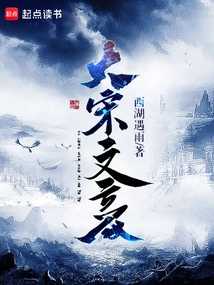
Great Song Writer
About This Novel
The first year of Jiayou. The war between Song and Xia gradually ceased, and Qingli became a thing of the past. Lu Beigu, a professor of Chinese language and literature, woke up by the Anle River. What comes into view is an era of flourishing culture and shining stars. This year, Su Shi came to Beijing from Shu with a cry of "Blessed Wind A Thousand Miles Away". Zeng Gong failed in many trials and fell into despair. Zhang Heng was confident and just waiting to become famous. In this year, Zhang Zai Hengqu's four sentences had not yet resounded throughout China, the Second Cheng Neo-Confucianism was still lurking in the background, and the revival movement of Ouyang Xiu's ancient prose was in the ascendant. In the beginning, as a poor scholar in the county school, Lu Beigu had to write and try to change his destiny. Inadvertently, he added a touch of color to the "Millennium Dragon and Tiger List" that ranks first in ancient and modern times. The young man's liver and gallbladder hang on Wu's hook, and his writing is proud of the prince. Drunk whip stars are flying across the Fan Tower, with a Tang Dynasty style and a Song Dynasty style!
Official Sources
What Readers Think
Rating
Community(0)
Official(44)Scraped 1mo ago
Haha, the author is so glass-hearted
In the comments of the starting line, he said, "The protagonist is so poor, modern people should not pretend to be noble in time travel", so he was blocked. Such a big heart...
generally
I have read nearly 150 chapters, and I can only say that the writing is particularly impressive. The protagonist is still studying in the state (almost equivalent to high school). The character creation can only be said to be average. The attempt to create an image of the protagonist who manages the world and helps the people just gives people a feeling of hypocrisy. Some supporting characters are extremely stereotyped, and you can basically know what to do next as soon as they appear. The storyline can only be described as general, with no special features. The first 150 chapters do not have any outstanding points. Personally, I feel that those who can read it are those who like a slightly talented writing style, and that's it.
A very vulgar scene from more than ten years ago! ! Bad review
At first glance, the beginning seems a little cliché, but as the plot progresses, I find that the author has profound writing skills and is skillful and skillful. He writes vividly about the imperial examination system of the Song Dynasty and the current social situation of the Northern Song Dynasty. He also puts forward his own views on the money shortage in Shu and the threat of Xixia. There are a large number of classical Chinese writing methods in the article that are quite ancient rhyme and writing ideas with views that transcend the times. There is a feeling of a collision of ideas between modern people and ancients. It is not as straightforward and simple as other novels and has a certain feasibility. I personally like it very much. Other book lovers who like this aspect should not miss it. Just a piece of food and grass, looking forward to more updates from the author.
Bad review
I want to show off my literary skills by reading a lot of classical Chinese, and then what? I am afraid that readers will not understand it, but I have to note 123. Isn't it ridiculous to annotate it later? Your notes are too ridiculous. You are writing a novel, not annotating an article.
You can write in vernacular, you can write in classical Chinese, and I can accept mixed writing, but you always write half of it yourself and annotate the other half, which affects people's reading experience. We are reading novels, not studying Chinese textbooks.
Why are you writing so many classical Chinese articles and then explaining them in vernacular Chinese later? Does this count as a low word count? , The progress is also so slow that I am speechless, I can't stand the county exam after reading more than 80 chapters in the table of contents.
Samsung. I admit that you are literate, but what next? If you write online novels, write online novels well! ! !
Why does this book have a rating of 8.1? How well written is it?
I don't quite understand it, it's a masterpiece of historical literature.
I came here from the starting point to read QQ. Except for the double-slit interference, it was too intellectually depressing. It was so poisonous that I didn't read it for months.
Rating
Community(0)
Official(44)Scraped 1mo ago
Haha, the author is so glass-hearted
In the comments of the starting line, he said, "The protagonist is so poor, modern people should not pretend to be noble in time travel", so he was blocked. Such a big heart...
generally
I have read nearly 150 chapters, and I can only say that the writing is particularly impressive. The protagonist is still studying in the state (almost equivalent to high school). The character creation can only be said to be average. The attempt to create an image of the protagonist who manages the world and helps the people just gives people a feeling of hypocrisy. Some supporting characters are extremely stereotyped, and you can basically know what to do next as soon as they appear. The storyline can only be described as general, with no special features. The first 150 chapters do not have any outstanding points. Personally, I feel that those who can read it are those who like a slightly talented writing style, and that's it.
A very vulgar scene from more than ten years ago! ! Bad review
At first glance, the beginning seems a little cliché, but as the plot progresses, I find that the author has profound writing skills and is skillful and skillful. He writes vividly about the imperial examination system of the Song Dynasty and the current social situation of the Northern Song Dynasty. He also puts forward his own views on the money shortage in Shu and the threat of Xixia. There are a large number of classical Chinese writing methods in the article that are quite ancient rhyme and writing ideas with views that transcend the times. There is a feeling of a collision of ideas between modern people and ancients. It is not as straightforward and simple as other novels and has a certain feasibility. I personally like it very much. Other book lovers who like this aspect should not miss it. Just a piece of food and grass, looking forward to more updates from the author.
Bad review
I want to show off my literary skills by reading a lot of classical Chinese, and then what? I am afraid that readers will not understand it, but I have to note 123. Isn't it ridiculous to annotate it later? Your notes are too ridiculous. You are writing a novel, not annotating an article.
You can write in vernacular, you can write in classical Chinese, and I can accept mixed writing, but you always write half of it yourself and annotate the other half, which affects people's reading experience. We are reading novels, not studying Chinese textbooks.
Why are you writing so many classical Chinese articles and then explaining them in vernacular Chinese later? Does this count as a low word count? , The progress is also so slow that I am speechless, I can't stand the county exam after reading more than 80 chapters in the table of contents.
Samsung. I admit that you are literate, but what next? If you write online novels, write online novels well! ! !
Why does this book have a rating of 8.1? How well written is it?
I don't quite understand it, it's a masterpiece of historical literature.
I came here from the starting point to read QQ. Except for the double-slit interference, it was too intellectually depressing. It was so poisonous that I didn't read it for months.
Featured in 15 Booklists
Official(15)
Xihu Daxin's new book still has the sour and rotten atmosphere of the literati, which is quite delicious!

Works: Writers of the Song Dynasty Author: West Lake in the Rain Status: serialized Tags: grassroots rise, imperial examination stream, genius stream, deduction, court The national teacher is here to teach everyone again! ❀❀❀❀❀❀❀❀❀❀❀❀❀❀❀❀❀❀❀❀❀❀❀❀❀❀❀❀❀❀ Shrimp said: In conventional literary works, most of the works are well-known to everyone, so as soon as you "copy" them, readers will immediately understand the greatness of the work. But this book does not. In order to avoid shortcuts, the author even replaced the only familiar question in the provincial examination for the reason of the "butterfly effect", in order to create a fair examination environment. In addition, the author is relatively familiar with the historical figures and events of the Song Dynasty. He should have consulted a lot of information, and many things are not written randomly without logic. The biggest feature of this book is that it does not follow the old routine of memorizing poems, but emphasizes on-the-spot performance in the examination room. It is about the protagonist constantly learning examination skills and enriching problem-solving ideas through question-sea strategies and the guidance of famous teachers, and then using a unique modern perspective to complete sharp problem-solving and finishing touches. The whole process has a clear purpose, a solid story, and vivid details. The details of the policy theory are very solid, and the details of the examination room are described extensively, giving readers a sense of involvement. The biggest advantage or disadvantage of this book is that the proportion of classical Chinese is relatively high, and the reading threshold is a bit high. Most of the plain and orderly poems and strategies cited from classics in the text were written by the author, who even imitated the writing style of historical celebrities for secondary creation. If you have a certain foundation in ancient Chinese, the experience of reading this book will be quite good. Generally speaking, there are no problems with the writing, the plot progresses smoothly, the rhythm is well controlled, the routines are somewhat innovative, and the characters are vivid. 🌹🌹🌹🌹🌹🌹🌹🌹🌹🌹🌹🌹🌹🌹🌹🌹🌹 Interested readers can read (chaotang, imperial examinations, manuscripts): The first recommendation is "The Master of the Ming Dynasty" by the same author "About me pretending to be the noble son of the Southern Dynasties" original title: "Impersonating the surname Langya" "Wenkui of Ming Dynasty" "Da Ming Primary School Student" "The Number One Scholar" "A noble son from a poor family" "Wenkui of Han and Wei Dynasties" Red Army "Monopoly in Another World" a Western fantasy novel about another world "The Supreme Saint of Confucianism and Taoism" "The Literary Sage of the Great Zhou Dynasty" "I Use Imperial Examinations to Prove Immortality" There are even more urban literary works, such as the author's most beautiful works Others include: "Writing novels will make you invincible" Li Guding "The Rise of the Literary Heroes of the Republic of China" Wang Zijun "Absolutely One" Undersea Walker "The girl at the front desk is actually my number one fan" is here to give you some fun "Literary Man 1978" "China Entertainment 2000" Beaver's Rice "China Entertainment 1997" Be a little fatter "Starting from the Draft Twice-cooked Pork" is now available for pre-order "Best wishes for animation production" song "The Great French Writer" Shenmeng Xiao Chenchen "Rebirth in America as a Master" Murong Mo
A new book by the Imperial Master of the Ming Dynasty The young man's liver and gallbladder hang on Wu's hook, and his writing is proud of the prince. Drunk whip stars are flying across the Fan Tower, with a Tang Dynasty style and a Song Dynasty style!
The first year of Jiayou. The war between Song and Xia gradually ceased, and Qingli became a thing of the past. Lu Beigu, a professor of Chinese language and literature, woke up by the Anle River. What comes into view is an era of flourishing culture and shining stars. This year, Su Shi came to Beijing from Shu with a cry of "Blessed Wind A Thousand Miles Away". Zeng Gong failed in many trials and fell into despair. Zhang Heng was confident and just waiting to become famous. This year, Hengqu's four sentences have not yet resounded throughout China, and Cheng-Zhu Neo-Confucianism is still lurking in the waves. He started out as a penniless poor scholar in a county school. Lu Beigu had no choice but to write and add a little more brilliance to the glorious and grand "Millennium Dragon and Tiger List". The young man's liver and gallbladder hang on Wu's hook, and his writing is proud of the prince. Drunk whip stars are flying across the Fan Tower, with a Tang Dynasty style and a Song Dynasty style!
You Might Also Like

Reborn Female General
Qianshan Tea Guest
Prime Minister of a Poor Family
Happiness Knocks On The Door
Prime Minister is on Top
Bean Sprouts For Soup
Li Ming
Goxi
The Fierce Ministers of the Song Dynasty
Rat Cat Dog Pigeon
Entrepreneurship in the Late Tang Dynasty
Crazy Chen
I Am Practicing Daily Life in Wanli
Shangguan Bu Shui
Xielu Lang of Tang Dynasty
Well Dressed
My Portable Ming Court
Fat Bird Goes First
I Am a Literary Giant in Russia
Karamazov