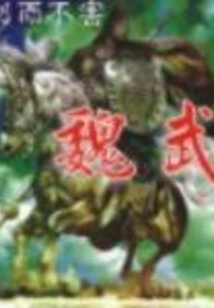
Wei Wu (the Sky after the Three Kingdoms)
by June 1st
About This Novel
The way of heaven is to benefit without harm; the way of saints is to work without fighting! The real protagonist of this novel is actually the entire era. An imaginary era, in which some afterimages of the Wei, Jin, Southern and Northern Dynasties can be vaguely seen. The author does not want to create a perfect and unrivaled protagonist here. The tasks they appear on are actually just to reflect the fragments of that era. This article only expresses the author's yearning for the magnanimity of the Northern Dynasty at that time, which was "the legacy of Wei Wu and singing about wine", and the elegance of the Southern Dynasty, which was "the magnanimity of a noble family and the style of celebrities." What kind of years are these: the nobility of Guangling San, the unrestrainedness of Orchid Pavilion Xu, the heroism of Chilean songs, all kinds of romance are just an escape from the suffering reality. The son of a Han family who splashes ink, the Xianbei son of a wandering horse, all the scenery in the world of mortals are destroyed in the nightmare. The sadness is as tragic as burning a harp and boiling a crane. I wish I could burn away the thousand-year-old curtain with a fire, and blow away the loess of the Central Plains with a gust of wind, so that I can enjoy the peach blossoms, sycamores, and green bamboos at that time, and look for that person's tail, hat, and mask. Can the ending be improved by exchanging indifference for his utility, exchanging kindness for his cruelty, and exchanging self-sufficiency for his greed?
Official Sources
What Readers Think
Rating
Community(0)
Rating
Community(0)
You Might Also Like
Possessed by Lu Bu
The King Is No More Than A Hegemon
Hanxiang
Jie And 2
The Poor Man's Two Thousand Years
Non-player Character
Reborn Female General
Qianshan Tea Guest
Tomorrow
Jie And 2
Shao Song
Grenades Are Afraid Of Water
My Brother-in-law is the Prince
Go Up The Mountain And Hit The Tiger On The Forehead
Qin Gong
When It Rains, I Bring A Knife
The World's Heroes
Gao Yue
The Best Servant
Yuyan