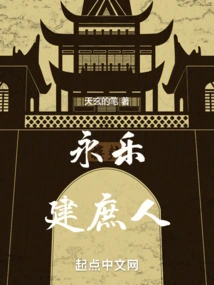
Yongle Built Common People
About This Novel
Jian Shuren, a person forgotten by history, comes from the 21st century... In the fourth year of Jianwen, the Jingnan period ended, and a large number of Yan troops poured into the Forbidden City. Zhu Di was preparing to reap the fruits of victory, but found that his "good nephew" had disappeared, and all his descendants - the Jianwen lineage - had escaped and disappeared forever in history. In order to avoid being accused of "regicide and nephew killing", Emperor Yongle, who had not yet ascended the throne, had no choice but to stage a drama with Yao Guangxiao of "a civet cat for a commoner". Historical records: Zhu Wengui, the second son of Zhu Yunwen, was deposed as a "commoner" and imprisoned in Fengyang Guang'an Palace, never to see the light of day. Ten years have passed, and almost everyone has forgotten about this remnant of Jianwen. It seems that the fate of Jiansu will continue like this for another forty years, until one day he quietly dies of old age in the palace. Until the eleventh year of Yongle, Zhu Di visited the north and drove to Fengyang to visit the imperial mausoleum. In the middle of the night, Jin Yiwei reported secretly: There is something wrong with the concubine in the palace. He often talks to himself, as if he is suffering from hysteria. In order to find out the truth, Zhu Di decided to go in person to find out the truth. In this way, an "eavesdropping storm" unfolded. ... I am Zhu Wengui, I am ill - mentally ill. Starting ten years ago, a vision that seemed to be that of the Ming Dynasty appeared in front of me, and became more and more real: there were sounds, touches, and even people started talking to me. I can no longer distinguish between fiction and reality: the psychiatrist who died tragically, the non-existent medication prescription records... In the end, which side is true? The nurse is coming to check the ward. I'll tell you the rest of the story next time. (Ps: This book is also called "The Real Ming Dynasty of Mental Illness")
Official Sources
What Readers Think
Rating
Community(0)
Official(6)Scraped 2mo ago
Description of character
This article specifically explains the personalities and behavioral logic of historical figures such as Ji Gang, Zhu Gaoxu, Yao Guangxiao, and Zhu Di. The author conceives and shapes the characters of these characters who have a lot of records in history based on historical data. Correspondingly, when faced with some choices, I will try to make their behavioral logic more biased towards the original logic in history, usually based on the major decisions they made during their lifetimes. 1. For example, Ji Gang is an executioner and careerist. He has a high position and kills people profusely. In history, he does have a unclear attitude towards the prince. It can be seen that he is a hawk and a wolf who will act for profit. Of course, such a figure is not a qualitative figure, because historical records are not completely objective and true. I am skeptical about his rebellion, because I think Ji Gang is not stupid enough to rebel against Zhu Di. He does not have the ability, nor should he have the courage. In the plot of this book, when he faced something like "the change in Fengyang", I think it is very possible that he informed the King of Han, because it was related to his life and death, as well as his glory and wealth. His loyalty to Zhu Di was just for glory and wealth, it was just a show, and he could betray Zhu Di's will naturally at critical moments. 2. Another example is Zhu Gaoxu. Some readers think that when Zhu Gaoxu saw Zhu Di, he was frightened and fell to the ground, hugging his legs and begging for mercy. The plot was very witty and brainless. I don't think so. In fact, I did not deliberately de-intelligentize his character, let alone any character, because it would be stupid for me to write like this. Zhu Gaoxu will kneel down and beg for mercy, which is the result of my calculation. Historically, Zhu Gaoxu has always wanted to compete for the crown prince, but he was not rebellious. This is very important, these are two different things. To fight for the crown prince is to fight Zhu Gaochi; to plot rebellion is to fight Zhu Di. Judging from historical data, Zhu Gaosui has traces of rebellion, but Zhu Gaoxu has no trace of it. The second prince wanted to take the crown prince's seat and then become emperor. Instead of killing the emperor and becoming emperor again. There are two levels of difficulty. The former only needs to find a way to drag the prince down from the throne and compete for his favor. Because Zhu Di only has three sons with the right to inherit, and he is the second oldest. If Zhu Gaochi cannot become the prince due to mistakes, it will definitely be him. In other words, this level of difficulty is only at the level of palace fighting. The latter is different. To plot rebellion is to raise an army to rebel like Zhu Di and fight against the entire Ming Empire with a small force. To put it bluntly, this is almost like seeking death. Zhu Di was able to succeed because Zhu Yunwen was stupid, and the ministers Zhu Yuanzhang left behind for Zhu Yunwen were also stupid. What about Zhu Gaoxu? He was the king of Han and had few soldiers, so how could he defeat Zhu Di? Court death? Therefore, Zhu Gaoxu had no courage and could not conspire against him. He only dared to fight for the crown prince. As for the historical data, in later generations, Zhu Gaochi died, Zhu Zhanji ascended the throne, and he raised the banner to rebel, that is one thing. Zhu Zhanji is his nephew, a young man who has never fought in a war, not his invincible father. So Zhu Gaoxu wanted to take a gamble and see if he could win. The result is very real and cannot be beaten in the slightest. Zhu Zhanji personally led the expedition, and the army came to the city, which froze Zhu Gaoxu's heart. So he surrendered without any hesitation. Have you ever thought about why he surrendered? Quite simply, he was afraid of death. He knew that it was one thing to raise a flag to rebel, but another thing to actually start a fight. If he really met Zhu Zhanji with swords, there was no way Zhu Zhanji would let him live. On the contrary, Zhu Zhanji would definitely not kill him to show his magnanimity, and at most he would be reduced to a commoner. Having said this, someone will definitely ask: No, wasn't Zhu Gaoxu very fierce during the crisis? Aren't you brave and good at fighting through life and death? Would such a person be afraid of death? My answer is: yes, he is particularly afraid of death. The front and back may seem contradictory, but they are not. During the Jingnan period, Zhu Di had really begun to rebel, and Zhu Yunwen's posture was also to kill the vassal king. There is no choice anymore. There is no way to surrender without fighting. Therefore, Zhu Gaoxu was forced to fight to the death and fight for his life. He fought so hard, but he was still afraid of death. He was afraid that Zhu Yunwen would kill him for treason, so he fought with all his strength. But when it came to Zhu Zhanji, there was no need for him to fight. One is not to win, but to be able to surrender. So he shot very crisply. As for being roasted by Zhu Zhanji later, that's not clear. Maybe he was really mean-mouthed and wanted to anger Zhu Zhanji. Or maybe, Zhu Zhanji just wanted to kill him. To sum up, it can be seen that Zhu Gaoxu is a smart man who cherishes his life. Would such a smart man fight with Zhu Di after being caught by him? You might as well think about it, if this were you, competing with your eldest brother for the crown prince position, you made arrogant words in front of your subordinates, promising gold and silver treasures after ascending to the throne, but your father suddenly came out, with a gloomy face and murderous intent. Ps: Your father is very fierce, killing people like tofu. At this time, would you choose to chop your father with a knife? Not to mention whether there are any moral constraints, if you really kill it, what will you get? There is only one way to die, and the word "patriricide" will never be erased in the annals of history. That was Zhu Di. Will he come to you without troops? Will he stand and let you chop him? If Zhu Gaoxu had lost his mind at this time and stabbed Zhu Di with a sword, he would have been stabbed to death. Next, isn't it Zhu Zhanji who ordered the swordsmen outside to have you imprisoned, and then issued a document to inform the world that the King of Han was planning to rebel and kill his father? You see, if you chop it down, you will definitely die. It's easy to say no to cutting, but also to beg Zhu Di for mercy. At least alive. Zhu Gaoxu knew very well who Zhu Di was. Beg for mercy, at least Zhu Di will not kill his own son. The characters of Yao Guangxiao and Zhu Di are similar. I analyzed historical data, established personality models, and then established behavioral logic to deduce the plot. If you have any different opinions, feel free to put them forward and share your opinions. I'm also very happy. Thank you very much
Comment reply question
I hope everyone can post your questions about chapters and paragraphs in chapter reviews and paragraph reviews. The author will take the time to reply one by one every day, and will correct any mistakes one by one. Thank you for your support! Questions about this book, such as "Is there a male protagonist?" Can be posted in the book review, and the author who does not involve spoilers will also answer it. Thank you for your cooperation! If you only read one or two chapters and don't care about the rest of the article, your comments will be deleted. Sorry.
The characters in this novel are most likely to be accurate to history, unlike some mindless bloopers.
Questions about Feiyu suit
Let me admit my mistakes first. I am just a lover of Ming history. I didn't go to a good high school, and I didn't enroll in a history major at a good university. I don't have a high level of research on Ming history, but I love history. I have been checking relevant historical materials during the process of writing this book to ensure that I make as few historical mistakes as possible. However, it is still difficult to avoid some mistakes induced by TV series, movies, and non-official history books, which will cause readers who have a deep understanding of Ming history to feel uncomfortable while reading. I'm sorry! I have been reading the comments section. I have carefully read all the comments that pointed out my writing errors, and will make revisions after consulting the official history while ensuring the smoothness and interest of the novel. This is also the process in which the book gets better little by little and I make progress little by little with everyone's help. I have a record of every book friend who raised the shortcomings of this book. Thank you very much for your support of this book! If one day this book is finished, I will try my best to contact you and send you a thank you gift. Closer to home, this book review is mainly to explain the issues about Feiyu Suit. In the official history, the Feiyu uniform is a second-grade uniform. It is not a uniform for each member of the Imperial Guard, but a reward from the emperor. It is a kind of honor. The position of commander of the Jinyi Guards is usually qualified to wear the flying fish suit. The records of the flying fish suit during the Yongle period are not as numerous as those in later generations, and they are not detailed. It is not certain whether Ji Gang had a flying fish suit, but it is assumed in the book that he did. "Da Zheng Ji" records: After Yongle, the eunuchs who were on the emperor's side must wear python clothes, made like a dragnet, embroidered with pythons on the left and right, and tied with Luan belts. This is also the uniform of Yanxian. The second time is the flying fish, which is only used by the servants. Regarding the Feiyu suit, in order to ensure the continuity of the plot and the traditional impression of spies such as "Jinyiwei", I will not make any changes to the previous article, but my initial understanding was indeed wrong. I apologize to everyone again and hereby explain. Finally, I would like to thank my book friend "Liu Ying Luan Xi" for pointing out this mistake of mine. Thank you for correcting me! Grateful!
Questions about the Battle of Tumu Fort
Let's talk about the conclusion first: 1. Based on the character, experience and historical facts of later generations, the actual commander of the Northern Expedition should not be Wang Zhen, but Zhu Qizhen. The reason why Wang Zhen was scolded so miserably in historical materials, as if all the blame lies with him, is simply because Zhu Qizhen confused right and wrong after he ascended the throne for the second time, in order to protect his "heroic reputation." 2. Zhu Qizhen's extremely poor military quality and command were the direct cause of the Tumu Fort Incident, but there were also other important reasons: First of all, the two sects of Ren and Xuan despised border defense, which led to the gradual collapse of border defense. The border defense policies set by the Hongwu and Yongle dynasties became ineffective and the defense lines shrank. Secondly, as decades passed, the border army became seriously corrupt, incomparable to the Yongle Dynasty, and its combat effectiveness dropped to the bottom. Finally, there are spies inside who have been selling arms and intelligence to Oara for a long time. The above conclusion is reached by the author after reading and analyzing official history for a long time. First of all, I would like to apologize. The author's initial understanding of the Tumu Fort Incident was biased. He believed in the widely circulated statement that "Wang Zhen was solely responsible" and ignored objectivity. The plot has been modified and about a thousand words have been added. Thanks to the book friend "Fallen Teeth" who pointed out this error. Thank you for correcting me!
The problem with Chapter 26 The Best Policy has been corrected
As the title states, the author locked himself in a small dark room for several days, and finally came up with a strategy that can theoretically be implemented for thousands of years. This is the end of his brain power. If you have any better ideas to mention here, I will further improve them. The corresponding chapter has been revised and about 1,500 words have been added. The form has become less, mainly the core has changed. "Education" is the focus of the new policy. I personally believe that human nature, except for the instinct of survival and the hormonal desire for love, other physical instincts such as "filial piety," "benevolence," and "good and evil" are all acquired and can be abandoned or shaped. Therefore, the focus of the new clan fell on education. It was based on education and gave them more advanced and specialized education to cultivate talents who could crush the imperial examinations, thereby surpassing the courtiers in ability and ensuring that no mediocre people would emerge. Regarding the inheritance system, in order to ensure that these disciples of the clan would not fight among themselves for the throne, I chose to incorporate "brainwashing" into the education. I used high-intensity brainwashing starting from childhood to shape the outlook of these new clan disciples, making them think very differently from me, everyone present, and the people of the Ming Dynasty. I really like a sentence in "Feng Shen": "What the horse sees is decided by humans." In the same way, what people see today was determined by our ancestors. It is also true that everyone will be disgusted and do not understand this policy of "recognizing one's clan but not one's relatives". That's all, thank you all for your support!
Rating
Community(0)
Official(6)Scraped 2mo ago
Description of character
This article specifically explains the personalities and behavioral logic of historical figures such as Ji Gang, Zhu Gaoxu, Yao Guangxiao, and Zhu Di. The author conceives and shapes the characters of these characters who have a lot of records in history based on historical data. Correspondingly, when faced with some choices, I will try to make their behavioral logic more biased towards the original logic in history, usually based on the major decisions they made during their lifetimes. 1. For example, Ji Gang is an executioner and careerist. He has a high position and kills people profusely. In history, he does have a unclear attitude towards the prince. It can be seen that he is a hawk and a wolf who will act for profit. Of course, such a figure is not a qualitative figure, because historical records are not completely objective and true. I am skeptical about his rebellion, because I think Ji Gang is not stupid enough to rebel against Zhu Di. He does not have the ability, nor should he have the courage. In the plot of this book, when he faced something like "the change in Fengyang", I think it is very possible that he informed the King of Han, because it was related to his life and death, as well as his glory and wealth. His loyalty to Zhu Di was just for glory and wealth, it was just a show, and he could betray Zhu Di's will naturally at critical moments. 2. Another example is Zhu Gaoxu. Some readers think that when Zhu Gaoxu saw Zhu Di, he was frightened and fell to the ground, hugging his legs and begging for mercy. The plot was very witty and brainless. I don't think so. In fact, I did not deliberately de-intelligentize his character, let alone any character, because it would be stupid for me to write like this. Zhu Gaoxu will kneel down and beg for mercy, which is the result of my calculation. Historically, Zhu Gaoxu has always wanted to compete for the crown prince, but he was not rebellious. This is very important, these are two different things. To fight for the crown prince is to fight Zhu Gaochi; to plot rebellion is to fight Zhu Di. Judging from historical data, Zhu Gaosui has traces of rebellion, but Zhu Gaoxu has no trace of it. The second prince wanted to take the crown prince's seat and then become emperor. Instead of killing the emperor and becoming emperor again. There are two levels of difficulty. The former only needs to find a way to drag the prince down from the throne and compete for his favor. Because Zhu Di only has three sons with the right to inherit, and he is the second oldest. If Zhu Gaochi cannot become the prince due to mistakes, it will definitely be him. In other words, this level of difficulty is only at the level of palace fighting. The latter is different. To plot rebellion is to raise an army to rebel like Zhu Di and fight against the entire Ming Empire with a small force. To put it bluntly, this is almost like seeking death. Zhu Di was able to succeed because Zhu Yunwen was stupid, and the ministers Zhu Yuanzhang left behind for Zhu Yunwen were also stupid. What about Zhu Gaoxu? He was the king of Han and had few soldiers, so how could he defeat Zhu Di? Court death? Therefore, Zhu Gaoxu had no courage and could not conspire against him. He only dared to fight for the crown prince. As for the historical data, in later generations, Zhu Gaochi died, Zhu Zhanji ascended the throne, and he raised the banner to rebel, that is one thing. Zhu Zhanji is his nephew, a young man who has never fought in a war, not his invincible father. So Zhu Gaoxu wanted to take a gamble and see if he could win. The result is very real and cannot be beaten in the slightest. Zhu Zhanji personally led the expedition, and the army came to the city, which froze Zhu Gaoxu's heart. So he surrendered without any hesitation. Have you ever thought about why he surrendered? Quite simply, he was afraid of death. He knew that it was one thing to raise a flag to rebel, but another thing to actually start a fight. If he really met Zhu Zhanji with swords, there was no way Zhu Zhanji would let him live. On the contrary, Zhu Zhanji would definitely not kill him to show his magnanimity, and at most he would be reduced to a commoner. Having said this, someone will definitely ask: No, wasn't Zhu Gaoxu very fierce during the crisis? Aren't you brave and good at fighting through life and death? Would such a person be afraid of death? My answer is: yes, he is particularly afraid of death. The front and back may seem contradictory, but they are not. During the Jingnan period, Zhu Di had really begun to rebel, and Zhu Yunwen's posture was also to kill the vassal king. There is no choice anymore. There is no way to surrender without fighting. Therefore, Zhu Gaoxu was forced to fight to the death and fight for his life. He fought so hard, but he was still afraid of death. He was afraid that Zhu Yunwen would kill him for treason, so he fought with all his strength. But when it came to Zhu Zhanji, there was no need for him to fight. One is not to win, but to be able to surrender. So he shot very crisply. As for being roasted by Zhu Zhanji later, that's not clear. Maybe he was really mean-mouthed and wanted to anger Zhu Zhanji. Or maybe, Zhu Zhanji just wanted to kill him. To sum up, it can be seen that Zhu Gaoxu is a smart man who cherishes his life. Would such a smart man fight with Zhu Di after being caught by him? You might as well think about it, if this were you, competing with your eldest brother for the crown prince position, you made arrogant words in front of your subordinates, promising gold and silver treasures after ascending to the throne, but your father suddenly came out, with a gloomy face and murderous intent. Ps: Your father is very fierce, killing people like tofu. At this time, would you choose to chop your father with a knife? Not to mention whether there are any moral constraints, if you really kill it, what will you get? There is only one way to die, and the word "patriricide" will never be erased in the annals of history. That was Zhu Di. Will he come to you without troops? Will he stand and let you chop him? If Zhu Gaoxu had lost his mind at this time and stabbed Zhu Di with a sword, he would have been stabbed to death. Next, isn't it Zhu Zhanji who ordered the swordsmen outside to have you imprisoned, and then issued a document to inform the world that the King of Han was planning to rebel and kill his father? You see, if you chop it down, you will definitely die. It's easy to say no to cutting, but also to beg Zhu Di for mercy. At least alive. Zhu Gaoxu knew very well who Zhu Di was. Beg for mercy, at least Zhu Di will not kill his own son. The characters of Yao Guangxiao and Zhu Di are similar. I analyzed historical data, established personality models, and then established behavioral logic to deduce the plot. If you have any different opinions, feel free to put them forward and share your opinions. I'm also very happy. Thank you very much
Comment reply question
I hope everyone can post your questions about chapters and paragraphs in chapter reviews and paragraph reviews. The author will take the time to reply one by one every day, and will correct any mistakes one by one. Thank you for your support! Questions about this book, such as "Is there a male protagonist?" Can be posted in the book review, and the author who does not involve spoilers will also answer it. Thank you for your cooperation! If you only read one or two chapters and don't care about the rest of the article, your comments will be deleted. Sorry.
The characters in this novel are most likely to be accurate to history, unlike some mindless bloopers.
Questions about Feiyu suit
Let me admit my mistakes first. I am just a lover of Ming history. I didn't go to a good high school, and I didn't enroll in a history major at a good university. I don't have a high level of research on Ming history, but I love history. I have been checking relevant historical materials during the process of writing this book to ensure that I make as few historical mistakes as possible. However, it is still difficult to avoid some mistakes induced by TV series, movies, and non-official history books, which will cause readers who have a deep understanding of Ming history to feel uncomfortable while reading. I'm sorry! I have been reading the comments section. I have carefully read all the comments that pointed out my writing errors, and will make revisions after consulting the official history while ensuring the smoothness and interest of the novel. This is also the process in which the book gets better little by little and I make progress little by little with everyone's help. I have a record of every book friend who raised the shortcomings of this book. Thank you very much for your support of this book! If one day this book is finished, I will try my best to contact you and send you a thank you gift. Closer to home, this book review is mainly to explain the issues about Feiyu Suit. In the official history, the Feiyu uniform is a second-grade uniform. It is not a uniform for each member of the Imperial Guard, but a reward from the emperor. It is a kind of honor. The position of commander of the Jinyi Guards is usually qualified to wear the flying fish suit. The records of the flying fish suit during the Yongle period are not as numerous as those in later generations, and they are not detailed. It is not certain whether Ji Gang had a flying fish suit, but it is assumed in the book that he did. "Da Zheng Ji" records: After Yongle, the eunuchs who were on the emperor's side must wear python clothes, made like a dragnet, embroidered with pythons on the left and right, and tied with Luan belts. This is also the uniform of Yanxian. The second time is the flying fish, which is only used by the servants. Regarding the Feiyu suit, in order to ensure the continuity of the plot and the traditional impression of spies such as "Jinyiwei", I will not make any changes to the previous article, but my initial understanding was indeed wrong. I apologize to everyone again and hereby explain. Finally, I would like to thank my book friend "Liu Ying Luan Xi" for pointing out this mistake of mine. Thank you for correcting me! Grateful!
Questions about the Battle of Tumu Fort
Let's talk about the conclusion first: 1. Based on the character, experience and historical facts of later generations, the actual commander of the Northern Expedition should not be Wang Zhen, but Zhu Qizhen. The reason why Wang Zhen was scolded so miserably in historical materials, as if all the blame lies with him, is simply because Zhu Qizhen confused right and wrong after he ascended the throne for the second time, in order to protect his "heroic reputation." 2. Zhu Qizhen's extremely poor military quality and command were the direct cause of the Tumu Fort Incident, but there were also other important reasons: First of all, the two sects of Ren and Xuan despised border defense, which led to the gradual collapse of border defense. The border defense policies set by the Hongwu and Yongle dynasties became ineffective and the defense lines shrank. Secondly, as decades passed, the border army became seriously corrupt, incomparable to the Yongle Dynasty, and its combat effectiveness dropped to the bottom. Finally, there are spies inside who have been selling arms and intelligence to Oara for a long time. The above conclusion is reached by the author after reading and analyzing official history for a long time. First of all, I would like to apologize. The author's initial understanding of the Tumu Fort Incident was biased. He believed in the widely circulated statement that "Wang Zhen was solely responsible" and ignored objectivity. The plot has been modified and about a thousand words have been added. Thanks to the book friend "Fallen Teeth" who pointed out this error. Thank you for correcting me!
The problem with Chapter 26 The Best Policy has been corrected
As the title states, the author locked himself in a small dark room for several days, and finally came up with a strategy that can theoretically be implemented for thousands of years. This is the end of his brain power. If you have any better ideas to mention here, I will further improve them. The corresponding chapter has been revised and about 1,500 words have been added. The form has become less, mainly the core has changed. "Education" is the focus of the new policy. I personally believe that human nature, except for the instinct of survival and the hormonal desire for love, other physical instincts such as "filial piety," "benevolence," and "good and evil" are all acquired and can be abandoned or shaped. Therefore, the focus of the new clan fell on education. It was based on education and gave them more advanced and specialized education to cultivate talents who could crush the imperial examinations, thereby surpassing the courtiers in ability and ensuring that no mediocre people would emerge. Regarding the inheritance system, in order to ensure that these disciples of the clan would not fight among themselves for the throne, I chose to incorporate "brainwashing" into the education. I used high-intensity brainwashing starting from childhood to shape the outlook of these new clan disciples, making them think very differently from me, everyone present, and the people of the Ming Dynasty. I really like a sentence in "Feng Shen": "What the horse sees is decided by humans." In the same way, what people see today was determined by our ancestors. It is also true that everyone will be disgusted and do not understand this policy of "recognizing one's clan but not one's relatives". That's all, thank you all for your support!
You Might Also Like
Possessed by Lu Bu
The King Is No More Than A Hegemon
Hanxiang
Jie And 2
The Poor Man's Two Thousand Years
Non-player Character
Reborn Female General
Qianshan Tea Guest
Tomorrow
Jie And 2
Shao Song
Grenades Are Afraid Of Water
My Father, Emperor Gaozu of the Han Dynasty
History Wolf
My Brother-in-law is the Prince
Go Up The Mountain And Hit The Tiger On The Forehead
Qin Gong
When It Rains, I Bring A Knife
The World's Heroes
Gao Yue