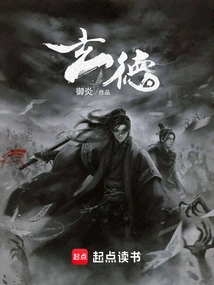
Xuande
by Yuyan
About This Novel
In front of you is! Clan of the Han Dynasty, Queen of Emperor Xiaojing, Zhuoxian Street Fighter, Direct Disciple of the Domestic Confucian Lu Zhi, Romantic Poet of the Eastern Han Dynasty, Person Directly Responsible for Luoyang Zhigui, Master of Classical Debate of Ancient Classics School, Leader of the Young Master School of Ancient Classics School, Founder of the Liu family in Zhuo County, Zhuo County, the seventh inheritance family of "Zuo Family Spring and Autumn", and the number one hater of Jinwen Classics School... What? Is the name too long to remember? Hmm... Okay. My name is Liu Bei, and my courtesy name is Xuande. This is my story, not that of my uncle.
Official Sources
What Readers Think
Rating
Community(0)
Official(43)Scraped 17d ago
This book starts off amazingly, but then it ends. There are two big problems. One is that the protagonist has too many inner monologues. Only 40% of an event is described, and the other 60% are all inner monologues. He repeatedly emphasizes that I must be cold-blooded and profit first. Are you Liu Bei? The second is to dwarf the supporting characters, which not only lowers their intelligence, but also vilifies the entire staff. The author does not believe in human nature, and thinks that everything is an exchange of interests. This is too superficial, so the characters in the author's works are flat and pale, neither three-dimensional nor plump, have no emotions, no personality, no joy, anger, sorrow, and joy, and are just paper figures.
An excellent Three Kingdoms novel with a novel perspective
As a bookworm who has read online novels for almost eight years, I have naturally read a lot of Three Kingdoms-type novels. When it comes to the Three Kingdoms, most people think of war, war, war. Relying on the momentum of the Yellow Turban Rebellion, he sat and watched the chaos in the world. Then he joined the world of strife and showed his power, attracting all the famous ministers and generals in the world, as well as beauties, big and small. This book is from another perspective. If what I said above is domineering, then this book is the kingly way. In the Romance of the Three Kingdoms, Liu Bei wasted half his life and only became rich in his middle age. After that, he acted benevolently. In this book, Liu Bei, as a time traveler in later generations, seized every opportunity to gain momentum, rose up as early as possible, suppressed the Yellow Turban Rebellion, stabilized the source of chaos, and stabilized the world with the power to clear away the filth. The famous beauties of the Three Kingdoms hardly appear in this book. In addition, the book's interpretation of the court disputes in the late Han Dynasty is also very novel and interesting, which is eye-catching. The debate between modern and ancient literary schools was the first time I saw it in a novel and the first time I heard this interpretation, which surprised me. Previous novels that talked about the dispute between eunuchs and civil servants were considered to have some historical knowledge, but this book further analyzes and interprets the internal factions of each camp. It can be seen that the author has studied the history of the Three Kingdoms and has his own ideas. Some people think that some of the words written by the author are a bit wordy and watery, but in my opinion, writing a novel is essentially "to express something." What the author wants to express may sometimes have nothing to do with the plot and may appear "watery" when written, but it is directly related to the original motivation and core of the book. There is a difference between a novel with depth and a purely fast-food novel. The difference lies in what the author wants to express. I also wrote novels before, but stopped because of the college entrance examination. At that time, the initial motivation for writing the novel was "I want to make up for the regrets in the original play and create the world in my mind." Later, as the collection subscription increased, the motivation became stronger and stronger. Because in my opinion, many people agree with the world I created and some of my ideas. When reading this book, I also agreed with some of the author's ideas. Maybe I am an idealist. For the sake of ideals, even if reality is messy, as long as I am moving towards the ultimate ideal, I will agree with it. All in all, I love this book very much, and I hope the author will work hard!
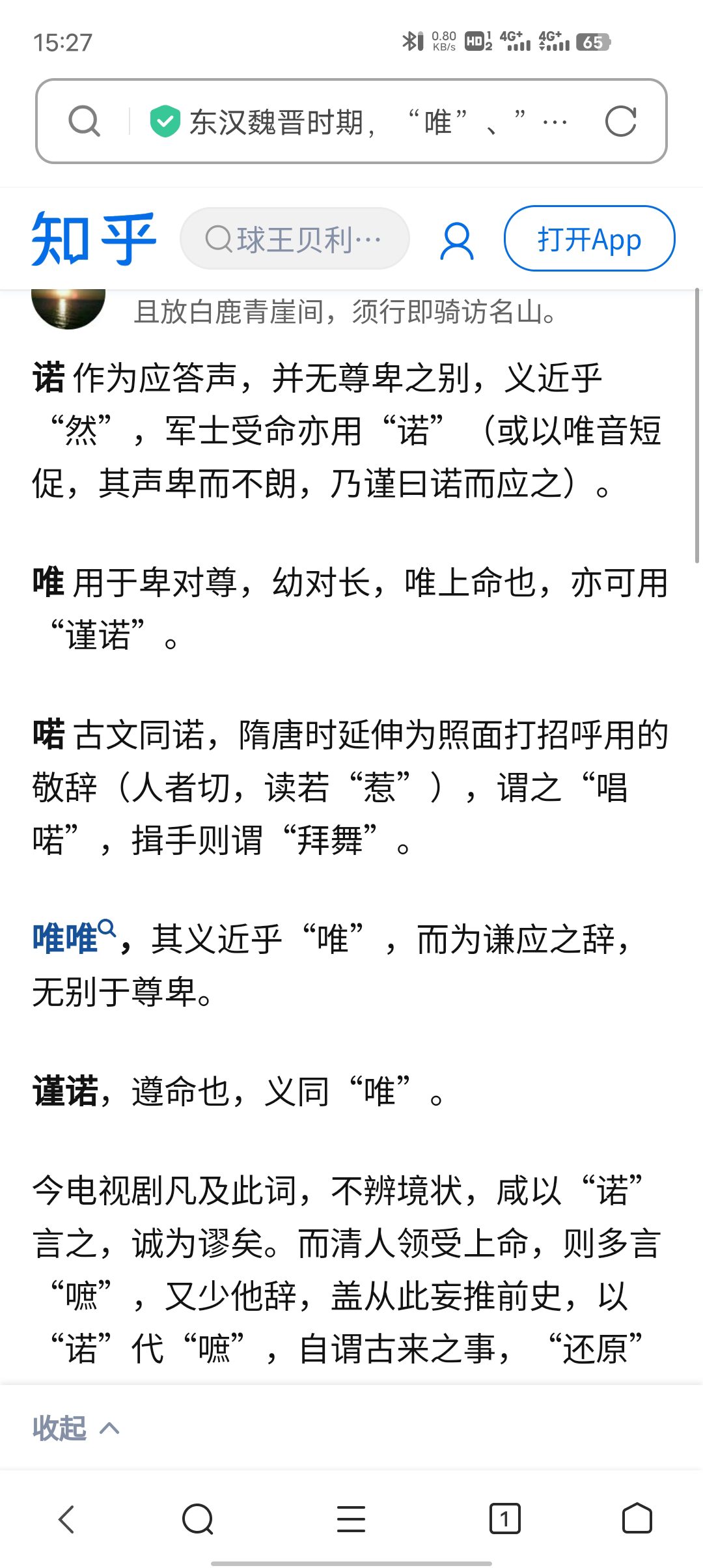
Hehe, I was used to "nuo" and suddenly heard "wei", so I checked it out.
It's not wrong, it's just that the story is too brainwashing.
After he ascended the throne, I felt that the construction of these countries can really be covered in one stroke. There is no need to write in such detail, and Kong Ming has not even appeared yet.
Is the author Japanese?
That's it, Liu Jun and Su Jun are so unaccustomed to it that they need to be changed. Anyway, I just started reading it, and it sounds so unpleasant to me.
After about ten chapters, I lost the desire to read. At the beginning, he actually went to persuade people to make revolution at the age of 7. Yes, it was "revolution"! Later, Guan Yu was picked up not because he knew he was Guan Yu, but because he was tall and could fight! Later, there was a close friendship with Gongsun Zan, not because he knew he was Gongsun Zan, but because he knew he was from a wealthy family and had a good father-in-law. Is he really so vicious? The protagonist, the time-traveler, is probably not a defective one!
From Xiao Xiongzhi in the late Han Dynasty, Qiming 1158, to Xuande now, Yu Yan's writing is getting better and better. I hope this book can be canonized.
Generally speaking, it looks like a narrative novel and cannot draw people into the protagonist.
The military is gone?
As for Zhuge Liang, I have been raising him for a while, and I have forgotten the previous ones, but after reading more than 600 chapters, I haven't seen Kong Ming. Where did he go?
A rare piece of Three Kingdoms literature
A good book. The author knows Tongliao well. Someone who has not studied history really cannot write this kind of Three Kingdoms.
Rating
Community(0)
Official(43)Scraped 17d ago
This book starts off amazingly, but then it ends. There are two big problems. One is that the protagonist has too many inner monologues. Only 40% of an event is described, and the other 60% are all inner monologues. He repeatedly emphasizes that I must be cold-blooded and profit first. Are you Liu Bei? The second is to dwarf the supporting characters, which not only lowers their intelligence, but also vilifies the entire staff. The author does not believe in human nature, and thinks that everything is an exchange of interests. This is too superficial, so the characters in the author's works are flat and pale, neither three-dimensional nor plump, have no emotions, no personality, no joy, anger, sorrow, and joy, and are just paper figures.
An excellent Three Kingdoms novel with a novel perspective
As a bookworm who has read online novels for almost eight years, I have naturally read a lot of Three Kingdoms-type novels. When it comes to the Three Kingdoms, most people think of war, war, war. Relying on the momentum of the Yellow Turban Rebellion, he sat and watched the chaos in the world. Then he joined the world of strife and showed his power, attracting all the famous ministers and generals in the world, as well as beauties, big and small. This book is from another perspective. If what I said above is domineering, then this book is the kingly way. In the Romance of the Three Kingdoms, Liu Bei wasted half his life and only became rich in his middle age. After that, he acted benevolently. In this book, Liu Bei, as a time traveler in later generations, seized every opportunity to gain momentum, rose up as early as possible, suppressed the Yellow Turban Rebellion, stabilized the source of chaos, and stabilized the world with the power to clear away the filth. The famous beauties of the Three Kingdoms hardly appear in this book. In addition, the book's interpretation of the court disputes in the late Han Dynasty is also very novel and interesting, which is eye-catching. The debate between modern and ancient literary schools was the first time I saw it in a novel and the first time I heard this interpretation, which surprised me. Previous novels that talked about the dispute between eunuchs and civil servants were considered to have some historical knowledge, but this book further analyzes and interprets the internal factions of each camp. It can be seen that the author has studied the history of the Three Kingdoms and has his own ideas. Some people think that some of the words written by the author are a bit wordy and watery, but in my opinion, writing a novel is essentially "to express something." What the author wants to express may sometimes have nothing to do with the plot and may appear "watery" when written, but it is directly related to the original motivation and core of the book. There is a difference between a novel with depth and a purely fast-food novel. The difference lies in what the author wants to express. I also wrote novels before, but stopped because of the college entrance examination. At that time, the initial motivation for writing the novel was "I want to make up for the regrets in the original play and create the world in my mind." Later, as the collection subscription increased, the motivation became stronger and stronger. Because in my opinion, many people agree with the world I created and some of my ideas. When reading this book, I also agreed with some of the author's ideas. Maybe I am an idealist. For the sake of ideals, even if reality is messy, as long as I am moving towards the ultimate ideal, I will agree with it. All in all, I love this book very much, and I hope the author will work hard!
Hehe, I was used to "nuo" and suddenly heard "wei", so I checked it out.
It's not wrong, it's just that the story is too brainwashing.
After he ascended the throne, I felt that the construction of these countries can really be covered in one stroke. There is no need to write in such detail, and Kong Ming has not even appeared yet.
Is the author Japanese?
That's it, Liu Jun and Su Jun are so unaccustomed to it that they need to be changed. Anyway, I just started reading it, and it sounds so unpleasant to me.
After about ten chapters, I lost the desire to read. At the beginning, he actually went to persuade people to make revolution at the age of 7. Yes, it was "revolution"! Later, Guan Yu was picked up not because he knew he was Guan Yu, but because he was tall and could fight! Later, there was a close friendship with Gongsun Zan, not because he knew he was Gongsun Zan, but because he knew he was from a wealthy family and had a good father-in-law. Is he really so vicious? The protagonist, the time-traveler, is probably not a defective one!
From Xiao Xiongzhi in the late Han Dynasty, Qiming 1158, to Xuande now, Yu Yan's writing is getting better and better. I hope this book can be canonized.
Generally speaking, it looks like a narrative novel and cannot draw people into the protagonist.
The military is gone?
As for Zhuge Liang, I have been raising him for a while, and I have forgotten the previous ones, but after reading more than 600 chapters, I haven't seen Kong Ming. Where did he go?
A rare piece of Three Kingdoms literature
A good book. The author knows Tongliao well. Someone who has not studied history really cannot write this kind of Three Kingdoms.
Featured in 90 Booklists
Official(90)
Yu Yan's work! At the beginning, he looks like a godfather, and the image of a completely different gang leader, Liu Xuande, a local tycoon, emerges vividly on the page. Then, through flashback techniques, Liu Xuande's life from time to time was written down one by one. In just a few chapters, you can read a nearly twenty-year class jump. He became eight percent of the scholars in the Han Dynasty, became a disciple of Lu Zhi, and participated in the debate between modern and ancient Chinese literature. The Yellow Turban is not yet here! Emperor Ling is alive now! Now, it's Liu Xuande's road to heaven! It's great. I haven't seen such a wonderful and unconventional Three Kingdoms drama in a long time. The last time I saw it was Fuhan! This book of Xuande fully portrays the character of Liu Bei, and places his writing power under the great era, under the great ministers of the Manchu Dynasty, and under the dawn of the world!
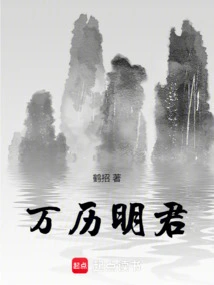
Overall score, 9 points, highly recommended! When I was young, I was ignorant and full of enthusiasm. I especially loved Cao Wei's conspiracy. Before middle age, with growing experience, I realized how romantic Ji Han was. When I was young, my understanding of the Three Kingdoms ranged from textbooks to novels to Yi Zhongtian and street stall literature. I felt that Cao Cao's true villain was his true temperament, and Liu Bei's false benevolence and righteousness were true hypocrisy. When looking for novels, I mainly look for novels about Cao Wei or Liu Bei's self-reliance. But is it really so? As my understanding of the Three Kingdoms and history grew, I realized that without the idealistic banner of benevolence and righteousness of the Jihan Group headed by Liu Bei, the Three Kingdoms would have been nothing more than an ordinary history of warlord rule in Chinese history. Looking through the history books of the Two Jin, Southern and Northern Dynasties, the Five Dynasties and Ten Kingdoms, and the late Song and Ming Dynasties, how little of this kind of history is there? Heroes such as Cao Cao and Sun Quan are just one of many powerful warlords. They may be slightly more prominent, but they have not achieved great things. How can they be compared with the ancestors of Han and Ming Dynasties? Without Xuande, there would be no Three Kingdoms. The protagonist of this book is the young Liu Bei. Although his father and grandfather were officials, they unfortunately died young and failed to save a family fortune. He was left orphaned and widowed. He could only make a living by weaving mats and selling shoes, and even the most basic food and clothing could not be guaranteed. Liu Bei's identity and the arrogance of the time traveler make the protagonist naively think that he can easily change the family's predicament and achieve a great cause. But the education from the indigenous people and the hungry belly made the protagonist quickly have to accept the reality. The author briefly tells the dilemma faced by the time traveler in the early stage in reverse order. Although the protagonist's behavior at the beginning seems stupid, looking back, I have to say that it is quite ironic. The author has done a lot of research on the history of the Three Kingdoms. The level of the previous work "The Legend of Heroes" is considered to be among the best among many Three Kingdoms novels. Different from the traditional Three Kingdoms writing method in the previous work, the author has made great progress in this book and has written ideologically. The author wants the protagonist to take an unimagined path, which requires extremely deep deduction skills, but based on the current level, I am quite confident in the author. After reading this book, I was deeply impressed by the fact that as the protagonist, a time traveler, he still found it difficult to face the dilemma of the times and identity. How did the real Liu Bei in history break through the situation, go from being a mat weaver to a shoe seller, go through hardships, and achieve Ji Han's achievements in the year of destiny?
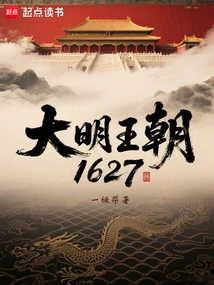
Very interesting
[Evaluation]: 6 [Disadvantages]: 5 Not bad. The ancient Chinese translation has a strong accent. The dilemmas encountered by modern people in ancient times when they cross the bottom and want to cross the class are relatively real, and the means to overcome the difficulties are also very real. Even if you are a modern lower class, if you want to break through and achieve class crossing, and become a rentier class with no money to rent out your house or car, given the current state since the founding of the People's Republic of China, it is estimated that you can only achieve this by taking the path of criminal law and not getting caught. I am not optimistic about the development of the subsequent plot. With the author's current fast-paced and straightforward expository style, I feel that with three to four hundred thousand words, even if he cannot become a powerful minister who holds the emperor in power and controls the princes, he will be almost
You Might Also Like
Reborn Female General
Qianshan Tea Guest
Shao Song
Grenades Are Afraid Of Water
The Three Kingdoms Began with Riding into Jingzhou Alone
Angry Eyebrows And Droopy Eyes
My Father, Emperor Gaozu of the Han Dynasty
History Wolf
Qin General
Dongjun Taking Off
I Will Be the Lord of Xuande
Angry Eyebrows And Droopy Eyes
Not Well-dressed
History Wolf
Three Kingdoms: I, Ma Su, Just Want to Die
Swordsman In Shu
I, Liu Bian, Sanxing Han Dynasty
Dim Star L
General of the Tang Dynasty
Fallen Leaves Withered