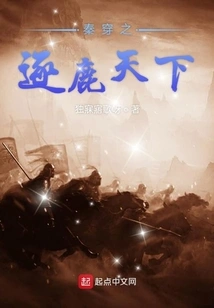
Qin Chuanzhi Competes in the World
About This Novel
Qin lost its deer, and the whole world chased it away. . . The protagonist is a prisoner at the beginning, how to overcome it? Break with knowledge. When the protagonist enters officialdom, how does he get promoted? Upgrade with knowledge. The protagonist goes into business, how to make money? Earn with knowledge. The protagonist pursues a lady, how to pursue her? Chase with knowledge. The protagonist joins the army, how can he make meritorious service? Build with knowledge. The protagonist is rebelling, how to rebel? Of course, we should use knowledge instead.
Official Sources
What Readers Think
Rating
Community(0)
Official(4)Scraped 1mo ago
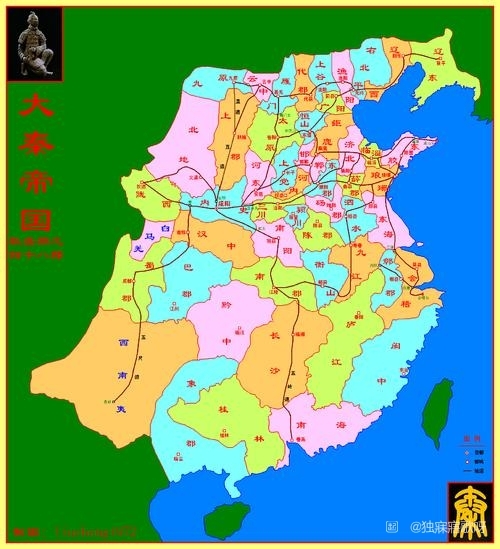
Map of counties in Qin State
Schematic map of the first-level administrative divisions of Qinguo County
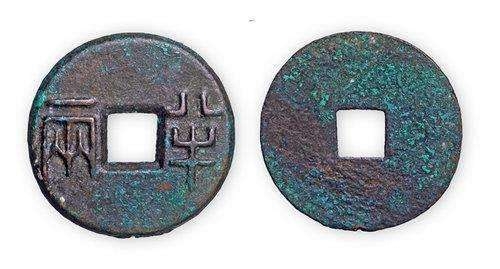
Qin Banliang
One coin is one Qin half liang "Sleeping Tiger Land Qin Slips·Jin Bu Lv": The width of the cloth is eight feet, and the width of the blessing is two feet and five inches. Ten pieces of money are equivalent to one piece of cloth. That is, eleven coins can buy a piece of cloth eight feet long and two feet five inches wide. For brown clothes, I will give you clothes: a big brown one, worth eighteen catties of quince, worth 60 cents; a medium brown piece, worth 14 jins of quince, worth 6 cents; a small brown piece, worth 11 jins of quince, worth thirty-six cents. That is, a large brown garment uses eighteen catties of hemp and is worth sixty coins; a medium brown garment uses fourteen catties of hemp and is worth forty-six coins; a small brown garment costs eleven catties of hemp and is worth thirty-six coins. "Sleeping Tiger Land Qin Bamboo Slips·Sikong": Those who are guilty must pay a ransom and have responsibilities to the public. If they are not able to enter and reward them, they will be ordered to live in the house, and the daily living will be eight qian; That is to say, if you work hard to pay off your official debt, you can pay eight qian a day if you don't eat public food; if you don't eat public food, you can pay six qian a day. Those who are responsible for the pounding of food at the end of the city, and those responsible for public food, will receive thirty coins in stone. That is thirty yuan for one stone of millet. I don't think you should eat rice when you are doing hard labor. "Liye Qin Slips": In October of the 35th year of the lunar calendar, in the 10th month of the 35th year of the lunar calendar, Yiyou Shao Nei Shoupu came out of the capital of Guizhou and got two dou of tiger meat and sold it to the garrison's father in the five cities. The money that Yang took was equal to 20 coins, which made Shi look at it as equal. That is, a dou of tiger meat is worth 20 yuan. "Liye Qin Slips" records: The big slave has a salary of 4,300; the small slave has a salary of 2,500. "Liye Qin Slips" records the price of the sacrifices: half a dou of wine is worth one qian; one can of dried meat is worth one qian; one and four sheep heads and feet are worth 4 yen; and half a dou of dolphin is worth 4 yen. "Historical Records·Xiao Xiangguo Family": On this day, more than ten people, including father, son and brothers, were granted the title of fiefdom. How can I be granted the title of 2,000 households? How can I be given two coins as a gift when the emperor tries to conquer Xianyang? Xiao He once gave Liu Bang two extra coins, and Liu Bang was extremely grateful. The following grain prices are my own guesses. Corrections and additions are welcome. A dou of grain is worth five cents, a dou of rice is fifty cents; a dou of millet is three cents, a dou of rice is thirty cents; a dou of wheat is worth three cents, a dou of rice is thirty cents; a dou of bean sprouts is two cents, a dou of rice is twenty cents. Other prices: A small slave pays 2,500 qian; a large slave 4,300 qian; a dou of wine costs 1 qian; a dou of pork costs 8 qian; and a small piece of dried meat costs 1 qian.
Explanation about Liu Bang's name:
The saying that "the emperor of the Han Dynasty changed his name to Ji when he ascended the throne" comes from "Historical Records Suoyin": Note: "The name of the country was given by Ji" in the Han Dynasty. This single cloud word is also suspicious. Note: The eldest brother of Emperor Gaozu of the Han Dynasty was named Bo, and the second was named Zhong. If there is no other name, Ji is also the name. Therefore, Xiang Dai said, "The great ancestor Ji Bu changed his name to the country after he came to the throne. Later, because the country was taboo, Ji Bu was not taboo, so Ji Bu was still called Ji Bu." The author of "Historical Records Suoyin" is Sima Zhen of the Tang Dynasty. Sima Zhen, whose courtesy name is Zizheng, calls himself Little Sima. There is no biography in the old and new Tang books, and his life story is unknown. Xiang Dai is also unknown, and his life story is unknown. Sima Zhen said, "The Book of Han records that the emperor of the Han Dynasty named his country with the courtesy name Ji. This single cloud character is also suspicious." There were many single-character characters in the Zhou, Qin, and Han dynasties, such as: Guan Yiwu, the prime minister during the reign of Duke Huan of Qi, was given the courtesy name Zhong; Shi Hui, the common ancestor of the Qi surnamed Liu and Qi surnamed Fan, was given the courtesy name Ji; during the Spring and Autumn Period, the fourth son of King Shoumeng of Wu, Gongzi Zha, was given the courtesy name Ji; Confucius's disciple Yan Zhipu was given the courtesy name Shu; Han Sui, a Korean doctor, was given the courtesy name Zhong; Su Qin, whose courtesy name was Ji; Fan Ju, whose courtesy name was Uncle; Xiang Juan of the Xiang family of Chu State, whose courtesy name was Bo; Wu Guang, whose courtesy name was Uncle; Peng Yue, whose courtesy name was Zhong; Zhang Shizhi, the prime minister during the period of Emperor Wen of the Han Dynasty, had the courtesy name Ji; Meicheng during the period of Emperor Jing of the Han Dynasty, had the courtesy name Uncle; and Gongsun Hong, the prime minister during the period of Emperor Wu of the Han Dynasty, was given the courtesy name Ji. Sima Zhen said, "The eldest brother of Emperor Gaozu of the Han Dynasty was named Bo, and his second name was Zhong. If there is no other name, Ji is also the name." "Book of Han·Princes and Marquises" records: Heyang Houxi, the emperor's brother, was the acting king. The Xiongnu attacked Dai, abandoned the country, and deposed him as a marquis. There are too many examples of incomplete names in "Historical Records". It cannot be said that "Historical Records" does not record the names of others. There are two reasons why the name is not recorded in "Historical Records". One is that the name is lost, and the other is that it is taboo for the venerable. "Zuo Shi Chun Qiu" records: "Slow down, and Zi Shi has not died yet, hence the name" It also contains "Bingwu of the first lunar month, the Marquis of Wei destroyed Xing, the same surname, hence the name." Zuo Qiuming believes that naming is a criticism of the monarch. "Gongyang Chunqiu" records: "Who is the father of Yi? He is the king of Zhu Lou. Why is he named? The word. What is the title of He? It is also a compliment." Scholars of the Gongyang school believe that calling someone a name is a form of praise. "Historical Records" records: Gaozu and Lu Wanzhuang both learned calligraphy and fell in love with each other. "Han Shu" records: Chu Yuan Wang Jiao Ziyou, the great ancestor's younger brother. Great book, diverse arts. When he was young, he, together with Lu Musheng, Bai Sheng and Shen Gong, received "Poetry" from Fu Qiu Bo. The uncle is a member of Sun Qing's family. When Qin burned books, they all went away. In that era, how could a family that could provide education for two sons be a poor person who didn't even know a name? "Han Ji" written by Xun Yue of the Eastern Han Dynasty records: The emperor of the Han Dynasty tabooed the state, with the courtesy name Ji. One final word: Anyway, I will adopt Xun Yue's statement. As for what Sima Zhen and Xiang Dai said, I don't believe it.
Good article
The author writes very well, rigorous and not boring
Rating
Community(0)
Official(4)Scraped 1mo ago
Map of counties in Qin State
Schematic map of the first-level administrative divisions of Qinguo County
Qin Banliang
One coin is one Qin half liang "Sleeping Tiger Land Qin Slips·Jin Bu Lv": The width of the cloth is eight feet, and the width of the blessing is two feet and five inches. Ten pieces of money are equivalent to one piece of cloth. That is, eleven coins can buy a piece of cloth eight feet long and two feet five inches wide. For brown clothes, I will give you clothes: a big brown one, worth eighteen catties of quince, worth 60 cents; a medium brown piece, worth 14 jins of quince, worth 6 cents; a small brown piece, worth 11 jins of quince, worth thirty-six cents. That is, a large brown garment uses eighteen catties of hemp and is worth sixty coins; a medium brown garment uses fourteen catties of hemp and is worth forty-six coins; a small brown garment costs eleven catties of hemp and is worth thirty-six coins. "Sleeping Tiger Land Qin Bamboo Slips·Sikong": Those who are guilty must pay a ransom and have responsibilities to the public. If they are not able to enter and reward them, they will be ordered to live in the house, and the daily living will be eight qian; That is to say, if you work hard to pay off your official debt, you can pay eight qian a day if you don't eat public food; if you don't eat public food, you can pay six qian a day. Those who are responsible for the pounding of food at the end of the city, and those responsible for public food, will receive thirty coins in stone. That is thirty yuan for one stone of millet. I don't think you should eat rice when you are doing hard labor. "Liye Qin Slips": In October of the 35th year of the lunar calendar, in the 10th month of the 35th year of the lunar calendar, Yiyou Shao Nei Shoupu came out of the capital of Guizhou and got two dou of tiger meat and sold it to the garrison's father in the five cities. The money that Yang took was equal to 20 coins, which made Shi look at it as equal. That is, a dou of tiger meat is worth 20 yuan. "Liye Qin Slips" records: The big slave has a salary of 4,300; the small slave has a salary of 2,500. "Liye Qin Slips" records the price of the sacrifices: half a dou of wine is worth one qian; one can of dried meat is worth one qian; one and four sheep heads and feet are worth 4 yen; and half a dou of dolphin is worth 4 yen. "Historical Records·Xiao Xiangguo Family": On this day, more than ten people, including father, son and brothers, were granted the title of fiefdom. How can I be granted the title of 2,000 households? How can I be given two coins as a gift when the emperor tries to conquer Xianyang? Xiao He once gave Liu Bang two extra coins, and Liu Bang was extremely grateful. The following grain prices are my own guesses. Corrections and additions are welcome. A dou of grain is worth five cents, a dou of rice is fifty cents; a dou of millet is three cents, a dou of rice is thirty cents; a dou of wheat is worth three cents, a dou of rice is thirty cents; a dou of bean sprouts is two cents, a dou of rice is twenty cents. Other prices: A small slave pays 2,500 qian; a large slave 4,300 qian; a dou of wine costs 1 qian; a dou of pork costs 8 qian; and a small piece of dried meat costs 1 qian.
Explanation about Liu Bang's name:
The saying that "the emperor of the Han Dynasty changed his name to Ji when he ascended the throne" comes from "Historical Records Suoyin": Note: "The name of the country was given by Ji" in the Han Dynasty. This single cloud word is also suspicious. Note: The eldest brother of Emperor Gaozu of the Han Dynasty was named Bo, and the second was named Zhong. If there is no other name, Ji is also the name. Therefore, Xiang Dai said, "The great ancestor Ji Bu changed his name to the country after he came to the throne. Later, because the country was taboo, Ji Bu was not taboo, so Ji Bu was still called Ji Bu." The author of "Historical Records Suoyin" is Sima Zhen of the Tang Dynasty. Sima Zhen, whose courtesy name is Zizheng, calls himself Little Sima. There is no biography in the old and new Tang books, and his life story is unknown. Xiang Dai is also unknown, and his life story is unknown. Sima Zhen said, "The Book of Han records that the emperor of the Han Dynasty named his country with the courtesy name Ji. This single cloud character is also suspicious." There were many single-character characters in the Zhou, Qin, and Han dynasties, such as: Guan Yiwu, the prime minister during the reign of Duke Huan of Qi, was given the courtesy name Zhong; Shi Hui, the common ancestor of the Qi surnamed Liu and Qi surnamed Fan, was given the courtesy name Ji; during the Spring and Autumn Period, the fourth son of King Shoumeng of Wu, Gongzi Zha, was given the courtesy name Ji; Confucius's disciple Yan Zhipu was given the courtesy name Shu; Han Sui, a Korean doctor, was given the courtesy name Zhong; Su Qin, whose courtesy name was Ji; Fan Ju, whose courtesy name was Uncle; Xiang Juan of the Xiang family of Chu State, whose courtesy name was Bo; Wu Guang, whose courtesy name was Uncle; Peng Yue, whose courtesy name was Zhong; Zhang Shizhi, the prime minister during the period of Emperor Wen of the Han Dynasty, had the courtesy name Ji; Meicheng during the period of Emperor Jing of the Han Dynasty, had the courtesy name Uncle; and Gongsun Hong, the prime minister during the period of Emperor Wu of the Han Dynasty, was given the courtesy name Ji. Sima Zhen said, "The eldest brother of Emperor Gaozu of the Han Dynasty was named Bo, and his second name was Zhong. If there is no other name, Ji is also the name." "Book of Han·Princes and Marquises" records: Heyang Houxi, the emperor's brother, was the acting king. The Xiongnu attacked Dai, abandoned the country, and deposed him as a marquis. There are too many examples of incomplete names in "Historical Records". It cannot be said that "Historical Records" does not record the names of others. There are two reasons why the name is not recorded in "Historical Records". One is that the name is lost, and the other is that it is taboo for the venerable. "Zuo Shi Chun Qiu" records: "Slow down, and Zi Shi has not died yet, hence the name" It also contains "Bingwu of the first lunar month, the Marquis of Wei destroyed Xing, the same surname, hence the name." Zuo Qiuming believes that naming is a criticism of the monarch. "Gongyang Chunqiu" records: "Who is the father of Yi? He is the king of Zhu Lou. Why is he named? The word. What is the title of He? It is also a compliment." Scholars of the Gongyang school believe that calling someone a name is a form of praise. "Historical Records" records: Gaozu and Lu Wanzhuang both learned calligraphy and fell in love with each other. "Han Shu" records: Chu Yuan Wang Jiao Ziyou, the great ancestor's younger brother. Great book, diverse arts. When he was young, he, together with Lu Musheng, Bai Sheng and Shen Gong, received "Poetry" from Fu Qiu Bo. The uncle is a member of Sun Qing's family. When Qin burned books, they all went away. In that era, how could a family that could provide education for two sons be a poor person who didn't even know a name? "Han Ji" written by Xun Yue of the Eastern Han Dynasty records: The emperor of the Han Dynasty tabooed the state, with the courtesy name Ji. One final word: Anyway, I will adopt Xun Yue's statement. As for what Sima Zhen and Xiang Dai said, I don't believe it.
Good article
The author writes very well, rigorous and not boring
You Might Also Like
Possessed by Lu Bu
The King Is No More Than A Hegemon
Hanxiang
Jie And 2
The Poor Man's Two Thousand Years
Non-player Character

Reborn Female General
Qianshan Tea Guest
Tomorrow
Jie And 2
Shao Song
Grenades Are Afraid Of Water
My Brother-in-law is the Prince
Go Up The Mountain And Hit The Tiger On The Forehead
Qin Gong
When It Rains, I Bring A Knife
The World's Heroes
Gao Yue
The Best Servant
Yuyan