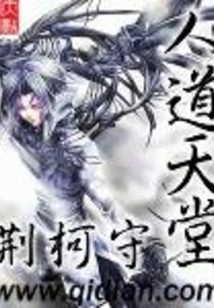
Humane Paradise
by Jing Keshou
About This Novel
This is a future world, the origin of dreams. The advancement of science and technology has enabled human beings to eliminate heavy manual labor and for the first time began to be liberated from the internal oppression of human beings. With the advent of the Golden Age, the karma of the past millions of years is still entangled. It is up to humans to choose whether to eliminate it or to free themselves.
Official Sources
What Readers Think
Rating
Community(0)
Official(33)Scraped 2mo ago
humane
After reading this book, I felt uninterested in reading other books. Maybe this book really is about a future golden age, or maybe it's not. But for now, the author has gained insight into the nature of today's society, where the right to choose is autonomous, not given. Classic
classic
When I read it, it reminded me of a poem by Wang Wei: After the new rain in the empty mountains, autumn comes late. The bright moon shines among the pines, and the clear spring flows over the rocks. The author has a deep understanding of Confucianism, Taoism and Buddhism. The feeling of being on the main road, surrounded by time and water, makes reading very comfortable. There is no feeling of impatience at all, just like the author describing the tea ceremony. Reading it fills the room with fragrance. There aren't many stories that can be repeated several times in a row. Very special
A feeling of pretending to be in the balls hits my face
I've read about a dozen chapters, but I really can't stand it anymore. The content is mixed here and there, and I don't know what I want to talk about. I originally wanted to persist, but I really can't stand the feeling of being pretentious about the protagonist's balls.
I can't understand what to write.
Killing his wife proves Jing Keshou
I have read this book many times. The killings during time travel, the peace of the main world, the holy way of humanity, and the best thing is the glory of Chinese civilization.
I've watched it countless times, I really like it
The core of Chinese civilization, highly recommended!
Not bad! Support!
This book is wonderful but too short. . .
Rating
Community(0)
Official(33)Scraped 2mo ago
humane
After reading this book, I felt uninterested in reading other books. Maybe this book really is about a future golden age, or maybe it's not. But for now, the author has gained insight into the nature of today's society, where the right to choose is autonomous, not given. Classic
classic
When I read it, it reminded me of a poem by Wang Wei: After the new rain in the empty mountains, autumn comes late. The bright moon shines among the pines, and the clear spring flows over the rocks. The author has a deep understanding of Confucianism, Taoism and Buddhism. The feeling of being on the main road, surrounded by time and water, makes reading very comfortable. There is no feeling of impatience at all, just like the author describing the tea ceremony. Reading it fills the room with fragrance. There aren't many stories that can be repeated several times in a row. Very special
A feeling of pretending to be in the balls hits my face
I've read about a dozen chapters, but I really can't stand it anymore. The content is mixed here and there, and I don't know what I want to talk about. I originally wanted to persist, but I really can't stand the feeling of being pretentious about the protagonist's balls.
I can't understand what to write.
Killing his wife proves Jing Keshou
I have read this book many times. The killings during time travel, the peace of the main world, the holy way of humanity, and the best thing is the glory of Chinese civilization.
I've watched it countless times, I really like it
The core of Chinese civilization, highly recommended!
Not bad! Support!
This book is wonderful but too short. . .
Featured in 249 Booklists
Official(249)
The protagonist travels to the author's previous book, after the unification of the Tang Dynasty, and developed into a super technological world that has developed for thousands of years. It describes a golden age that plunders the growth of other worlds. The protagonist has a jade gourd, travels through various types of worlds, or saves the world, or becomes a king and ascends the world, or becomes a god in Shinto, or martial arts, or the sun god of another world, transcendence, immeasurable light, immeasurable merit and virtue, and the immeasurable light travels through the world and shakes the world, shattering the reincarnation disk, leading to "Pure Sun", another work of the author. "Humane Paradise" describes a materially rich country that travels to different worlds through the soul and brings back a culturally enriched spiritual world. It is almost a rudimentary utopia, and it is very similar to our real world, giving it a strong sense of immersion. Then the most exciting thing is that the soul travels to various wonderful worlds, which is equivalent to condensing multiple time travel novels into one, which feels very good.
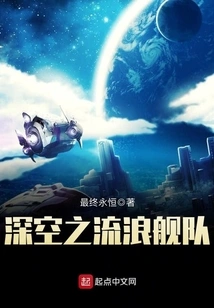
The leader's pinnacle work summarizes his private goods theory, expounds his various thoughts, and creates a golden age that everyone yearns for.
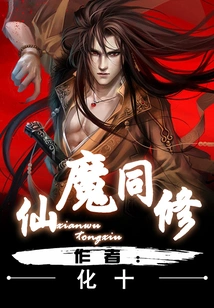
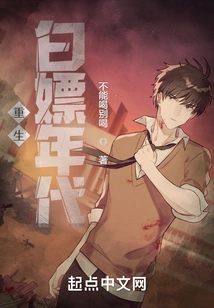
Future urban literature The protagonist Fang Xin predicts the future with the help of Yu Ruyi, and commits suicide in order not to experience tragic events in the future. After his death, Yu Ruyi is sent to the future urban world to be possessed and live a heavy life, where Fang Xin is not troubled by material life and can focus on cultivating to become a perfect person.
Old books. A very special work. Jing Ke's guardian is called "the leader", which refers to the careful and logical three views in his books, which are always mixed with a lot of personal information and are very convincing. Unlike other authors, the leader's books are particularly easy to read because of their profound and sharp thinking on politics, history, religion and other aspects and their concise writing style. This book is no exception. This "humanity" was initially established, and its system was further elaborated and improved in subsequent works such as "Chun Yang", "Yi Ding", and "Qingdi". Can be regarded as the origin.
You Might Also Like
Future King
Lazy Speech
Return
Nuclear Powered Battleship
Reborn Female General
Qianshan Tea Guest
Holy Light
Take All
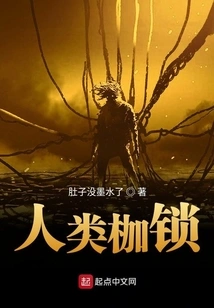
Human Shackles
My Stomach Is Out Of Ink
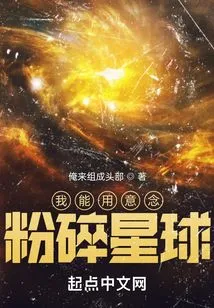
I Can Smash the Planet with My Thoughts
I'll Form The Head
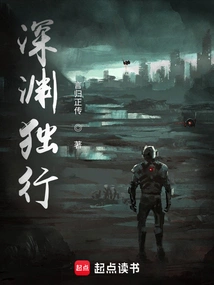
Walking Alone in the Abyss
Closer To Home
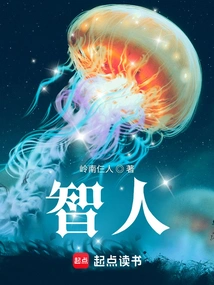
Homo Sapiens
Three People From Lingnan
Hidden Corner
Get Away
Sequence of Ming Dynasty
Domestic Dawenxi