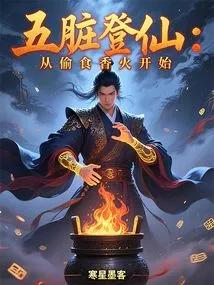
Immortality of the Five Internal Organs: Starting from Stealing Incense
About This Novel
Lu Chengsi once traveled through time, refining blood and flesh into a temple, and building the five internal organs into a divine will!
Official Sources
What Readers Think
Rating
Community(0)
Official(5)Scraped 2mo ago
Several dungeon maps of Wu Zang Deng Xian will be expanded next.
1. Eastern Wasteland: The continent where the story starts has relatively poor resources and complicated forces. The areas that have been explored include Baicaomen (the starting point, which has been destroyed), Xuandan Sect (the main antagonistic force, representing the immortal sect of institutionalized cruelty), Blackstone City (the city of chaos and sin), and Blood Maple City (the current location of the blood brew). The Eastern Wasteland also includes new areas such as the Vast Mountains, the Meteor Plains, and the Misty Swamp, which are full of opportunities and dangers. They are the initial stage for the protagonist's rise and revenge. 2. Endless Sea: The vast ocean world is ruled by the sea tribe and the demon kingdom, and different systems such as demon cultivation and blood inheritance are prevalent. Rich in resources but full of dangers, it is a potential place for the protagonist to hide and improve. His plundering practice method is highly consistent with the laws of the law of the jungle in the sea, and may also contain clues about the origin of Tai Sui. 3. Northern Icefield: A bitter cold place with extremely cold environment. It is a gathering place for demons, evil cultivators and exiles who believe in the law of the jungle. This place is rich in extremely cold spiritual materials. It may become a place where the protagonist can refine the "Five Zang Temple" or find the power to suppress Tai Sui. At the same time, there may also be tentacles of the Medicine Refining Pavilion extending here. 4. Middle-earth China: The core and heyday of the immortal civilization, with abundant spiritual energy, numerous sects, and strict hierarchy. Taking orthodox Taoism, sword cultivation, Confucianism cultivation, etc. As the mainstream system, it pays attention to the basic character of mind. This is an intelligence center, but the protagonist's "evil method" is easily exposed and hunted here, and its unique system will also violently conflict with the orthodox ideas of this place. 5. Netherworld Ghost Mansion: The place where the souls of the dead return. The rules are completely different from the world of the living, and it is full of gloom. The key connection between this realm and the main plot is that it is a dangerous place where the protagonist may have to venture into to find the soul of Gan Ling in order to resurrect him in the future. The power of Tai Sui involves the origin of life, and may also have a taboo connection with the law of death in this place. 6. Nine Heavens Fairyland/Outside the Territory: The legendary higher plane or star field after ascension is the ultimate map in the later period. This place may be related to the ultimate goal of Wanglan Fairy and Xuandan Sect, and the heyday or origin of Tai Sui may also be related to this. The protagonist's path to "immortality" may eventually lead to this place, with the intention of breaking into or even subverting the world in a unique way.
The worst start in history: the protagonist is treated as a tribute, disembowelled and sacrificed to immortals and Buddhas!
This book is set in a cruel world where "immortals and Buddhas eat people, and mortals are like medicine." The questions I have about the first three chapters are actually the hooks I want to lay out. 1. About the core of the plot: The first three chapters complete the reversal of the protagonist Lu Chengsi from "medicine man" to "god-killer". The first chapter lays out the world view: the tributes of immortals and Buddhas are living people, and the sect uses people to make elixirs. The protagonist, as a top-notch "medicine man", is disembowelled by a tiger to remove his internal organs. It is full of ritual and highlights the cruelty of the world and the strictness of hierarchy. The second chapter is the turning point, revealing the protagonist's trump card - he is not a lamb to be slaughtered. The mysterious "Five Zang Temple" in his mind allows him to parasitize his internal organs elsewhere, thus "stealing" the tribute incense. The third chapter is the climactic revenge. He used the information gap (telling the three-flavored medicine) to intensify the conflict, and then used himself as bait and container, and finally completed the counterattack, turning the tiger who ate him into the first "god statue" in his temple, achieving a complete reversal of identity. 2. About "darkness" and "setting": The dark style at the beginning of the book is one of its biggest features. It is not dark for the sake of being dark, but to build a real world where the weak eat the strong and subvert the traditional values of cultivating immortals. This extreme environmental oppression just makes the protagonist's subsequent resistance and revenge more impactful and satisfying. Regarding the setting of "cutting off the tongue and still talking", there is already a foreshadowing in the article: "The medicine people of Baicaomen will not die instantly even if they lose their internal organs. The remaining medicinal power accumulated in the body over the years will take effect and forcibly hang their lives." The protagonist is a "treasure medicine" fed with countless rare medicinal materials over many years, and has extremely strong recovery power. A traumatic injury like a cut tongue heals quickly with the support of huge medicinal power, which is completely in line with the logic of this book. This reflects my original setting - the medicine man is an existence beyond the common sense of the ordinary human body.
The sect and power system of the five internal organs ascending to immortality will be unfolded next.
Sects and power systems 1. Core Settings and Contradictions The story has built a dark "medicine man" industrial chain with "Xuandan Sect" as the core (source and biggest beneficiary), "Baicaomen" as the production end, and "Refining Medicine Pavilion" as the processing and distribution end. The core contradiction is the conflict between individual (Lu Chengsi) resistance and systematic and institutionalized exploitation. The direction of expansion is to place this industrial chain in the larger world structure. Because of its huge profits and quick success characteristics, it will inevitably trigger other forces to covet, imitate, boycott or exploit it, making Lu Chengsi's road of survival and revenge involved in the game of major forces. 2. Expansion of power system The various forces are divided into three major camps: 1. Righteous camp (bright on the surface, filthy on the inside): Xuan Dan Sect (already exists): A famous alchemy sect in the East Wasteland with a very high reputation, but it is the mastermind behind the medicine industry chain. There are factions such as Dandingfeng (mainstream alchemy), Yushougu (controlling the escort of demon servants), and Andantang (directly executing the medicine man's plan). Tianjian Pavilion (newly added): pursues the ultimate swordsmanship and is the main competitor of Xuandan Sect. Some members may become temporary allies of the protagonist because they despise "shortcuts" or uphold justice, but they may also be hostile to the protagonist because of his "inhuman" training methods. Yaochi Holy Land (newly added): A transcendent force that only accepts female cultivators. He may have had transactions with Xuan Dan Sect but kept a distance from the Medicine Man incident, and there were internal differences on whether to intervene. The special medicine of the protagonist's companion Gan Ling may arouse their interest. 2. The evil heretic camp (chaos game): Ten Thousand Beasts Mountain (newly added): The Beast Control Sect, which coexists with monsters and even half-demonizes them, regards medicine as high-quality "beast food", and has a naked hostile relationship with the Xuandan Sect. The monster aura on the protagonist may attract their attention (hostility or cooperation). Samsara Palace (newly added): Top assassins and intelligence organizations, get paid to do things. It is not only a potential channel for the protagonist to obtain intelligence and fight fire with fire, but it may also be a threat to hunt him down. Flesh and Blood Pagoda (newly added): A Buddhist heretic who pursues the forging of the "Immortal Buddha Body" and will become extremely fanatical about the "Five Zang Temple" system practiced by the protagonist. He is an extremely dangerous and direct pursuer. 3. Neutral camp (vacillating): Tianji Pavilion (newly added): A neutral intelligence organization that sells information. It may become the source of information for the protagonist, or it may be backlashed by the protagonist due to the deduction. Rogue cultivator alliance (new): The bottom-level rogue cultivator organization controls the lawless place. The protagonist can use his hatred for the Xuan Dan Sect to form an initial force here, but he also needs to be wary of betrayal at all times. 3. Combat Power Level System It clarifies the ten traditional cultivation levels from Qi training, foundation building, golden elixir, Nascent Soul, and spirit transformation to virtual refining, body integration, Mahayana, transcending tribulations, and even the ascended true immortal/celestial being. The core feature of the protagonist Lu Chengsi lies in his "Five Zang Temple" system: By suppressing powerful beings (such as monsters and monks) in the temples in the body (heart, liver, spleen, lungs, kidneys, etc.), Gaining some of their abilities and improving their cultivation is the basis for achieving leapfrog challenges. Opening a new temple corresponds to a major breakthrough. The actual combat power is the superposition of one's own level and the power of all the "gods in the temple", but subtracting the backlash and weakening, it may briefly burst into destructive power that far exceeds the current level (at a huge cost). 4. Integration with existing plots and future directions Upgraded Escape and Revenge: The protagonist's escape will no longer only face the Xuan Dan Sect, but will encounter multiple forces (such as being captured by the Ten Thousand Beast Mountain, assassinated by the Reincarnation Hall, and being rejected by the Tianjian Pavilion for asylum), so that his revenge will change from survival to a battle of wits that requires the use of conflicting forces. Evolution of the Five Zang Temples: In the future, the targets of suppression will be more diversified, and may include sword cultivators (obtaining sword intent), assassins (acquiring assassination skills), body cultivators (strengthening the physical body), etc., Corresponding to the strengthening of temples of different internal organs. Tai Sui's conspiracy: Behind Tai Sui's temptation to devour and strengthen the protagonist, there may be a larger conspiracy, or it may be aimed at cultivating him as a "sacrifice" or "container" for a sealed supreme being, which is related to the ultimate demands of other top forces.
Combat level
The ten traditional cultivation levels include Qi training, foundation building, golden elixir, Nascent Soul, transformation from spirit to void refining, integration, Mahayana, transcending tribulations and even becoming a true immortal after ascension. Each level is divided into front, middle, back and perfection.
The sects and maps that will appear next
Reincarnation Hall, Tianji Pavilion, Loose Cultivator Alliance; Endless Sea, Northern Icefield, Middle-earth Divine State, Netherworld Ghost Mansion
Rating
Community(0)
Official(5)Scraped 2mo ago
Several dungeon maps of Wu Zang Deng Xian will be expanded next.
1. Eastern Wasteland: The continent where the story starts has relatively poor resources and complicated forces. The areas that have been explored include Baicaomen (the starting point, which has been destroyed), Xuandan Sect (the main antagonistic force, representing the immortal sect of institutionalized cruelty), Blackstone City (the city of chaos and sin), and Blood Maple City (the current location of the blood brew). The Eastern Wasteland also includes new areas such as the Vast Mountains, the Meteor Plains, and the Misty Swamp, which are full of opportunities and dangers. They are the initial stage for the protagonist's rise and revenge. 2. Endless Sea: The vast ocean world is ruled by the sea tribe and the demon kingdom, and different systems such as demon cultivation and blood inheritance are prevalent. Rich in resources but full of dangers, it is a potential place for the protagonist to hide and improve. His plundering practice method is highly consistent with the laws of the law of the jungle in the sea, and may also contain clues about the origin of Tai Sui. 3. Northern Icefield: A bitter cold place with extremely cold environment. It is a gathering place for demons, evil cultivators and exiles who believe in the law of the jungle. This place is rich in extremely cold spiritual materials. It may become a place where the protagonist can refine the "Five Zang Temple" or find the power to suppress Tai Sui. At the same time, there may also be tentacles of the Medicine Refining Pavilion extending here. 4. Middle-earth China: The core and heyday of the immortal civilization, with abundant spiritual energy, numerous sects, and strict hierarchy. Taking orthodox Taoism, sword cultivation, Confucianism cultivation, etc. As the mainstream system, it pays attention to the basic character of mind. This is an intelligence center, but the protagonist's "evil method" is easily exposed and hunted here, and its unique system will also violently conflict with the orthodox ideas of this place. 5. Netherworld Ghost Mansion: The place where the souls of the dead return. The rules are completely different from the world of the living, and it is full of gloom. The key connection between this realm and the main plot is that it is a dangerous place where the protagonist may have to venture into to find the soul of Gan Ling in order to resurrect him in the future. The power of Tai Sui involves the origin of life, and may also have a taboo connection with the law of death in this place. 6. Nine Heavens Fairyland/Outside the Territory: The legendary higher plane or star field after ascension is the ultimate map in the later period. This place may be related to the ultimate goal of Wanglan Fairy and Xuandan Sect, and the heyday or origin of Tai Sui may also be related to this. The protagonist's path to "immortality" may eventually lead to this place, with the intention of breaking into or even subverting the world in a unique way.
The worst start in history: the protagonist is treated as a tribute, disembowelled and sacrificed to immortals and Buddhas!
This book is set in a cruel world where "immortals and Buddhas eat people, and mortals are like medicine." The questions I have about the first three chapters are actually the hooks I want to lay out. 1. About the core of the plot: The first three chapters complete the reversal of the protagonist Lu Chengsi from "medicine man" to "god-killer". The first chapter lays out the world view: the tributes of immortals and Buddhas are living people, and the sect uses people to make elixirs. The protagonist, as a top-notch "medicine man", is disembowelled by a tiger to remove his internal organs. It is full of ritual and highlights the cruelty of the world and the strictness of hierarchy. The second chapter is the turning point, revealing the protagonist's trump card - he is not a lamb to be slaughtered. The mysterious "Five Zang Temple" in his mind allows him to parasitize his internal organs elsewhere, thus "stealing" the tribute incense. The third chapter is the climactic revenge. He used the information gap (telling the three-flavored medicine) to intensify the conflict, and then used himself as bait and container, and finally completed the counterattack, turning the tiger who ate him into the first "god statue" in his temple, achieving a complete reversal of identity. 2. About "darkness" and "setting": The dark style at the beginning of the book is one of its biggest features. It is not dark for the sake of being dark, but to build a real world where the weak eat the strong and subvert the traditional values of cultivating immortals. This extreme environmental oppression just makes the protagonist's subsequent resistance and revenge more impactful and satisfying. Regarding the setting of "cutting off the tongue and still talking", there is already a foreshadowing in the article: "The medicine people of Baicaomen will not die instantly even if they lose their internal organs. The remaining medicinal power accumulated in the body over the years will take effect and forcibly hang their lives." The protagonist is a "treasure medicine" fed with countless rare medicinal materials over many years, and has extremely strong recovery power. A traumatic injury like a cut tongue heals quickly with the support of huge medicinal power, which is completely in line with the logic of this book. This reflects my original setting - the medicine man is an existence beyond the common sense of the ordinary human body.
The sect and power system of the five internal organs ascending to immortality will be unfolded next.
Sects and power systems 1. Core Settings and Contradictions The story has built a dark "medicine man" industrial chain with "Xuandan Sect" as the core (source and biggest beneficiary), "Baicaomen" as the production end, and "Refining Medicine Pavilion" as the processing and distribution end. The core contradiction is the conflict between individual (Lu Chengsi) resistance and systematic and institutionalized exploitation. The direction of expansion is to place this industrial chain in the larger world structure. Because of its huge profits and quick success characteristics, it will inevitably trigger other forces to covet, imitate, boycott or exploit it, making Lu Chengsi's road of survival and revenge involved in the game of major forces. 2. Expansion of power system The various forces are divided into three major camps: 1. Righteous camp (bright on the surface, filthy on the inside): Xuan Dan Sect (already exists): A famous alchemy sect in the East Wasteland with a very high reputation, but it is the mastermind behind the medicine industry chain. There are factions such as Dandingfeng (mainstream alchemy), Yushougu (controlling the escort of demon servants), and Andantang (directly executing the medicine man's plan). Tianjian Pavilion (newly added): pursues the ultimate swordsmanship and is the main competitor of Xuandan Sect. Some members may become temporary allies of the protagonist because they despise "shortcuts" or uphold justice, but they may also be hostile to the protagonist because of his "inhuman" training methods. Yaochi Holy Land (newly added): A transcendent force that only accepts female cultivators. He may have had transactions with Xuan Dan Sect but kept a distance from the Medicine Man incident, and there were internal differences on whether to intervene. The special medicine of the protagonist's companion Gan Ling may arouse their interest. 2. The evil heretic camp (chaos game): Ten Thousand Beasts Mountain (newly added): The Beast Control Sect, which coexists with monsters and even half-demonizes them, regards medicine as high-quality "beast food", and has a naked hostile relationship with the Xuandan Sect. The monster aura on the protagonist may attract their attention (hostility or cooperation). Samsara Palace (newly added): Top assassins and intelligence organizations, get paid to do things. It is not only a potential channel for the protagonist to obtain intelligence and fight fire with fire, but it may also be a threat to hunt him down. Flesh and Blood Pagoda (newly added): A Buddhist heretic who pursues the forging of the "Immortal Buddha Body" and will become extremely fanatical about the "Five Zang Temple" system practiced by the protagonist. He is an extremely dangerous and direct pursuer. 3. Neutral camp (vacillating): Tianji Pavilion (newly added): A neutral intelligence organization that sells information. It may become the source of information for the protagonist, or it may be backlashed by the protagonist due to the deduction. Rogue cultivator alliance (new): The bottom-level rogue cultivator organization controls the lawless place. The protagonist can use his hatred for the Xuan Dan Sect to form an initial force here, but he also needs to be wary of betrayal at all times. 3. Combat Power Level System It clarifies the ten traditional cultivation levels from Qi training, foundation building, golden elixir, Nascent Soul, and spirit transformation to virtual refining, body integration, Mahayana, transcending tribulations, and even the ascended true immortal/celestial being. The core feature of the protagonist Lu Chengsi lies in his "Five Zang Temple" system: By suppressing powerful beings (such as monsters and monks) in the temples in the body (heart, liver, spleen, lungs, kidneys, etc.), Gaining some of their abilities and improving their cultivation is the basis for achieving leapfrog challenges. Opening a new temple corresponds to a major breakthrough. The actual combat power is the superposition of one's own level and the power of all the "gods in the temple", but subtracting the backlash and weakening, it may briefly burst into destructive power that far exceeds the current level (at a huge cost). 4. Integration with existing plots and future directions Upgraded Escape and Revenge: The protagonist's escape will no longer only face the Xuan Dan Sect, but will encounter multiple forces (such as being captured by the Ten Thousand Beast Mountain, assassinated by the Reincarnation Hall, and being rejected by the Tianjian Pavilion for asylum), so that his revenge will change from survival to a battle of wits that requires the use of conflicting forces. Evolution of the Five Zang Temples: In the future, the targets of suppression will be more diversified, and may include sword cultivators (obtaining sword intent), assassins (acquiring assassination skills), body cultivators (strengthening the physical body), etc., Corresponding to the strengthening of temples of different internal organs. Tai Sui's conspiracy: Behind Tai Sui's temptation to devour and strengthen the protagonist, there may be a larger conspiracy, or it may be aimed at cultivating him as a "sacrifice" or "container" for a sealed supreme being, which is related to the ultimate demands of other top forces.
Combat level
The ten traditional cultivation levels include Qi training, foundation building, golden elixir, Nascent Soul, transformation from spirit to void refining, integration, Mahayana, transcending tribulations and even becoming a true immortal after ascension. Each level is divided into front, middle, back and perfection.
The sects and maps that will appear next
Reincarnation Hall, Tianji Pavilion, Loose Cultivator Alliance; Endless Sea, Northern Icefield, Middle-earth Divine State, Netherworld Ghost Mansion
You Might Also Like
Reborn Female General
Qianshan Tea Guest
Journey to the West: Starting from Baihu Ridge
Time Passes And There Is No More
Huang Tingzhidao
Deep Kindness And Great Righteousness
I Have a Avenue Tree
Become An Immortal At The Age Of 100
My Destiny is Mine
Du Yangwu

After My Sect Quota Was Taken, I Became a Casual Cultivator
Braised Watermelon Cup
Subdue the Dragon
Sweet And Sour

Corpse Monster Cultivation Notes
Kiss Fingertips
Qingyu Practice Notes
Falling Peach Blossoms In Nanshan
Journey to the West: Catching the Hundred-eyed Demon King at the Beginning
Time Passes And There Is No More