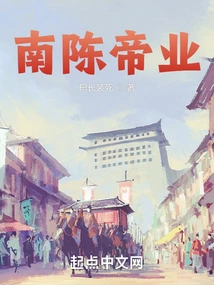
Nanchen Diye
by Good At Pretending To Be Dead
About This Novel
In the third year of Yongding (559), the king of the Northern Zhou Dynasty became the emperor. Gao Yang of the Northern Qi Dynasty left for drinking, and Chen Qian of the Southern Dynasty came to the emperor's residence for the first time. At that time, Jiankang was harmed by Hou Jing, and his clothes and crown were withered; Jiangbiao suffered a military revolution, and its people lost seventy percent. Fortunately, the emperor's son, Bo Zong, came from later generations to cut off the disadvantages and promote governance, counterattacked the northern soil, and eventually became the emperor's foundation.
Official Sources
What Readers Think
Rating
Community(0)
Official(26)Scraped 1mo ago
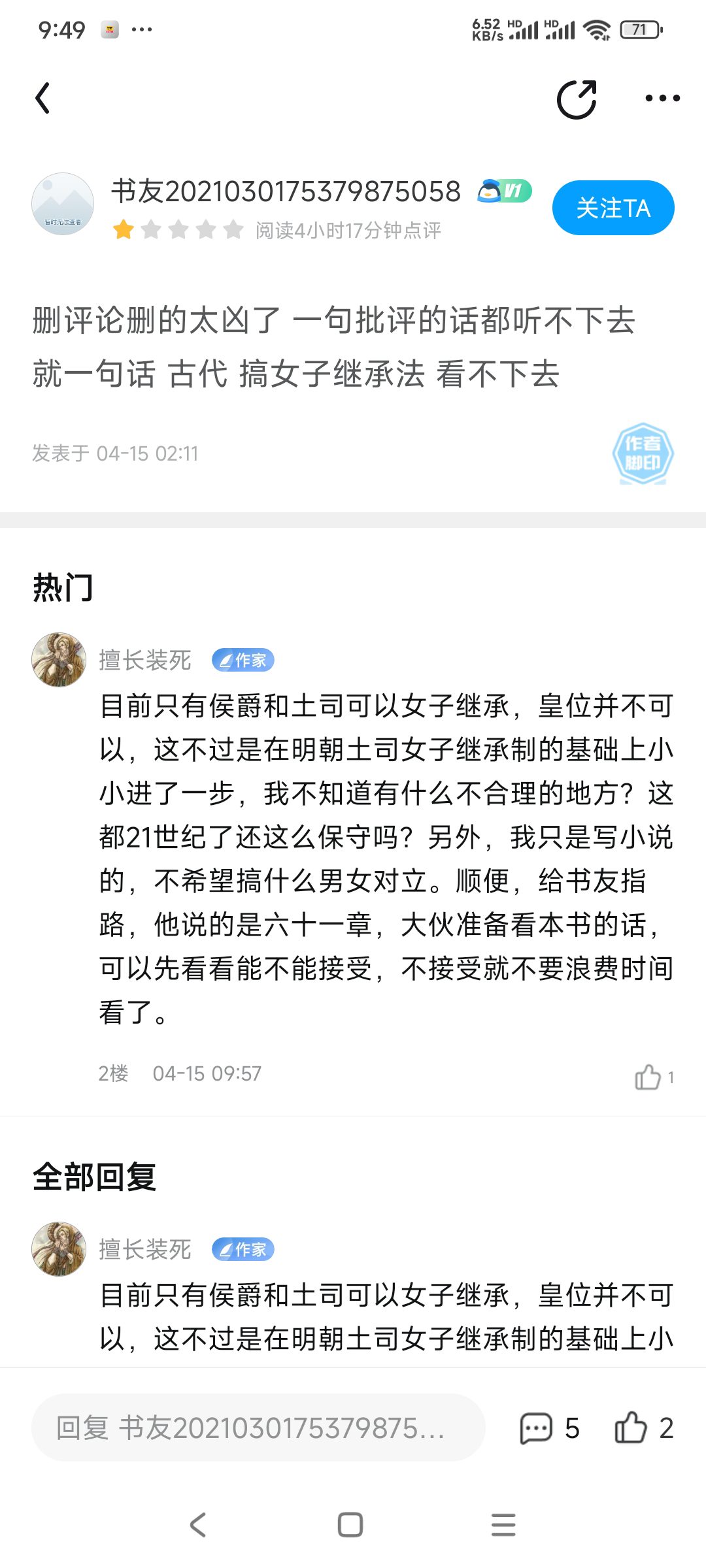
The deletion of comments is so brutal that I can't stand to hear a single word of criticism. It's just one sentence. In ancient times, the female inheritance law was introduced. I can't stand it.
So far, among the historical novels I have read, it is the shortest in length, the language is compact but not complicated, the subject matter is novel, the arrangement is appropriate, the thinking is considered thoughtful, and the description of the world is still considered appropriate. Historical novels, some specialize in language, some specialize in textual research, and of course some are not good at both, specializing in plot planning. However, there is no beginning, and there is an end. Many of them start high and go low, and it is difficult to narrate. They follow the style of their writing to add literary resources and polish their writing. After all, the secular world is intolerable, and two taels of silver can easily make things difficult. Moreover, people's likes and dislikes can make three people become tigers and make lies. How is the post-Three Kingdoms era like the former Three Kingdoms era? Three points of the tripod has become a dream, and future generations will just complain in vain. Let's encourage them for the time being, so as not to let those who are literary in nature and carve out dragons be left in the dust and unable to continue.
More
I read Qidian. It's very good. I've always wanted to read Nan Chen's books, but the writing is mediocre and not enough.
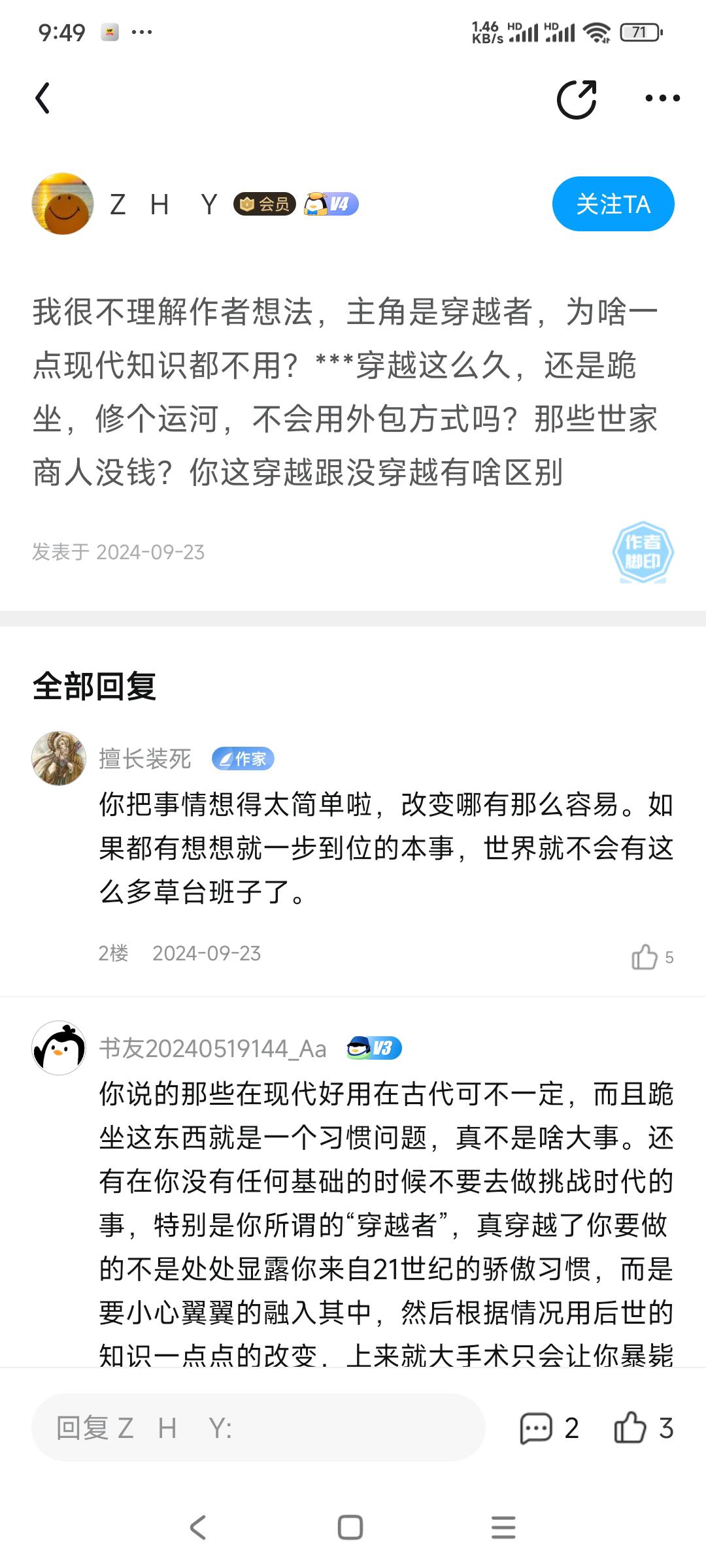
I really don't understand the author's idea. The protagonist is a time traveler. Why doesn't he use any modern knowledge? ***After traveling for so long, I still kneel down and build a canal. Isn't it possible to use outsourcing? Those businessmen from aristocratic families have no money? What's the difference between your time-traveling and not-time-traveling?
The author is so talented, it made me laugh so hard
Anyway, I have to control the comments and the comments. Which of the two is easier? If you don't study, you would think that the Ming Dynasty was before the Northern and Southern Dynasties😘. You won't ban me, right?
A rare start for Nanchen, a game that unifies the world by relying on internal affairs victory and economic victory.
Just like the title, I jumped to read the next book. I have no doubts about the author's ideas, the rapid and efficient internal pacification in the first stage, and the deduction of the recovery of Huainan in the third stage. However, I can't help but have reservations about the cross-sea attack on the peninsula and the Japanese story in the second stage - because in my understanding, this kind of frequent cross-sea operations , would only occur in an "inner lake" environment like the Mediterranean. In the East China Sea, even if the Southern Dynasty's navigation technology was unimaginably high, the risk would still be too great - to capture Tamna Island, a stable source of war horses would be enough. In the same way, if the idea of gold and silver from Japan is determined, it can also be achieved through "commerce" and other means. As for the third stage of the deduction of the recapture of Jingbei, I can only say that I still have some stereotypes about the combat effectiveness of the Southern Dynasty army. However, considering that the territory of the Northern Zhou Dynasty in Jingbei is very similar to the salient, it should be possible to win if Nanchen goes all out; but at the same time, I think the author underestimated the damage to the population and economy caused by the war. Even if Jingbei, Huainan and other places were recaptured, the population would not increase that much at once. Finally, for the fourth stage deduced by the author, the series of plots in which the Northern Zhou Dynasty split and then fought among themselves, and Nan Chen took the opportunity to regain Bashu, felt too optimistic and condescending (coincidence). Moreover, I also doubt the value that the Bashu land can play in the Northern Expedition strategy, but I am very interested in and strongly agree with the author's strategy of eating meat from the Northern Qi Dynasty. So the derivation I imagined was to consolidate the internal affairs, tap potential, and train the army after regaining Jingbei, and then take advantage of the opportunity of the Northern Zhou Dynasty to destroy the Northern Qi Dynasty to launch a large-scale Northern Expedition to the Yellow River and capture Shandong and half of Henan; then take advantage of the civil strife in the Northern Zhou Dynasty to try to replicate the Northern Expedition plan of the early Ming Dynasty and capture half of it in one go. Hebei, half of Henan; needless to say further on, as long as breakthroughs are made in the three directions of Hebei, Hedong, and Bashu, the possibility of unifying the world will be increased by 30%, 20%, and 10%. In addition to the already 40% possibility (25% for Jiangnan, and 1.5% For the Central Plains), the worst is to be invincible! This series of deductions are all based on the reliable "domestic victory" and "economic victory" advocated by the author. At this time, the territory of Nanchen was basically the most densely populated and best developed area. As long as it could hold on, it could kill the Zhou (Sui). Not to mention taking the initiative to attack, even the most passive one can let the protagonist defeat the opponent by virtue of his age advantage. It will not be easy to unify the world when Guangshen comes to power...😘
Are you writing a novel or copying historical materials?
The content is detailed and the writing is smooth, but the length is a bit short.
Will the capital be moved? Jiankang is not suitable for the capital of a unified country!
The writing is incomprehensible. I think it is better if the novel is written in a popular way and most people can understand it. After all, what you are writing is a novel, not a classical Chinese text.
Rating
Community(0)
Official(26)Scraped 1mo ago
The deletion of comments is so brutal that I can't stand to hear a single word of criticism. It's just one sentence. In ancient times, the female inheritance law was introduced. I can't stand it.
So far, among the historical novels I have read, it is the shortest in length, the language is compact but not complicated, the subject matter is novel, the arrangement is appropriate, the thinking is considered thoughtful, and the description of the world is still considered appropriate. Historical novels, some specialize in language, some specialize in textual research, and of course some are not good at both, specializing in plot planning. However, there is no beginning, and there is an end. Many of them start high and go low, and it is difficult to narrate. They follow the style of their writing to add literary resources and polish their writing. After all, the secular world is intolerable, and two taels of silver can easily make things difficult. Moreover, people's likes and dislikes can make three people become tigers and make lies. How is the post-Three Kingdoms era like the former Three Kingdoms era? Three points of the tripod has become a dream, and future generations will just complain in vain. Let's encourage them for the time being, so as not to let those who are literary in nature and carve out dragons be left in the dust and unable to continue.
More
I read Qidian. It's very good. I've always wanted to read Nan Chen's books, but the writing is mediocre and not enough.
I really don't understand the author's idea. The protagonist is a time traveler. Why doesn't he use any modern knowledge? ***After traveling for so long, I still kneel down and build a canal. Isn't it possible to use outsourcing? Those businessmen from aristocratic families have no money? What's the difference between your time-traveling and not-time-traveling?
The author is so talented, it made me laugh so hard
Anyway, I have to control the comments and the comments. Which of the two is easier? If you don't study, you would think that the Ming Dynasty was before the Northern and Southern Dynasties😘. You won't ban me, right?
A rare start for Nanchen, a game that unifies the world by relying on internal affairs victory and economic victory.
Just like the title, I jumped to read the next book. I have no doubts about the author's ideas, the rapid and efficient internal pacification in the first stage, and the deduction of the recovery of Huainan in the third stage. However, I can't help but have reservations about the cross-sea attack on the peninsula and the Japanese story in the second stage - because in my understanding, this kind of frequent cross-sea operations , would only occur in an "inner lake" environment like the Mediterranean. In the East China Sea, even if the Southern Dynasty's navigation technology was unimaginably high, the risk would still be too great - to capture Tamna Island, a stable source of war horses would be enough. In the same way, if the idea of gold and silver from Japan is determined, it can also be achieved through "commerce" and other means. As for the third stage of the deduction of the recapture of Jingbei, I can only say that I still have some stereotypes about the combat effectiveness of the Southern Dynasty army. However, considering that the territory of the Northern Zhou Dynasty in Jingbei is very similar to the salient, it should be possible to win if Nanchen goes all out; but at the same time, I think the author underestimated the damage to the population and economy caused by the war. Even if Jingbei, Huainan and other places were recaptured, the population would not increase that much at once. Finally, for the fourth stage deduced by the author, the series of plots in which the Northern Zhou Dynasty split and then fought among themselves, and Nan Chen took the opportunity to regain Bashu, felt too optimistic and condescending (coincidence). Moreover, I also doubt the value that the Bashu land can play in the Northern Expedition strategy, but I am very interested in and strongly agree with the author's strategy of eating meat from the Northern Qi Dynasty. So the derivation I imagined was to consolidate the internal affairs, tap potential, and train the army after regaining Jingbei, and then take advantage of the opportunity of the Northern Zhou Dynasty to destroy the Northern Qi Dynasty to launch a large-scale Northern Expedition to the Yellow River and capture Shandong and half of Henan; then take advantage of the civil strife in the Northern Zhou Dynasty to try to replicate the Northern Expedition plan of the early Ming Dynasty and capture half of it in one go. Hebei, half of Henan; needless to say further on, as long as breakthroughs are made in the three directions of Hebei, Hedong, and Bashu, the possibility of unifying the world will be increased by 30%, 20%, and 10%. In addition to the already 40% possibility (25% for Jiangnan, and 1.5% For the Central Plains), the worst is to be invincible! This series of deductions are all based on the reliable "domestic victory" and "economic victory" advocated by the author. At this time, the territory of Nanchen was basically the most densely populated and best developed area. As long as it could hold on, it could kill the Zhou (Sui). Not to mention taking the initiative to attack, even the most passive one can let the protagonist defeat the opponent by virtue of his age advantage. It will not be easy to unify the world when Guangshen comes to power...😘
Are you writing a novel or copying historical materials?
The content is detailed and the writing is smooth, but the length is a bit short.
Will the capital be moved? Jiankang is not suitable for the capital of a unified country!
The writing is incomprehensible. I think it is better if the novel is written in a popular way and most people can understand it. After all, what you are writing is a novel, not a classical Chinese text.
Featured in 1 Booklist
You Might Also Like

Reborn Female General
Qianshan Tea Guest
Sweep Yuan
Savages
I Really Just Want to Be a Dragon Master
Sorghum River Car God
Overthrow Qin
Dongjun Taking Off
Gou Qin
Mi Muli
Jinting Han People
Chen Ruicong
Wait, Please Don't Call Me Emperor Zhaolie
The World Is A Little Salty
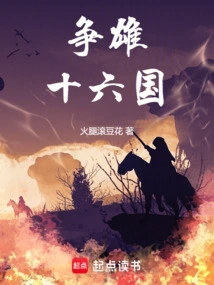
Fighting for the Sixteen Kingdoms
Ham Rolled Beancurd
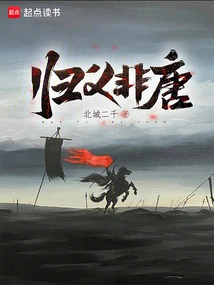
Guiyi is Not the Tang Dynasty
North City Two Thousand
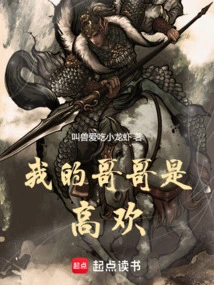
My Brother is Gao Huan
The Beast Loves To Eat Crayfish